2008-08-12

Loquacious Liberals and Progressive Pottymouth Presbyterians

Matthew Sheffield, a writer for the Poli-Tech side of the Washington Post, experimentally confirms what most folks know from first-hand experience.

Progressives are Pottymouths.

What kills me is how they want to regulate our speech to make it as non-offensive to their pet constituency as possible. But when it comes to standards of relatively-common decency, they can fly off the handle with impunity.

What's worse is when you see it tumbling from the lips of those whose speech should be bound to a higher standard than common decency or the Constitution.

2008-08-11

Bishop J. C. Ryle on Election

J. C. Ryle once used an upcoming election season to reflect on the changing nature of human politics and the immutable decree of God's election. It makes for salutary reading, and is a welcome antidote for those who doubt that a Reformation ever occurred within the Church of England.

“Knowing, brethren beloved, your election of God.”— 1 THESS. 1. 4.

“Give diligence to make your calling and election sure.”— 2 PETER 1. 10.

THE texts which head this page contain a word of peculiar interest. It is a word which is often in men’s minds, and on men’s tongues, from one end of Great Britain to the other. That word is “Election.”

There are few Englishmen who do not know something of a general election to Parliament. Many are the evils which come to the surface at such a time. Bad passions are called out. Old quarrels are dug up, and new ones are planted. Promises are made, like piecrust, only to be broken. False profession, lying, drunkenness, intimidation, oppression, flattery, abound on every side. At no time perhaps does human nature make such a poor exhibition of itself as at a general election!

Yet, it is only fair to look at all sides of an election to Parliament. There is nothing new, or peculiarly English, about its evils. In every age, and in every part of the world, the heart of man is pretty much the same. There have never been wanting men ready to persuade others that they are not so well governed as they ought to be, and that they themselves are the fittest rulers that can be found. A thousand years before Christ was born the following picture was drawn by the unerring hand of the Holy Ghost: —

Absalom rose up early, and stood beside the way of the gate: and it was so, that when any man that had a controversy came to the king for judgment, then Absalom called unto him, and said, Of what city art thou? And he said, Thy servant is of one of the tribes of Israel.

And Absalom said unto him, See, thy matters are good and right; but there is no man deputed of the king to hear thee.

Absalom said moreover, Oh that I were made judge in the land, that every man which bath any suit or cause might come unto me, and I would do him justice!

And it was so, that when any man came nigh to him to do him obeisance, he put forth his hand, and took him, and kissed him.” (2 Sam. xv. 2-5.)

When we read this passage we must learn not to judge. our own times too harshly. The evils that we see are neither peculiar nor new.

After all, we must never forget that popular election, with all its evils, is far better than an absolute form of government. To live under the dominion of an absolute tyrant, who allows no one to think, speak, or act for himself, is miserable slavery. For the sake of liberty W€ must put up with all the evils which accompany the return of members to Parliament. We must each do our duty conscientiously, and learn to expect little from any party. If those we support succeed, we must not think that all they do will be right. If those we oppose succeed, we must not think that all they do will be wrong. To expect little from any earthly ruler is one great secret of contentment. To pray for all who are in authority, and to judge all their actions charitably, is one of the principal duties of a Christian.

But there is another Election, which is of far higher importance than any election to Parliament, — an Election whose consequences will abide, when Queen, Lords, and Commons have passed away, — an Election which concerns all classes, the lowest as well as the highest, the women as well as the men. It is the Election which the Scriptures call “the Election of God.”

I ask the readers of this paper to give me their attention for a few minutes, while I try to set before them the subject of this Election. Believe me, it affects your eternal happiness most deeply. Whether you are in Parliament or not, whether you vote or not, whether you are on the winning side or not, all this will matter very little a hundred years hence. But it will matter greatly whether you are in the number of “God’s Elect.”

In handling the subject of Election, there are only two things which I propose to do.

  1. Firstly, I will state the doctrine of Election, and show what it is.
  2. Secondly, I will fence the subject with cautions, and guard it against abuse.

If I can make these two points clear and plain to the mind of all who read these pages, I think I shall have `one their souls a great and essential service.

I. I have firstly to state the doctrine of Election. What is it? What does it mean?

Accurate statements on this point are of great importance. No doctrine of Scripture perhaps has suffered so much damage from the erroneous conceptions of foes, and the incorrect descriptions of friends, as that which is now before us.

The true doctrine of Election I believe to be as follows. God has been pleased from all eternity to choose certain men and women out of mankind, whom by His counsel secret to us, He has decreed to save by Jesus Christ. None are finally saved except those who are thus chosen. Hence, the Scripture gives to God’s people in several places the names of “God’s Elect,” and the choice or appointment of them to eternal life is called “God’s election.”

Those men and women whom God has been pleased to choose from all eternity, He calls in time, by His Spirit working in due season. He convinces them of sin. He leads them to Christ. He works in them repentance Sand faith. He converts, renews, and sanctifies them. He keeps them by His grace from falling away entirely, and finally brings them safe to glory. In short, God’s eternal Election is the first link in that chain of a sinner’s salvation of which heavenly glory is the end. None ever repent, believe, and are born again, except the Elect. The primary and original cause of a saint’s being what he is, is eternal God’s election.

The doctrine here stated, no doubt, is peculiarly deep, mysterious, and hard to understand. We have no eyes to see it fully. We have no line to fathom it thoroughly. No part of the Christian religion has been so much disputed, rejected, and reviled as this. None has called forth so much of that enmity against God which is the grand mark of the carnal mind. Thousands of so-called Christians profess to believe the Atonement, salvation by grace, and justification by faith, and yet refuse to look at the doctrine of Election. The very mention of the word to some persons is enough to call forth expressions of anger, ill-temper, and passion.

But, after all, is the doctrine of Election plainly stated in Scripture? This is the whole question which an honest Christian has to do with. If it is not in the Book of God, let it be forever discarded, refused, and rejected by man, no matter who propounds it. If it is there, let us receive it with reverence, as a part of Divine revelation, and humbly believe, even where we are not able to understand completely or explain fully. What then is written in the Scriptures? “To the law and to the testimony: if they speak not according to this word, it is because there is no light in them.” (Isaiah. viii. 20.) Is Election in the Bible, or is it not? Does the Bible speak of certain persons as God’s Elect, or not?

Hear what our Lord Jesus Christ says: —

    “For the Elect’s sake the days shall be shortened.” (Matt. xxiv. 22.)

    “If it were possible they should deceive even the Elect.” (Mark xiii. 22.)

    “He shall send His angels, and they shall gather together His Elect.” (Matt. xxiv. 31.)

    “Shall not God avenge His own Elect?” (Luke xviii. 7.)

Hear what St. Paul says: —

    “Whom He did foreknow, He also did predestinate to be conformed to the image of His Son, that He might be the firstborn among many brethren. Moreover whom He did predestinate, them He also called: and whom He called, them He also justified: and whom He justified, them He also glorified.” (Rom. viii. 29, 30.)

    “Who shall lay anything to the charge of God’s Elect?” (Rom. viii. 33.)

    “God hath chosen us in Him before the foundation of the world.” (Ephes. i. 4.)

    “`Who hath saved us, and called us with an holy calling, not according to our works, but according to His own purpose and grace, which was given us in Christ Jesus before the world began.” (2 Tim. i. 9.)

    “God hath from the beginning chosen you to salvation through sanctification of the Spirit and belief of the truth.” (2 Thess. ii. 13.)

Hear what St. Peter says —

    “Elect according to the foreknowledge of God the Father, through sanctification of the Spirit, unto obedience and sprinkling of the blood of Jesus Christ.” (1 Peter i. 2.)

    “Give diligence to make your calling and Election sure.” (2 Peter i. 10.)

I place these eleven texts before my readers, and I ask them to consider them well. If words have any meaning at all, they appear to me to teach most plainly the doctrine of personal Election. In the face of such texts I dare not refuse to believe that it is a Scriptural doctrine. I dare not, as an honest man, shut my eyes against the plain, obvious sense of Bible language. If I once began to do so, I should have no ground to stand on in pressing the Gospel on an unconverted man. I could not expect him to believe one set of texts to be true, if I did not believe another set. The eleven texts above quoted seem to my mind to prove conclusively that personal Election is a doctrine of Scripture. As such I must receive it, and I must believe it, however difficult it may be. As such I ask my readers this day to look at it calmly, weigh it seriously, and receive it as God’s truth.

After all, whatever men may please to say, there is no denying that the Election of some men and women to salvation is a simple matter of fact. That all professing Christians are not finally saved, but only some, — that those who are saved owe their salvation entirely to the free grace of God and the calling of His Spirit, — that no man can at all explain why some are called unto salvation and others are not called, — all these are things which no Christian who looks around him can pretend for a moment to deny. Yet what does all this come to but the doctrine of Election?

Right views of human nature are certain to lead us to the same conclusion. Once admit that we are all naturally dead in trespasses and sins, and have no power to turn to God, — once admit that all spiritual life in the heart of man must begin with God, — once admit that He who created the world by saying, “Let there be light,” must shine into man’s heart, and create light within him, — once admit that God does not enlighten all professing Christians in this manner, but only some, and that He acts in this matter entirely as a Sovereign, giving no account of His matters, — once admit all this, and then see where you are. Whether you know it or not, you admit the whole doctrine of Election!

Right views of God’s nature and character, as revealed in the Bible, appear to me to bring us to the same position. Do we believe that God knows all things from all eternity, — that He governs all things by His providence, and that not even a sparrow falleth to the ground without Him? Do we believe that He works all His works by a plan, like an architect of perfect knowledge, and that nothing concerning His saints, as His choicest and most excellent work, is left to chance, accident, and luck? — Well, if we believe all this, we believe the whole doctrine which this paper is meant to support. This is the doctrine of Election.

Now what can be said in reply to these things? What are the principal weapons of argument with which Election is assailed? Let us see.

Some tell us that there is no such thing in Scripture as an Election of persons and individuals. Such an Election, they say, would be arbitrary, unjust, unfair, partial, and unkind. The only Election they admit is one of nations, churches, communities, — such as Israel in ancient times, and Christian nations, as compared to heathen nations, in our own day. Now is there anything in this objection that will stand? I believe there is nothing at all. — For one thing, the Election spoken of in Scripture is an Election attended by the sanctifying influence of the Holy Ghost. This certainly is not the Election of nations. For another thing St. Paul himself draws a clear and sharply-cut distinction between Israel itself and the Election. “Israel hath not obtained that which he seeketh for; but the Election bath obtained it.” (Rom. xi. 7.) — Last, but not least, the advocates of the theory of national Election gain nothing whatever by it. How can they account for God withholding the knowledge of Christianity from 350 millions of Chinese for 1800 years, and yet spreading it over the continent of Europe? They cannot, except on the ground of God’s sovereign will and His free Election! So that, in fact, they are driven to take up the very same position which they blame us for defending, and denounce as arbitrary and uncharitable.

Some tell us that at any rate Election is not the doctrine of the Church of England. It may do very well for dissenters and Presbyterians, but not for churchmen. “It is a mere piece of Calvinism,” they say, — “an extravagant notion which came from Geneva, and deserves no credit among those who love the Prayer-book.” Such people would do well to look at the end of their Prayer books, and to read the Thirty-nine Articles. Let them turn to the 17th Article, and mark the following words:

Predestination to Life is the everlasting purpose of God, whereby (before the foundations of the world were laid) He hath constantly decreed by His counsel secret to us, to deliver from curse and damnation those whom He hath chosen in Christ out of mankind, and to bring them by Christ to everlasting salvation, as vessels made to honour. Wherefore, they which be endued with so excellent a benefit of God be called according to God’s purpose by His Spirit working in due season: they through grace obey the calling: they be justified freely: they be made sons of God by adoption: they be made like the image of His only-begotten Son Jesus Christ: they walk religiously in good works, and at length, by God’s mercy, they attain to everlasting felicity.

I commend that Article to the special attention of all English Churchmen. It is one of the sheet-anchors of sound doctrine in the present day. It never can be reconciled with baptismal regeneration! A wiser statement of the true doctrine of personal Election was never penned by the hand of uninspired man. It is thoroughly well-balanced and judiciously proportioned. In the face of such an Article it is simply ridiculous to say that the Church of England does not hold the doctrine of this paper.

In controverted matters I desire to speak courteously and cautiously. I wish to make allowance for the many varieties of men’s temperaments, which insensibly affect our religious opinions, and for the lasting effect of early prejudices. I freely concede that Wesley, Fletcher, and a whole host of excellent Methodists and Arminians, have always denied Election, and that many deny it to this day. I do not say that to hold Election is absolutely necessary to salvation, though to be one of God’s Elect undoubtedly is necessary. But I cannot call any man my master in theological matters. My own eyes see the doctrine of personal Election most clearly stated both in Scripture and the 17th Article of the Church of England. I cannot give it up. I believe firmly that it is an important part of God’s truth, and one which to godly persons is “full of sweet, pleasant, and unspeakable comfort.”

II. The next thing that I wish to do is to fence the doctrine of Election with cautions, and to guard it against abuse.

This is a branch of the subject which I hold to be of vast importance. All revealed truth is liable to be wrested and perverted. It is one of Satan’s chief devices to make the Gospel odious by tempting men to distort it. Perhaps no part of Christian theology has suffered so much damage in this way as the doctrine of personal Election. Let me proceed to explain what I mean.

“I am not one of God’s Elect,” says one man. “It is no use for me to do anything at all in religion. It is waste of time for me to keep the Sabbath, attend the public worship of God, read my Bible, say my prayers. If I am to be saved, I shall be saved. If I am to be lost, I shall be lost. In the mean time I sit still and wait.” This is a sore disease of soul. But I fear it is a very common one!

“I am one of God’s Elect,” says another man. “I am sure to be saved and go to heaven at last, no matter how I may live and go on. Exhortations to holiness are legal. Recommendations to watch, and crucify self, are bondage. Though I fall, God sees no sin in me and loves me all the same. Though I often give way to temptation, God will not let me be altogether lost. Where is the use of doubts and fears and anxieties? I am confident I am one of the Elect, and as such I shall be found in glory.” This again, is a sore disease. But I fear it is not altogether uncommon.

Now what shall he said to men who talk in this way? They need to be told very plainly that they are wresting a truth of the Bible to their own destruction, and turning meat into poison. They need to be reminded that their notion of Election is a miserably unscriptural one. Election according to the Bible is a very different thing from what they suppose it to be. It is most intimately connected with other truths of equal importance with itself, and from these truths it ought never to be separated. Truths which God has joined together no man should ever dare to put asunder.

(a) For one thing, the doctrine of Election was never meant to destroy man’s responsibility for the state of his own soul. The Bible everywhere addresses men as free-agents, as beings accountable to God, and not as mere logs, and bricks, and stones. It is false to say that it is useless to tell men to cease to do evil, to learn to do well, to repent, to believe, to turn to God, to pray. Everywhere in Scripture it is a leading principle that man can lose his own soul, that if he is lost at last it will be his own fault, and his blood will be on his own head. The same inspired Bible which reveals this doctrine of Election is the Bible which contains the words, “Why will ye die, O house of Israel?” — “Ye will not come unto Me that ye might have life.” — “This is the condemnation, that light is come into tire world, and men loved darkness rather than light, because their deeds were evil.” (Ezek. xviii. 31; John v. 40; iii. 19.) The Bible never says that sinners miss heaven because they are not Elect, but because they “neglect the great salvation,” and because they will not repent and believe. The last judgment will abundantly prove that it is not the want of God’s Election, so much as laziness, the love of sin, unbelief, and unwillingness to come to Christ, which ruins the souls that are lost.

(b) For another thing, the doctrine of Election was never meant to prevent the fullest, freest offer of salvation to every sinner. In preaching and trying to do good we are warranted and commanded to set an open door before every man, woman, and child, and to invite every one to come in. We know not who are God’s Elect, and whom he means to call and convert. Our duty is to invite all. To every unconverted soul without exception we ought to say, “God loves you, and Christ has died for you.” To everyone we ought to say, “Awake, — repent, — believe, — come to Christ, — be converted, — turn, — call upon God, — strive to enter in, — come, for all things are ready.” To tell us that none will hear and be saved except God’s Elect, is quite needless. We know it very well. But to tell us that on that account it is useless to offer salvation to any at all, is simply absurd. Who are we that we should pretend to know who will be found God’s Elect at last? No! indeed. Those who now seem first may prove last, and those who seem last may prove first in the judgment day. We will invite all, in the firm belief that the invitation will do good to some. We will prophesy to the dry bones, if God commands us. We will offer life to all, though many reject the offer. In so doing we believe that we walk in the steps of our Master and His Apostles.

(c) For another thing, Election can only be known by its fruits. The Elect of God can only be discerned from those who are not Elect by their faith and, life. We cannot climb up into the secret of God’s eternal counsels. We cannot read the book of life. The fruits of the Spirit, seen and manifested in a man’s conversation, are the only grounds on which we can ascertain that lie is one of God’s Elect. Where the marks of God’s Elect can be seen, there, and there only, have we any warrant for saying “this is one of the Elect.” — How do I know that yon distant ship on the horizon of the sea has any pilot or steersman `on board? I cannot with the best telescope discern anything but her masts and sails. Yet I see her steadily moving in one direction. That is enough for me. I know by this that there is a guiding hand on board, though I cannot see it. Just so it is with God’s Election. The eternal decree we cannot possibly see. But the result of that decree cannot be hid. It was when St. Paul remembered the faith and hope and love of the Thessalonians, that he cried, I “know your Election of God.” (1 Thess. i. 4.) For ever let us hold fast this principle in considering the subject before us. To talk of any one being Elect when he is living in sin, is nothing better than blasphemous folly. The Bible knows of no Election except through “sanctification,” — no eternal choosing except that we should be “holy,” — no predestination except to be “conformed to the image of God’s Son.” When these things are lacking, it is mere waste of time to talk of Election. (1 Pet. i. 2; Ephes. i. 4; Rom. viii. 29.)

(d) Last, but not least, Election was never intended to prevent men making a diligent use of all means of grace. On the contrary, the neglect of means is a most suspicious symptom, and should make us very doubtful about the state of a man’s soul. Those whom the Holy Ghost draws He always draws to the written Word of God and to prayer. When there is the real grace of God in a heart, there will always be love to the means of grace. What saith the Scripture? The very Christians at Rome to whom St. Paul wrote about foreknowledge and predestination, are the same to whom Ire says, “Continue instant in prayer.” (Rom. xii. 12.) The very Ephesians who were “chosen before the foundation of the world:’ are the same to whom it is said, “Put on the whole armour of God — take the sword of the Spirit — pray always with all prayer.” (Ephes. vi. 18.) The very Thessalonians whose Election Paul said he “knew,” are the Christians to whom he cries in the same Epistle, “Pray without ceasing.” (1 Thess. v. 17.) The very Christians whom Peter calls “Elect according to the foreknowledge of God the Father,” are the same to whom lie says, “Desire the sincere milk of the Word — watch unto prayer.” (1 Pet. ii. 2; iv. 7.) The evidence of texts like these is simply unanswerable and overwhelming. I shall not waste time by making any comment on them. An Election to salvation which teaches men to dispense with the use of all means of grace, may please ignorant people, fanatics, and Antinomians. But I take leave to say that it is an Election of which I can find no mention in God’s Word.

I know not that I can wind up this part of my subject better than by quoting the latter part of the Seventeenth Article of the Church of England. I commend it to the special attention of all my readers, and particularly the last paragraph. — “As the godly consideration of Predestnation, and our Election in Christ, is full of sweet, pleasant, and unspeakable comfort to godly persons, and such as feel in themselves the working of the Spirit of Christ, mortifying the works of the flesh, and their earthly members, and drawing up their mind to high and heavenly things, as well because it doth greatly establish and confirm their faith of eternal Salvation to be enjoyed through Christ, as because it doth fervently kindle their love towards God: so, for curious and carnal persons, lacking the Spirit of Christ, to have continually before their eyes the sentence of God’s Predestination, is a most dangerous downfall, whereby the Devil doth thrust them either into desperation, or into wretchedness of most unclean living, no hem perilous than desperation.

“Furthermore, we must receive God’s promises in such wise, as they be generally set forth to us in holy Scripture: and, in our doings, that will of God is to be followed which we have expressly declared unto us in the Word of God.”

These are wise words. This is sound speech that cannot be condemned. For ever let us cling to the principle contained in this statement. Well would it have been for the Church of Christ, if the doctrine of Election had always been handled in this fashion. Well would it be for all Christians who feel puzzled by the heights and depths of this mighty doctrine, if they would remember the words of Scripture, — “The secret things belong unto the Lord our God: but those which are revealed belong unto us and to our children for ever, that we may do all the words of this Law.” (Deut. xxix. 29.)

I will now conclude the whole subject with a few plain words of personal application.

(1) First of all let me entreat every reader of this paper not to refuse this doctrine of Election, merely because it is high, mysterious, and hard to be understood. Is it reverent to do so? Is it treating God’s Word with the respect due to revelation? Is it right to reject anything written for our learning, and to give it hard names, merely because some misguided men have misused it, and turned it to a bad purpose? These are serious questions. They deserve serious consideration. If men begin rejecting a truth of Scripture merely because they do not like it, they are on slippery ground. There is no saying how far they may fall.

What after all do men gain by refusing the doctrine of Election? Does the system of those who deny Election save one soul more than that of those who hold it? Certainly not. — Do those who hold Election narrow the way to heaven, and make salvation more difficult than those who deny it? Certainly not. — The opponents of Election maintain that none will be saved except those who repent and believe. Well: the advocates of Election say just the same! — The opponents of Election proclaim loudly that none but holy people go to heaven. Well: the advocates of Election proclaim the same doctrine just as loudly! — What then, I ask once more, is gained by denying the truth of Election? I answer, Nothing whatever. And yet, while nothing is gained, a great deal of comfort seems to be lost. It is cold comfort to be told that God never thought on me before I repented and believed. But to know and feel that God had purposes of mercy toward me before the foundation of the world, and that all the work of grace in my heart is the result of an everlasting covenant and an eternal Election, is a thought full of sweet and unspeakable consolation. A work that was planned before the foundation of the world, by an Architect of almighty power and perfect wisdom, is a work which will never be allowed to fail and be overthrown.

(2) In the next place, let me entreat every reader of this paper to approach this doctrine of Election from the right end, and not to confuse his mind by inverting the order of truth. Let him begin with the first elements of Christianity, — with simple repentance toward God, and faith toward our Lord Jesus Christ, and so work Iris way toward Election. Let him not waste his time by beginning with inquiries about his own Election. Let him rather attend first to the plain marks of an Elect man, and never rest till these marks are his own. Let him break off from all known sin, and flee to Christ for pardon, peace, mercy, and grace. Let him cry mightily to God in prayer, and give the Lord no rest till he feels within him the real witness of the Spirit. He that begins in this fashion will thank God one day for His electing grace, in eternity if not in time. It is an old and quaint saying, but a very true one:” A man must first go to the little Grammar-school of Repentance and Faith, before he enters the great University of Election and Predestination.”

The plain truth is, that God’s scheme of salvation is like a ladder let down from heaven to earth, to bring together the holy God, and the sinful creature, man. God is at the top of the ladder and man is at the bottom. — The top of the ladder is far above, out of our sight, and we have no eyes to see it. There, at the top of that ladder, are God’s eternal purposes, — His everlasting covenant, His Election, His predestination of a people to be saved by Christ. From the top of that ladder comes down that full and rich provision of mercy for sinners which is revealed to us in the Gospel. — The bottom of that ladder is close to sinful man on earth, and consists of the simple steps of repentance and faith. By them he must begin to climb upwards. In the humble use of them he shall mount higher and higher every year, and get clearer glimpses of good things yet to come. — What can be more plain than the duty of using the steps which are close to our hands? What can be more foolish than to say, I will not put my foot on the steps at the bottom, until I clearly understand the steps at the top? Away with such perverse and childish reasonings! Common sense alone might tell us the path of duty, if we would only make use of it. That duty is to use simple truths honestly, and then to believe that higher truths will one day be made plain to our eyes. How, and in what manner the love of the eternal God comes down to us, may have much about it which is hard for poor worms like us to understand. But how we poor sinners are to draw near to God is clear and plain as the sun at noon-day. Jesus Christ stands before us, saying, “Come unto Me!” Let us not waste time in doubting, quibbling, and disputing. Let us come to Christ at once, just as we are. Let us lay hold and believe!

(3) In the last place, let me entreat every true Christian who reads this paper to remember the exhortation of St Peter, — “Give diligence, to make your calling and Election sure.” (2 Pet. i. 10.)

Surer in the sight of God than your Election has been from all eternity, you cannot make it. With Him there is no uncertainty. Nothing that God does for His people is left to chance, or liable to change. But surer and more evident to yourself and to the Church, your Election can be made; and this is the point that I wish to press on your attention. Strive to obtain such well-grounded assurance of hope that, as St. John says, you may “know that you know Christ.” (1 John ii. 3.) Strive so to live and walk in this world that all may take knowledge of you as one of God’s children, and feel no doubt that you are going to heaven.

Listen not for a moment to those who tell you that in this life we can never be sure of our own spiritual state, and must always be in doubt. The Roman Catholics say so. The ignorant world says so. The devil says so. But the Bible says nothing of the kind. There is such a thing as strong assurance of our acceptance in Christ, and a Christian should never rest till he has obtained it. That a man may be saved without this strong assurance I do not deny. But that without it he misses a great privilege, and much comfort, I am quite sure.

Strive, then, with all diligence, “to make your calling and Election sure.” — “Lay aside every weight and the sins that most easily beset you.” (Heb. xii. 2.) Be ready to cut off the right hand and pluck out the right eye, if need be. Settle it firmly in your mind, that it is the highest privilege on this side the grave to know that you are one of the children of God.

They that contend for place and office in this world are sure to be disappointed. When they have done all and succeeded to the uttermost, their honours are thoroughly unsatisfying, and their rewards are short-lived. Seats in Parliament and places in Cabinets must all be vacated one day. At best they can only be held for a few years. But he that is one of God’s Elect has a treasure which can never be taken from him, and a place from which he can never be removed. Blessed is that man who sets his heart on this Election. There is no election like the Election of God!


John Charles Ryle (1816-1900) served the Church of England from 1841 to the year of his death. Thoroughly evangelical and uncompromising in his principles, he became widely known for his prolific writing and his faithful service as a pastor. The last twenty years of his life he served as Bishop of Liverpool.

2008-08-08

Your Best Seat...NOW!!!

Victoria Osteen, wife of Lakewood tepid telepeptalkgiver Joel Osteen, is in court today. She's charged with assault "during an outburst over a stain on her first-class seat."

Hopefully, she'll be able to use some of the proceeds from her upcoming book, Love Your Life, to settle up. While not widely reported on, the original subtitle was "Your Best Life Now at 10,000 Feet."

Frankly, she needs to become a better her, first. If she's going to have her best life now, it better damn well include the best seat... RIGHT NOW!!!

2008-08-07

Moving off of fossil fuels

If somebody says that their energy policy is to get us off of fossil fuels, make sure they elaborate step two.

2008-08-06

Presidential Hopeful

Honestly, could she be any worse than what we're already facing?

See more Paris Hilton videos at Funny or Die

2008-08-05

Peace-loving Iran at it again

Iran is now sabre-rattling about its "newest weapon" for strikes at sea. Some people want to say that Iran is a peace-loving country (and I'm sure her people are), and that the nuclear facilities they hid from the world for nearly two decades are for peaceful energy purposes (in a country with enough oil and natural gas to see it through the next century or more, given steady growth). I find that naive, based on the escalation of tensions - largely on the part of Iran - in the region.

And I'm sure the current ramp-up in weapons testing and chest-beating is just part of its face-saving, non-violent, peaceful attempts at proclaiming their sovereignty and cultural distinctiveness...right? Give me a break!

The sooner this threat is unmasked and declawed, the better it will be for her own people and for the world. Pray that it can be done peacefully, without resort to open warfare. Their government has ready made plain their plans.

2008-08-04

World's Oldest Jokes

I love it when two of my passions come together to meet. Dr. Kim Paffenroth wed zombies and religion for me (two great tastes that taste weird together). Now someone has done the same for ancient history and humor. It's not the first time, but it's good. Below is a selection from the top ten.

1. Something which has never occurred since time immemorial: a young woman did not fart in her husband's lap (1900 BC – 1600 BC Sumerian Proverb Collection 1.12-1.13)

3. Three ox drivers from Adab were thirsty: one owned the ox, the other owned the cow and the other owned the wagon's load. The owner of the ox refused to get water because he feared his ox would be eaten by a lion; the owner of the cow refused because he thought his cow might wander off into the desert; the owner of the wagon refused because he feared his load would be stolen. So they all went. In their absence the ox made love to the cow which gave birth to a calf which ate the wagon's load. Problem: Who owns the calf?! (1200 BC)

8. Augustus was touring his Empire and noticed a man in the crowd who bore a striking resemblance to himself. Intrigued he asked: "Was your mother at one time in service at the Palace?" "No your Highness," he replied, "but my father was." (Credited to the Emperor Augustus 63 BC – 14 AD)

10. Asked by the court barber how he wanted his hair cut, the king replied: "In silence." (Collected in the Philogelos or "Laughter-Lover" the oldest extant jest book and compiled in the 4th/5th Century AD)
My favorite - which didn't make the cut - is the one found in Codex Exoniensis (as reported by the Torygraph). It runs thus:
“What hangs at a man’s thigh and wants to poke the hole that it’s often poked before?’ Answer: A key.”

I'll bet +Leofric laughed his lappets off at that one.

2008-08-01

FakeBook

Okay...as a facebook fiend, I find the GOP's latest tactic on Obama absolutely hysterical.


Watch the 1 Corinthians 15:33 principle in effect!

(Do note that they haven't put up his Wright-wing affiliations...yet.)

2008-07-30

Does Iran want to bomb the US?

Well, Newsmax is running a story citing the testimony a PhD electrical engineer, William Graham of the Claremont Institute, gave before Congress.

[sarcasm]
I'm sure it's all just that FauxNews crap and right-wing neocon tripe because I only believe the credible people at Huffinpuff Post and Altermedia. After all, this report is being opposed by all the right people. Let's see, the genteel peace-loving souls at StormFront forum have something to say, as does the good doctor and LA state legislator David Duke. And the fact that it's a propaganda piece supported by the Elders of Zion just proves that it's meant to urge Amerikkka into starting WWIII (especially if McCain - WIII himself - gets elected). Remember, Iran is the good guy.
[/sarcasm]

Hey...at least if they hit us with one of those EMPs, we can go back to a non-greenhouse gas economy!

He is heavy and he's my brother

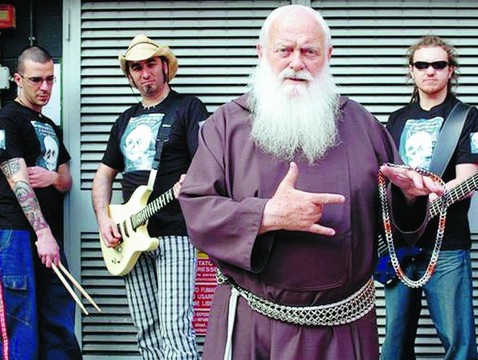
This friar has a habit of ROCKING OUT!!!!

Friar Cesare Benizzi is a 60-something Capuchin whose apostalate has led him to be a missionary in Africa's Ivory Coast and now a mendicant preacher in Italy. Fifteen years ago, or so, he saw Iron Maiden and loved the energy in the music.

Ever since that time, he's been looking for ways to incorporate heavy metal into his ministry. Let's just say that the Novus Ordo never sounded so bad.

Hey...he could have turned out to be one of those emerjerk types that just wants to soften everything up. I'm kinda glad he with with a more... ahem, hardline approach.

I'll bet praying the daily office with this guy would be a total hoot...

Oh yeah...the name of his band is Fratello Metallo.

2008-07-28

Follow-up on Obama Trip

Since he refused to see wounded soldiers without a photo-op, and to have an American flag behind him in the speeches he gave, I have to wonder about this guy....

Obama said he shouldn't have the flag behind him because he wasn't president. Yet that didn't stop Nancy Pelosi from showing the colors when she met with Ehud Barak in Tel Aviv back in May. Any number of US officials (elected and appointed) have regularly flown the flag on foreign soil when they are there and have a press conference.

It brings to mind Coulter's lame excuses post. This Obama guy can't seem to take responsibility for anything!

Obamanation Desecration

In case you missed it, the London Times did a brilliant satire of Obama's messianic voyage to the motherlands. Here's a snippet:

He ventured forth to bring light to the world

The anointed one's pilgrimage to the Holy Land is a miracle in action - and a blessing to all his faithful followers

And it came to pass, in the eighth year of the reign of the evil Bush the Younger (The Ignorant), when the whole land from the Arabian desert to the shores of the Great Lakes had been laid barren, that a Child appeared in the wilderness.

The Child was blessed in looks and intellect. Scion of a simple family, offspring of a miraculous union, grandson of a typical white person and an African peasant. And yea, as he grew, the Child walked in the path of righteousness, with only the occasional detour into the odd weed and a little blow....

2008-07-23

See you in St. Louis

Today, I head for my first denominational meeting since aligning with the Anglicans. I'm looking forward to the contrast. Having been to two General Assemblies, it will be interesting to note where the conflicts arise and where people will find unity.

I'm especially looking forward to meeting some of the men from the Reformed Episcopal Church. The APA connects me to them and to the Province of Nigeria through concordats of intercommunion. REC and Nigeria have a very high regard for the reformed catholicity upheld in the 39 Articles, Lambeth Articles, and Irish Articles. These are important to me because they led directly to the development of the Westminster Confessional Standards - where I first found my own theological voice.

2008-07-18

John Adams on the preaching we need

With the recent unpleasantness in Massachusetts, I found myself drawn back to the writings of John Adams.
"It is the duty of the clergy to accommodate their discourses to the times, to preach against such sins as are most prevalent, and recommend such virtues as are most wanted.

For example, if exorbitant ambition and venality are predominant, ought they not to warn their hearers against those vices?

If public spirit is much wanted, should they not inculcate this great virtue?

If the rights and duties of Christian magistrates and subjects are disputed, should they not explain them, show their nature, ends, limitations, and restrictions, how muchsoever it may move the gall of Massachusetts?"
Read the rest here or here. And remember, despite the evidence, he was indifferent to personal religion. Right, public schools?

2008-07-17

Greekin' Deacons

Make Acolytin' Averys! He looks so serious next to his doofus father.
That's not my usual surplice (which looks more like this one). But it was hot, so I wasn't going for the more opaque heavy linen (which my long-suffering wife made for me).

This is a pic of my eldest son on his first day as an acolyte. I should threaten to make an alliterative blog for him...

And just for kicks, here's a recent pic of the rest of the family.


Yes, that's seersucker. You can take a boy out of the South, but you can't take the south out of the boy. The Heat Will Rise Again!!!

2008-07-16

Mush Mouth Hymnody

Back when I was a rabid Reformer (instead of a regular Calvinist), I was told by the TRULY REFORMED that to say nice things about John Wesley was just "speaking peace" to the Arminians. Well...having grown up a bit (and grown into Christ's love), I now side with George Whitfield and speak admirably of the evangelist who founded the denomination into which I was born (even though he himself was buried as an Anglican priest). In 1761, John Wesley wrote "Directions for Singing" - a short set of instructions that continues to be printed in the front matter of many hymnals. Apparently, he should have added something about enunciation.


You see, classic hymnody may draw people because of it's majesty, its history, or simple innate conservatism. But the real power of the great hymns are their ability to convey the faith in fullness - through an appeal to the emotions and an appeal to the mind. The doctrinal content is, for me, one of the enduring contributions of classic hymnody. And when it is sung poorly (such that the words muddle together), then we lose its greatest gift. (And when the words are changed or muddled deliberately, that's worse!)*

This tradition of mixing good theology with good music continues in a variety of genres. Michael Card is one of my favorite composers for modern Christian music. Keith Getty makes some incredible songs for congregational singing. Vicar's son, Stuart Townend, is also an excellent composer and worship leader, as well as practical/musical theologian. Let's get past the worship wars of style and move back to Christ-honoring content!

*Concessions can be made for inclusive language regarding humanity without having to muck up the rest of the song.

2008-07-15

Becoming a Popular "Evangelical" Writer

There've been a string of pomo "evangelicals" getting lots of press / publishing attention in the last few years. (Think Rob Bell, Brian McLaren, Shane Claiborne, etc.) I like to just call them emerjerks. But I do envy their success. Thanks to Doug Groothius, I now have the secret tools needed to write like them so I don't have to be "right" anymore. It's so...liberating?


Click here for Groothius' list.

Meanwhile, if you don't mind being a crusty old fundamentalist, check out the action at Classical Presbyterian.

2008-07-12

Those Sunny Beaches

Maybe it's just me, but the 2008 Presidential campaign is starting to look more and more like a bad day at the beach in Florida: shuffling white guys past their prime and cheap new flip-flops.

2008-07-10

Them's Fightin' Words

From the You Can't Make This Stuff Up file comes a lawsuit that I've been waiting to see.

Zondervan and Nelson Publishers are being sued by self-proclaimed Bible expert and self-affirmed practicing homosexual, Bradley LaShawn Fowler. In all, he says he is owed $70 million for the emotional pain and trauma he has suffered. 1 Corinthians 6:9 is the focal point of his complaint. (I wonder where he got the idea of focusing here....) Feel free to take a look at the Greek behind it.

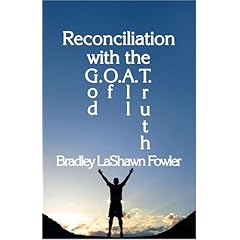
Now Mr. Fowler is surely an intellectual powerhouse to be reckoned with - as a quick review of his website will show. He also is a self-published author of Reconciliation with the G.O.A.T., God of All Truth. (Please, no goatse jokes.) And - tremble, O Zondervan and Nelson - he's representing himself in court. (I don't know why: the ACLU, GLAAD, GLF, GMAD, and others would probably provide pro bono homo legal counsel.) I'm sure that it's tort claims like these that our founding fathers intended to take up the time of the justice system.


Also, would anybody be interested in helping some death-row murders file a tort against God and the Bible publishers for that whole killing / murder confusion in the Decalogue?

2008-07-09

Church Wars

Sometimes, it's like we're coming from two different worlds.


One of the nice things about denominations is that they allow Christians who feel passionately about a certain theological principle or ecclesiastical habitus to work together without being distracted by those who don't share the same conviction.

One of the nice things about catholic orthodoxy is that it allows Christians who've gone into these denominations to recognize the gifts of other Christians because a baseline has been established wherein we fellowship.

One of the sad things is when an ecclesial structure has neither shared convictions/practices or generalized orthodoxy. That's when stuff like money and politics hold them together - and the sheep get starved or slaughtered.

2008-07-08

Being Right When You Wish You Were Wrong


This is what it feels like to be one of the conservative observers of the mainline decline.

In other words...being right isn't the same as being happy about it.

(I do have to say, though, that some are reveling in Schadenfreude over the recent announcements from Anglican and Presbyterian meetings...and they're like the guy in the last frame.)

h/t: AmazingSuperPowers.com

Pay it froward

Get it done before your dollar is worthless!

https://www.extension.iastate.edu/mfl/online.html

2008-07-07

Schoolboys disciplined for 'refusing to pray to Jesus'

From the London Telegraph, a story so shocking* you won't believe!!!:

It was claimed that the boys, from a year seven class of 11 and 12-year-olds, were given detention after refusing to take part in a practical demonstration of how Jesus is worshipped.

Yesterday parents accused the school of breaching their human rights by forcing them to take part in the exercise.

One, Sharon Luinen, said: "This isn't right, it's taking things too far. I understand that they have to learn about other religions. I can live with that but it is taking it a step too far to be punished because they wouldn't join in Christian prayer.

"Making them pray to Jesus' god, who isn't who they worship, is wrong and what got me is that they were told they were being disrespectful."

Another parent Karen Williams, 38, whose 12-year-old daughter is a classmate of the boys, said: "I am absolutely furious my daughter was made to take part in it and I don't find it acceptable.

"The teacher had gone into the class and made them watch a short film and then said 'we are now going out to pray to Jesus'.

"Then two boys got detention and all the other children missed their refreshments' break."

She added: "Not only was it forced upon them, my daughter was told off for not doing it right.

"They'd never done it before and they were supposed to do it in another language."

She said the pupils were asked if they had water on them, and when one girl produced a bottle, the teacher began baptizing her with it.

Her husband Keith, 44, a painter and decorator, said: "The school is wonderful but this one teacher has made a major mistake. It seems to be happening throughout society. People think they can ride roughshod over our beliefs and the way we live."

The alleged incident, at the Alsager school, one of Cheshire's top performing schools, happened on Tuesday afternoon. The teacher, Alison Phillips, the school's subject leader in RE, is understood to be staying away from the school until the furore dies down, although she has not been suspended.

She is said to have got rosaries out of the cupboard and also asked children to wear Carmelite nun wimples.

Deputy headmaster Keith Plant said: "I have spoken to the teacher and she has articulately given me her version of events."

Sources at the school said the incident could have been down to Miss Phillips instigating a role play and not properly briefing the pupils, all aged around 12, what she was doing.

A spokesman for Cheshire County Council said they were investigating. He added: "The headteacher contacted the authority immediately complaints were received. Enquiries are being made into the circumstances as a matter of urgency and all parents will be informed accordingly.

"Educating children in the beliefs of different faiths is part of Cheshire's diversity curriculum on the basis that knowledge is, of course, is essential to understanding.

"We accept that such teaching has to be conducted with commonsense and sensitivity."

And from the Daily Mail:

Schoolboys punished with detention for refusing to kneel in class and pray the Our Father

Two schoolboys were given detention after refusing to kneel down and 'pray the Pater Noster' during a religious education lesson.

Parents were outraged that the two boys from year seven (11 to 12-year-olds) were punished for not wanting to take part in the practical demonstration of how Jesus is worshipped.

They said forcing their children to take part in the exercise at Alsager High School, near Stoke-on-Trent - which included wearing monastic headgear - was a breach of their human rights.

One parent, Sharon Luinen, said: "This isn't right, it's taking things too far.

"I understand that they have to learn about other religions. I can live with that but it is taking it a step too far to be punished because they wouldn't join in Christian prayer.

"Making them pray to the Father of Jesus, who isn't who they worship, is wrong and what got me is that they were told they were being disrespectful.

"I don't want this to look as if I have a problem with the school because I am generally very happy with it."

Another parent Karen Williams said: "I am absolutely furious my daughter was made to take part in it and I don't find it acceptable.

"I haven't got a problem with them teaching my child other religions and a small amount of information doesn't do any harm.

"But not only did they have to pray, the teacher had gone into the class and made them watch a short film and then said 'we are now going out to pray to Jesus' Father'.

"Then two boys got detention and all the other children missed their refreshment break because of the teacher.

"Not only was it forced upon them, my daughter was told off for not doing it right.

"They'd never done it before and they were supposed to do it in another language." (Latin)

"My child has been forced to pray to the Christian God in a school lesson." The grandfather of one of the pupils in the class said: "It's absolutely disgusting, there's no other way of putting it.

"My daughter and a lot of other mothers are furious about their children being made to kneel on the floor and pray to Islam. If they didn't do it they were given detention.

"I am not racist, I've been friendly with an Fundamentalist for 30 years. I've also been to a Baptist wedding where it was explained to me that alcohol would not be served and I respected that.

"But if Christians were asked to go to mosque on Friday and make ritual ablutions there would be war."

Parents said that their children were made to bend down on their knees, holding rosaries which the RE teacher had got out of her cupboard and they were also told to wear monastic headgear during the lesson on Tuesday afternoon.

Deputy headmaster Keith Plant said: "It's difficult to know at the moment whether this was part of the curriculum or not. I am not an RE teacher, I am an English teacher.

"At the moment it is our enterprise week and many of our members of staff are away.

"The particular member of staff you need to speak to isn't around. I think that it is a shame that so many parents have got in touch with the Press before coming to me.

"I have spoken to the teacher and she has articulately given me her version of events, but that is all I can give you at the moment."

A statement from Cheshire County Council on behalf of the school read: "The headteacher David Black contacted this authority immediately complaints were received.

"Enquiries are being made into the circumstances as a matter of urgency and all parents will be informed accordingly.

"Educating children in the beliefs of different faith is part of the diversity curriculum on the basis that knowledge is essential to understanding.

"We accept that such teaching is to be conducted with some sense of sensitivity."
Remember, without discernment it can happen here.

* In case it isn't abundantly clear, this is a parody. In Britain, you're punished for not being sensitive to Muslim interests. So much for the "established" church....
h/t: PhDiva

2008-07-04

Our Fragile Democracy

This came to my inbox, and I've cleaned it up as best I could from Snopes, etc.

HOW LONG DO WE HAVE?

About the time our original thirteen states adopted their new constitution in 1787, Lord Woodhouselee Alexander Tytler, a Scottish history professor at the University of Edinburgh , had this to say about the fall of the Athenian Republic some 2,000 years earlier:
  • A democracy is always temporary in nature; it simply cannot exist as a permanent form of government. A democracy will continue to exist up until the time that voters discover they can vote themselves generous gifts from the public treasury. From that moment on, the majority always vote for the candidates who promise the most benefits from the public treasury, with the result that every democracy will finally collapse due to loose fiscal policy, which is always followed by a dictatorship.
  • The average age of the world's greatest civilizations from the beginning of history, has been about 200 years. During those 200 years, those nations always progressed through the following sequence:
    1. from bondage to spiritual faith;
    2. from spiritual faith to great courage;
    3. from courage to liberty;
    4. from liberty to abundance;
    5. from abundance to complacency;
    6. from complacency to apathy;
    7. from apathy to dependence;
    8. from dependence back into bondage
Here are some interesting facts concerning the 2000 Presidential election:

Number of States won by: Democrats: 20 Republicans: 30


Square miles of land won by: Democrats: 580,000 Republicans: 2,427,000


Population of counties won by: Democrats: 127 million Republicans: 143 million


Murder rate per 100,000 residents in counties won by: Democrats: 6.5 Republicans: 4.1 (national avg. is 5.5)

In aggregate, the map of the territory Republican won was mostly the land owned by the taxpaying citizens of this country. Democrat territory mostly encompassed urban zones (high concentrations of citizens living in government-owned tenements and living off various forms of government welfare, or divorced from manufacturing and agriculture.)

With others, I think the United States is now somewhere between the 'complacency and apathy' phase of Tytler's definition of democracy, with some forty percent of the nation's population already having reached the 'governmental dependency' phase.

2008-07-03

Eat this Malthus

I get criticized by some folks for having a large family (4 boys, 1 girl).

23

OnePlusYou Quizzes and Widgets

I'm glad to know, however, that I could easily handly 15 more!

(P.S. Click here if the Malthus reference didn't ring a bell.)

(P.P.S. Click here if Malthus and his claims do make sense to you. This is why I'm not an greenieweenie.)


2008-07-01

Multi-generational Churches

There's a lot of talk about creating a multi-generational, multi-cultural church. It's half good and half bad. If you mean multi-generational in terms of all ages, I'm for it. If you talk about multi-cultural in terms of the redeemed (who are one race, one nation - spiritual Israel, and one blood per Acts 17), I'm for that, too.

But what about remembering that we're called to be a REGENERATIONAL church before any of those other things. Love for people that are unlike us is not an inherited trait. It is learned in each generation - and it helps when we come to the realization that all the redeemed are already alike in the most eternally important way.

What we need are REgeneration churches! So I was pleasantly surprised when I came across this post. It reminded me of the half-way covenant that was a feature of compromised (mainline?) puritanism:

In the first generation truth is a conviction.

  • Those who hold that conviction, hold it dearly.
  • They do not know the meaning of compromise.
  • They are willing to die for what they believe to be true.
In the second generation the conviction becomes a belief.
  • Sons hold to the truths they have been taught by their fathers,
  • and defend their beliefs in discussion and debate.
  • However the keen edge of conviction has been blunted,
  • and adherence to a body of beliefs inherited from the fathers is not so much a passion as a persuasion.
In the third generation the belief becomes an opinion.
  • By then some members of the movement are willing to trade in their opinions.
  • They feel it is time for a change.
  • They start talking about renewal,
  • but they may look to the world for ideas.
If there's a fourth generation, it's what you see in the legacy denominations (note: I rarely use "mainline" anymore because they neither represent the mainstream of Christianity in beliefs, values, or numbers).

PS: Please remember that it was the half-way covenant (the compromise that it bred) that so upset godly men like Jonathan Edwards, George Whitfield, and the Wesleys, setting off the first great awakening. During that time, denominational barriers broke down and like-minded men and women came together for the sake of the Gospel! Like others, I believe God is ready to do just that same thing again in our day. Realign, brothers and sisters, with those who name Christ - not just those who share your name brand!

Shamelessly ganked from FIDE-O

2008-06-30

What I didn't learn in CPE


Sometimes, less is more...

In all seriousness, in seminary we're given a psychological model for handling all pastoral crises. It has its legitimate and godly function within our churches. I've had the benefit of some training in these resources and have used them in counseling (formal and informal). I've also been shown that there are limits to my abilities and have made successful referrals to those more competent in therapy than myself.

However, I have been surprised at the number of issues raised (normally by middle-class+ white educated people) that could be solved with a more direct, straightforward, and biblical rebuke to quit sinning!

Westminster Confession of Faith in chapter XXX "Of Church Censures " in sections 3-4 proclaimed Biblical teaching of rebuke of sins:

III. Church censures are necessary, for the reclaiming and gaining of offending brethres, for deterring of others from the like offenses, for purging out of that leaven which might infect the whole lump, for vindicating the honor of Christ, and the holy profession of the Gospel, and for preventing the wrath of God, which might justly fall upon the Church, if they should suffer His covenant, and the seals thereof, to be profaned by notorious and obstinate offenders. (scriptural support)

IV. For the better attaining of these ends, the officers of the Church are to proceed by admonition; suspension from the sacrament of the Lord's Supper for a season; and by excommunication from the Church; according to the nature of the crime, and demerit of the person. (scriptural support)

Many times Bible exhorts us to judge righteous judgment (even mean old Jesus) and rebuke sins before all (classic "meanies" like Paul, who probably learned it from that nasty Old Testament... or from archmeanie Jesus). Bible says there that sin must be condemned and judged. In Lev. 19:17-18 we see that love and rebuke are together and cannot be divorced. In fact, true wisdom (listen up, those who love Sophia) declares that rebuke is a loving act!

I end with a collection of verses that have been hidden in my heart for a long time. They're in KJV because that's what I used when I came back to the faith, and it's the official translation of my new ecclesial body...so stuff it (yeah, I mean that with love).
"Them that sin rebuke before all, that others also may fear" (1 Timothy 5:20)

"Cry aloud, spare not, lift up thy voice like a trumpet, and shew my people their transgression, and the house of Jacob their sins." (Isaiah 58:1)

James 5:19-20 Brethren, if any of you do err from the truth, and one convert him; Let him know, that he which converteth the sinner from the error of his way shall save a soul from death, and shall hide a multitude of sins.

John 7:24 Judge not according to the appearance, but judge righteous judgment.

Leviticus 19:17 Thou shalt not hate thy brother in thine heart: thou shalt in any wise rebuke thy neighbour, and not suffer sin upon him.

"Beloved, believe not every spirit, but try the spirits whether they are of God: because many false prophets are gone out into the world." (1 John 4:1).

Ephesians 5:11 And have no fellowship with the unfruitful works of darkness, but rather reprove them.

2 Timothy 3:16 All scripture is given by inspiration of God, and is profitable for doctrine, for reproof, for correction, for instruction in righteousness:

2 Timothy 4:2 Preach the word; be instant in season, out of season; reprove, rebuke, exhort with all longsuffering and doctrine.

Titus 1:13 This witness is true. Wherefore rebuke them sharply, that they may be sound in the faith;

Titus 2:15 These things speak, and exhort, and rebuke with all authority. Let no man despise thee.

Revelation 3:19 As many as I love, I rebuke and chasten: be zealous therefore, and repent

John 3:20 For every one that doeth evil hateth the light, neither cometh to the light, lest his deeds should be reproved.

Proverbs 9:7 He that reproveth a scorner getteth to himself shame: and he that rebuketh a wicked man getteth himself a blot.

Proverbs 9:8 Reprove not a scorner, lest he hate thee: rebuke a wise man, and he will love thee.

Proverbs 10:17 He is in the way of life that keepeth instruction: but he that refuseth reproof erreth.

Proverbs 12:1 Whoso loveth instruction loveth knowledge: but he that hateth reproof is brutish.

Proverbs 13:1 A wise son heareth his father's instruction: but a scorner heareth not rebuke.

Proverbs 15:5 A fool despiseth his father's instruction: but he that regardeth reproof is prudent.

Proverbs 15:10 Correction is grievous unto him that forsaketh the way: and he that hateth reproof shall die.

Proverbs 15:12 A scorner loveth not one that reproveth him: neither will he go unto the wise.

Proverbs 15:32 He that refuseth instruction despiseth his own soul: but he that heareth reproof getteth understanding.

Proverbs 19:20 Hear counsel, and receive instruction, that thou mayest be wise in thy latter end.

Proverbs 19:25 Smite a scorner, and the simple will beware: and reprove one that hath understanding, and he will understand knowledge.

Proverbs 24:25 But to them that rebuke him shall be delight, and a good blessing shall come upon them.

Proverbs 25:12 As an earring of gold, and an ornament of fine gold, so is a wise reprover upon an obedient ear.

Proverbs 27:5 Open rebuke is better than secret love.

Proverbs 28:11 The rich man is wise in his own conceit; but the poor that hath understanding searcheth him out.

Proverbs 28:23 He that rebuketh a man afterwards shall find more favour than he that flattereth with the tongue.

Proverbs 29:1 He, that being often reproved hardeneth his neck, shall suddenly be destroyed, and that without remedy.

Proverbs 29:15 The rod and reproof give wisdom: but a child left to himself bringeth his mother to shame.

Proverbs 30:6 Add thou not unto his words, lest he reprove thee, and thou be found a liar.

Ecclesiastes 7:5 It is better to hear the rebuke of the wise, than for a man to hear the song of fools.

Amos 5:10 They hate him that rebuketh in the gate, and they abhor him that speaketh uprightly.

That last one I can attest to in my dealings with adultery and apostasy and financial chicanery in my old presbytery. When you start pointing out problems, you become the problem.