| Kingsfold 3 vv. (Clyde McClendon, Organist) |  |
 | ||
 | Found at bee mp3 search engine |  |
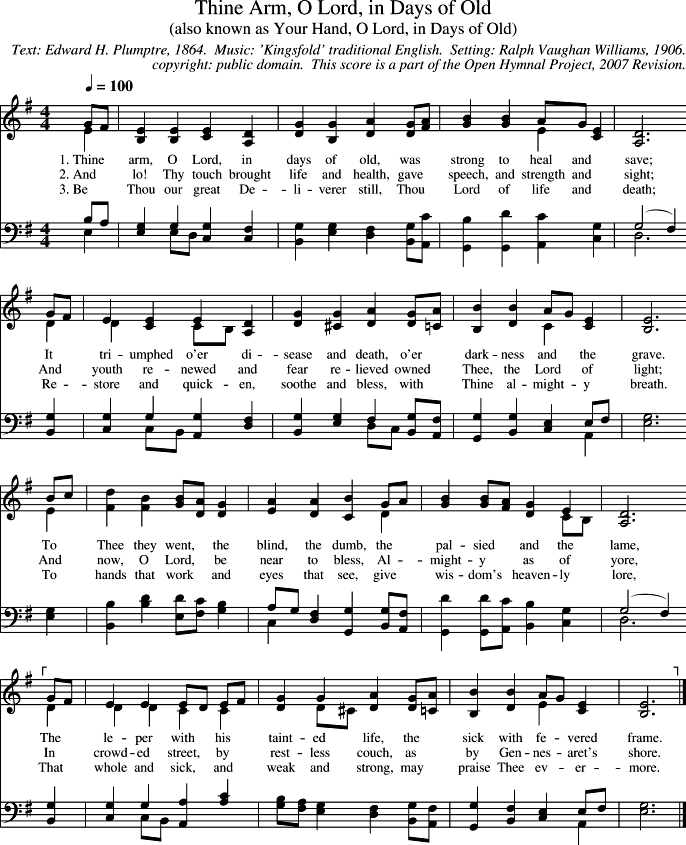
If you're of a different musical bent, you can enjoy Michael W. Smith's "Healing Rain."

| Kingsfold 3 vv. (Clyde McClendon, Organist) | |
| | ||
| Found at bee mp3 search engine | |
"What can be supposed wanting in our Church in order to salvation? We have the Word of God, the Faith of the Apostles, the Creeds of the Primitive Church, the Articles of the four first General Councils, a holy liturgy, excellent prayers, perfect sacraments, faith and repentance, the Ten Commandments, and the sermons of Christ, and all the precepts and counsels of the Gospels. We … require and strictly exact the severity of a holy life. … We communicate often, our priests absolve the penitent. Our Bishops ordain priests, and confirm baptised persons, and bless their people and intercede for them. And what could here, be wanting to salvation?”
- Jeremy Taylor, Bp. of Down & Connor (1613-1667)
I have been part of this debate for years, but things do get settled and this issue is now settled for me. I do not debate any longer with members of the "Flat Earth Society" either.In the Episcopal Church - of which he remains some sort of high-ranking ecclesial officer in good standing - this is called "openness" and indaba. (In other words, you need to be open to our innovations on the faith and discipline of the Church, and then listen while we tell you you're an oppressive, morally bankrupt simpleton.) Here are some more excerpts:
I have made a decision. I will no longer debate the issue of homosexuality in the church with anyone. I will no longer engage the biblical ignorance that emanates from so many right-wing Christians about how the Bible condemns homosexuality, as if that point of view still has any credibility....I have been part of this debate for years, but things do get settled and this issue is now settled for me. I do not debate any longer with members of the "Flat Earth Society" either.Even advocates of the revisionist position* admit that the biblical evidence is on the side of the historic faith. But Mr. Spong cares little about the evidence, and even less about the authority of the Scriptures. (In spite of any vows he made to defend them as - some sort of high-ranking ecclesial officer in good standing.) Spong has already admitted that Scripture condemns homosexuality. You can watch it, but here's what he says:
Spong: But let me say that I do not disagree that homosexuality is condemned in Scripture. I do not agree with that.
Ankerberg: Yes, you’ve said that before.
Spong: I think that is obvious. It’s in Leviticus; it’s in the Sodom and Gomorrah story; it’s in the Pauline corpus at least, and probably some other places…
Ankerberg: All right, we’re…
Spong: The issue in my mind is not that. The issue is whether or not the people who lived at the time of the Bible and who wrote about homosexuality understood the scientific meaning of homosexuality.
10 But these people blaspheme all that they do not understand, and they are destroyed by all that they, like unreasoning animals, understand instinctively. 11Woe to them! For they walked in the way of Cain and abandoned themselves for the sake of gain to Balaam’s error and perished in Korah’s rebellion. 12These are hidden reefs at your love feasts, as they feast with you without fear, shepherds feeding themselves; waterless clouds, swept along by winds; fruitless trees in late autumn, twice dead, uprooted; 13 wild waves of the sea, casting up the foam of their own shame; wandering stars, for whom the gloom of utter darkness has been reserved forever.Speaking of casting up foam to their own shame...
Yeah...we conservative types are the sort that keep condemning the Jews with "high-sounding, pious rhetoric." Oh wait...that's the TEC revisionistas.I will no longer temper my understanding of truth in order to pretend that I have even a tiny smidgen of respect for the appalling negativity that continues to emanate from religious circles where the church has for centuries conveniently perfumed its ongoing prejudices against blacks, Jews, women and homosexual persons with what it assumes is "high-sounding, pious rhetoric."
I will dismiss as unworthy of any more of my attention the wild, false and uninformed opinions of such would-be religious leaders as Pat Robertson, James Dobson, Jerry Falwell, Jimmy Swaggart, Albert Mohler, and Robert Duncan.Yeah...real nuanced. All of those guys are so practically alike as to make no distinction possible, much less desirable.
| Woodley Ensemble - The Strife is O'er (Palestrina) | |
| | ||
| Found at bee mp3 search engine | |

Beloved in the Lord,
It was with the most profound sorrow that I received and read the twelve theses of John Spong, recently published. At point after point these few sentences contain an explicit denial of the Christian faith. The incarnation and atoning sacrifice of Jesus Christ are denied; the efficacy of prayer and the work of the Holy Spirit are declared null; scripture and creeds are no longer trustworthy guides.
The man set aside as Bishop of Newark for the last twenty years has placed his theses before the Christian world and called for debate. The debate will be between those who profess the Christian faith and one who offers some other religion.
As I travel about our diocese, I see the pain and confusion which this shepherd-become-wolf is causing my people, not to mention that wider fellowship which is all the baptized in Christ Jesus. What this errant brother is doing must be named for what it is, not apostolate but apostasy.
What John Spong proposes as a reformed Christianity abandons every revealed essential. It is not Christianity. It is a counterfeit.
Everything I promised to do at my ordination requires that I speak clearly at this moment. Most especially pastoral compassion and gospel witness require a timely word both to the people of God and to the world at large.
We in the Episcopal Diocese of Pittsburgh -- like Christians in every age -- have our disagreements about how the boundaries of Christian response to the cultures and peoples among which we minister are to be shaped. When we disagree here, it is because of our deep conviction for and experience of the One God -- both transcendent and immanent -- revealed in Scripture, Tradition and Reason as Father, Son, and Holy Spirit. This is not the circumstance with which John Spong confronts us. We are confronted now by one who has become an outsider, one who by his philosophical, intellectual and credal shifts no longer reasons out of that bedrock of Christian faith that always shapes our local debates.
Pray for the Episcopal Church and for our Anglican Communion as the bishops prepare to gather at Lambeth. We are a worldwide fellowship of immense missionary faithfulness and of magnificent local diversity. Nevertheless, we must also be a communion that can recognize when an apostle is one no longer, or when a teaching must be declared utterly false
Faithfully your bishop,
+Robert VII Pittsburgh
Revd Rod Thomas, chairman of Reform, makes four points as an initial response to today’s announcement from the Archbishops of Canterbury and Westminster:
“Anglicans concerned about protecting the basic Christian faith need not go to Rome, because we now have the Fellowship of Confessing Anglicans (FCA (UK)) which holds together those who want to stop the orthodox faith being eroded. We can remain Anglican. Furthermore, the FCA Primates have recognised that problems with episcopal oversight are arising here in the UK. They have expressed the hope that these will be solved locally, but if not, they are willing to step in.”
“This development highlights the need for robust legislative provision to cater for those who cannot agree to women bishops, such as that recently suggested by the Revision Committee.”
“If priests really are out of sympathy with the C of E’s doctrine (as opposed to the battles we are having over women’s ministry and sexuality), then perhaps it is better they make a clean break and go to Rome. However, when they do, they will have to accommodate themselves to Rome’s top-down approach to church life, whereas the C of E has always stressed the importance of decision making at the level of the local church.”
“It is illusory to pretend that this development is an outcome of ecumenical dialogue. It illustrates the difficulties the C of E faces and the need for stronger leadership, rather than the ‘softly softly’ approach so far taken to those holding liberal views who are splitting the church.”

 Episcopal News Service reports that Dr. Katharine Jefferts Schori notified Bp. Keith Ackerman by mail and email October 16 that she has accepted the former Bishop of Quincy's voluntary renunciation of ordained ministry in the Episcopal Church.
In a statement released by the Presiding Bishop's office October 16, JeffertsSchori cited Title III, Section 7 of the Canons: "I have accepted the renunciation of the Ordained Ministry of this Church, made in writing to me in July 2009 by the Rt. Rev. Keith L. Ackerman, Bishop of Quincy, Resigned who is, therefore, removed from the Ordained Ministry of this Church and released from the obligations of all Ministerial offices, and is deprived of the right to exercise the gifts and spiritual authority as a Minister of God's Word and Sacraments conferred on him in Ordinations.”According to the statement, Jefferts Schori had thanked Ackerman in an October 7 letter "for your follow up note regarding your plans to function as a bishop in the Diocese of Bolivia in the Province of the Southern Cone. As you know, there is no provision for transferring a bishop to another Province. I am therefore releasing you from the obligations of ordained ministry in this Church.”
The full text of the her October 7 letter may be read here.
 From an Anglo-Catholic perspective, I've got to chuckle a bit. Since his firm conviction is that Dr. Schori cannot be a presbyter, much less a bishop in the Church of God, what effect can this possibly have? The only thing it means is that if someone catches him confirming or ordaining or otherwise acting episcopally or sacerdotally in a TEC-affiliated building, he might be escorted out by police (should locals be inclined to report it).
I can hardly believe it took them that long. He'd already written an autobiography at 30...surely he already knew how great he was, right? After nominating Hitler and Tookie the Cop-Killah, and actually awarding this prize to Yassir (strap-a-bomb-to-a-kid) Arafat, I can hardly see how this award has any credibility left.
Editor's Note: Although President Obama had only been in office for 12 days before the nominations for this year's Nobel Peace prize closed the entire process actually takes a full year. According to the official Nobel Prize Web site invitation letters are sent out in September. Every year, the Norwegian Nobel Committee sends out thousands of letters inviting a qualified and select number of people to submit their nominations for the Nobel Peace Prize. The deadline to submit nominations is February 1. -- Two hundred five names were submitted for the 2009 Nobel Peace Prize, 33 of which are organizations. A short list of nominees is prepared in February and March. The short list is subject to adviser review from March until August. At the beginning of October, the Nobel Committee chooses the Nobel Peace Prize Laureates through a majority vote. The decision is final and without appeal. The names of the Nobel Peace Prize Laureates are then announced."
Barack Obama won the Nobel Peace Prize this morning. Over the last decade the only requirement to win the prize was that the nominee had to be critical of George W. Bush (see Al Gore, Mohamed El Baradei and Jimmy Carter).
President Obama has broken new ground here. Nominations for potential winners of the 2009 Nobel Peace Prize ended on February 1. The president took office only 12 days earlier on January 20.
Let’s take a look at the president’s first 12 days in the White House according to his public schedule to see what he did to deserve a Nobel Peace Prize:
January 20: Sworn in as president. Went to a parade. Partied.
January 21: Asked bureaucrats to re-write guidelines for information requests. Held an “open house” party at the White House.
January 22: Signed Executive Orders: Executive Branch workers to take ethics pledge; re-affirmed Army Field Manual techniques for interrogations; expressed desire to close Gitmo (how’s that working out?)
January 23: Ordered the release of federal funding to pay for abortions in foreign countries. Lunch with Joe Biden; met with Tim Geithner.
January 24: Budget meeting with economic team.
January 25: Skipped church.
January 26: Gave speech about jobs and energy. Met with Hillary Clinton. Attended Geithner's swearing in ceremony.
January 27: Met with Republicans. Spoke at a clock tower in Ohio.
January 28: Economic meetings in the morning, met with Defense secretary in the afternoon.
January 29: Signed Ledbetter Bill overturning Supreme Court decision on lawsuits over wages. Party in the State Room. Met with Biden.
January 30: Met economic advisers. Gave speech on Middle Class Working Families Task Force. Met with senior enlisted military officials.
January 31: Took the day off.
February 1: Skipped church. Threw a Super Bowl party.
So there you have it. The short path to the Nobel Peace Prize: Party, go to meetings, skip church, release federal funding to pay for abortions in foreign countries, party some more.
Good grief.
Read more Tommy De Seno at www.JustifiedRight.com.
h/t Bp. Chuck
...Wee should not worship Images, and that we should not have Images in the Temple, for fear and occasion of worshiping them, though they be of themselves things indifferent: for the Christian is the holy Temple and lively Image of GOD, as the place well declareth, to such as will read and weigh it. And whereas all godly men did ever abhor that any kneeling and worshiping or offering should bee used to themselves when they were alive (for that it was the honour due to GOD only) as appeareth in the Acts of the Apostles by S. Peter forbidding it to Cornelius (Acts 10.25-26), and by S. Paul and Barnabas forbidding the same to the Citizens in Lystra (Acts 14.14-15): Yet wee like mad men fall down before the dead idols or images of Peter and Paul, and give that honour to sticks and stones, which they thought abominable to be given to themselves being alive.
...For they were then Preaching Bishops, and more often seen in Pulpits, than in Princes palaces, more often occupied in his legacy, who said, "Go ye into the whole world, and preach the Gospel to all men," than in Embassies and affairs of Princes of this world....
Now it remaineth for the conclusion of this Treatise, to declare as well the abuse of Churches and Temples, by too costly and sumptuous decking and adorning of them, as also the lewd painting, gilding, and clothing of Idols and Images, and so to conclude the whole treatise.
...True Religion then and pleasing of GOD, standeth not in making, setting up, painting, gilding, clothing and decking of dumb and dead images (which be but great puppets and babies for old fools in dotage, and wicked idolatry, to dally and play with) nor in kissing of them, capping, kneeling, offering to them, in sensing of them, setting up of candles, hanging up of legs, arms, or whole bodies of wax before them, or praying, and asking of them or of Saints, things belonging only to GOD to give. But all these things bee vain and abominable, and most damnable before GOD. Wherefore all such do not only bestow their money and labor in vain: but with their pains and cost purchase to themselves GODS wrath and utter indignation, and everlasting damnation both of body and soul. For ye have heard it evidently proved in these Homilies against idolatry, by GODS word, the Doctors of the Church, Ecclesiastical histories, reason, and experience, that Images have been and be worshiped, and so idolatry committed to them by infinite multitudes, to the great offense of GODS Majesty, and danger of infinite souls, and that idolatry can not possibly be separated from Images set up in Churches and Temples, gilded and decked gloriously, and that therefore our Images be indeed very Idols, and so all the prohibitions, laws, curses, threatenings of horrible plagues, as well temporal as eternal, contained in the holy Scripture, concerning idols, and the makers, and maintainers, and worshipers of them, appertain also to our Images set vp in Churches and Temples, and to the makers, maintainers, and worshipers of them.
In English cathedrals these days it is common to find stands of lighted candles. In York Minster there is just such a stand.On a table nearby there is a notice saying that it is a nice idea to light a candle and pray. The use of candles has become very popular, not only as a symbol of prayer, but to mark various kinds of aspirations-for the freedom of hostages, to emphasize all manner of political and social issues, and as a mark of public sorrow. Lights of various kinds are used in a number of world religions. and Christians are heirs, to a certain extent, of ancient Jewish customs. Is there, then, a specific Christian use of candles and lamps?
Beyond the obvious practical need to give light in dark buiIdings, there are two uses which have special Christian significance. The first is the symbolic use, representing Christ as the Light of the world. The gift of a lighted candle at Baptism, the blessing of candles at Candlemass and the ceremonies of the New Fire and the Easter Candle are all examples of this use of lights.
The second use is that of candles and lamps in the sanctuaries of churches and those which are placed in front of statues and pictorial images (icons). It is thought that this custom originated in the ancient Roman manner of honouring their chief magistrates, the Consuls, by carrying lighted candles or torches before them in public. This honorific custom was adopted by the Roman emperors, and then passed over into the ceremonies of the Church. The candIes which now stand on our altars are permanent versions of the candles carried in procession at the beginning of Mass and in full ceremonial, the solemn reading of the Gospel is still attended by portable lights. This second use is intended to mark out with honour objects and actions of special sacredness-for this reason we keep a light burning permanently before the Blessed Sacrament when it is reserved.
The same idea of paying honour is attached to the lighting of candles or lamps before the images which depict Our Lord and His Holy Mother, and the Saints. Such acts have a special significance and history attached to them.
We are only too familiar with the unhappy fact that most Churches are sliding toward secularism. Faith in the living Christ becomes a mere philosophy. The joy of the Holy Spirit is replaced by the dullness of humanistic moralism. This is not the first time the Gospel has been threatened in this way-although, in our day, it may have been taken to greater lengths than before.
The threat appeared clearly for the first time some twelve hundred years ago and the distance in time makes no difference to the effect. A Byzantine Emperor, Leo Ill, unleashed an attack on the use of images in the worship of the Church. Leo and his followers accused orthodox Christians of idolatry, and demanded that, in obedience to the Second of the Ten Commandments, the use of the images should cease. Many people agreed with Leo-his message seemed simple, honest, and pious too. It was true that there were people who acted as though the images had some supernatural power of their own. The supporters of Leo's movement became known as "The Destroyers of the images (icons)" or 'Iconoclasts'. Few realised that Iconoclasm was actually an attack on the True Faith. For one thing it put the clock back to the Old Testament-making Christianity a religion of rules and not of salvation through grace. Again it made Christianity out to be either a coldly intellectual thing, or a mere matter of emotional response.
Those who wished to honour the images knew that they had centuries of Christian tradition to support them. They knew also that the honour they paid to the icons was quite different from their worship of the Holy Trinity (they even had distinct words to make sure that there was no confusion). There was, though, need for someone to point out to orthodox believers the deeper significance of honouring the icons. The man who did this was a Christian monk who had at one time been a high government official representing the Christian subjects of the Caliph of Damascus.
St John of Damascus pointed out that the Incarnation of the Son of God as Jesus of Nazareth changed completely our understanding of God's relationship with His creation and of the Second Commandment against idolatry. "In earlier times, he wrote, "God, who is without form or body, could never be depicted. But now, when God is seen in the flesh conversing with men, I make an image of the God I see. I do not worship matter: I worship the Creator of matter Who became matter for my sake. Who willed to take His abode in matter: Who worked out my salvation through matter. Never will I cease honouring the matter which wrought my salvation. I honour it, but not as God ... Because of this I salute all remaining matter with reverence, because God has filled it with grace and power." St John could see that the attack on the images concealed a denial of the reality of the Incarnation of Christ and a rejection of the sacramental way in which the new life in Christ is received by us. At the Seventh Ecumenical Council, which restored the place of images in the life of the Church, a senior bishop exclaimed of Iconoclasm. "This is the worst of heresies because it includes them all."
The calling of the Seventh Ecumenical Council proved a turning point in the struggle against Iconoclasm-a battle which, nevertheless, still had many years to run. In the later Middle Ages when the true significance and use of the images tended to be obscured by superstition, there was a revival of Iconoclasm and this attitude became part of the Reformation programme. In consequence the older formularies of post-Reformation Anglicanism are definitely Iconoclastic in character and this is why Anglicanism has never accepted officially the decisions of the Seventh Council.
The modern influence of Iconoclasm is not to be seen in church buildings with plain walls and clear glass, but in a reducing of the Faith to 'rational' principles, an emphasis on secular issues at the expense of spiritual need. The lighting of a candle in a cathedral becomes an expression of the human need to pray, not an acknowledgement of the Christ to Whom we pray. In an Anglican Catholic Church we find should always find an opportunity provided to light a candle before an image of Christ, His Holy Mother, or one of the Saints. Here we have prayer meaningfully directed and honour rightly bestowed. Such shrines are a practical fulfilment of the decrees of the Seventh Council which the ACC has never hesitated to accept.
An image is never an invitation to idolatry. It may depict Our Lord. or His Holy Mother. It may represent Our Lady with the Child Jesus, again it may represent one of the Saints, a scene from the Scriptures. or an incident in the subsequent life of the Church. In all cases the image is a window upon the realities of the Heavenly Kingdom, never an object of adoration in itself. St. Basil the Great said that the honour paid to the image passes to the original. So when we light candle in front of an image we are honouring Christ Himself, recalling his Incarnation and the way in which, through His Death and Resurrection, He lives, by the power of the Holy Spirit, in the lives of His Saints. Our prayers through or to the Saints are prayers to Christ Himself and, in Christ, to the Holy Trinity.
When we honour the images we are honouring the fullness of the Gospel Faith. The proclaiming of this Gospel, in word and deed, is our task as members of the Body of Christ. It is to the fullness of the Gospel that, as members of the ACC in fellowship with all Catholic believers, we have a joyful commitment-a commitment we renew every time we light a candle before the holy images.
We didn’t know until recently that the brain area that is responsible for making rational, thought-out decisions, the area that considers the pros and cons and consequences of decisions, is immature in teens. The circuits aren’t complete; the wiring is unfinished. Sex educators insist that, like adults, teens are capable of making responsible decisions, they just lack information about sexuality and access to contraceptives. So the way to fight sexually transmitted infections and teen pregnancies, these authorities argue, is to provide teens with information and contraceptives, and teach them skills like how to say “no” and how to put on a condom. But current neuropsychological research does not support this stance. We know now that teens’ poor decisions are likely due not to lack of information, but to lack of judgement. And there is only one thing that will bring that: time.
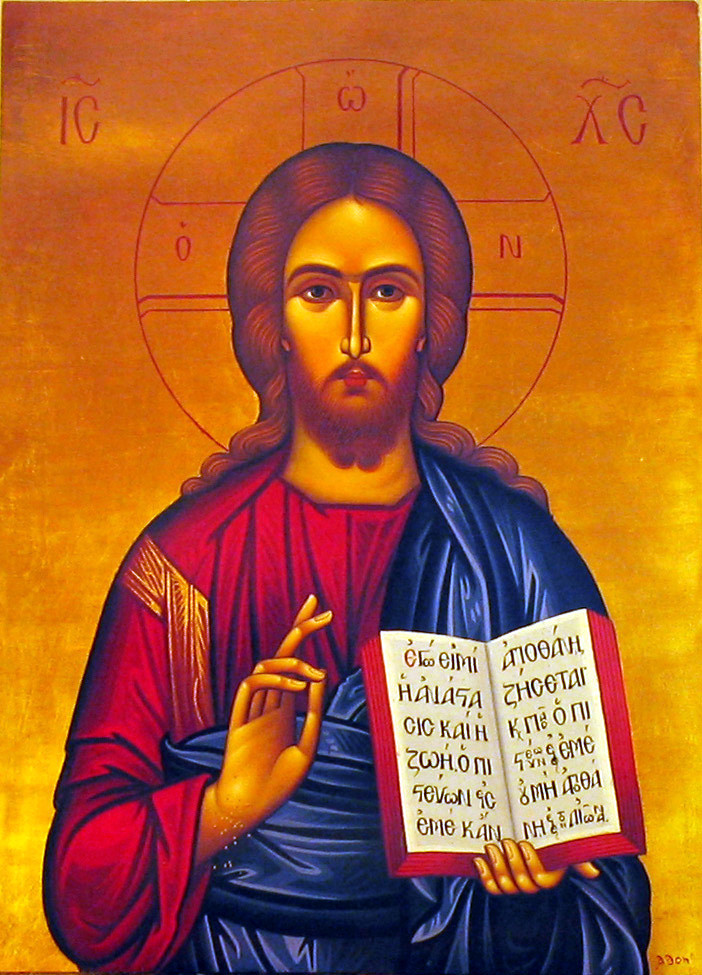
Two points refute this:
 First, the Commandment specifically mentions heaven, earth, sea, etc. God seems to be pointing out the type of worship the Israelites encountered in their pagan neighbors like Egypt, Babylonia, Philistia, Canaan, etc. In other words, “heavens,” meaning astrology, “earth,” meaning animism and nature worship, and “sea” meaning various forms of aquatic idolatry, such as Nile worship. So, God is not railing against the inherent evil of an image, but against the practices of the Israelite neighbors, which included any or all of the above.
(Ironically, many will allow an American flag - replete with eagle at the top, symbol of Roman power - to be in their places of worship without a peep!)
3. The Bible itself is full is symbolism, which is merely another form of the use of images. Thus, the Holy Spirit appears in the form of a dove at Christ’s baptism. A dove, then, is legitimately used as an image of the Holy Spirit. The paschal lamb is an image of Christ, and so on. God presents Himself to us in Scripture through a variety of images. Human fathers, then, are an image of our heavenly Father. St. Paul, in Colossians 1:15, says that Christ is the image (Greek is “ikon”) of the invisible God. It was, in fact, the Jews who were enraged at Christ’s claim of divinity, a claim that provoked their erroneous zeal against holy images. How could the invisible Jehovah be Incarnate in a human image? To the Pharisees this was idolatry. But the catholic view gives due honor to the Incarnation by recognizing the validity and holy nature of images as part and parcel of the Incarnation, and this was the reasoning of Nicea II.
5. In Acts 19:11-12, cloths and handkerchiefs are touched by St. Paul, and are then placed upon those possessed and the spirits are driven out by these “relics.” Likewise, the woman with an issue of blood touches the hem of Jesus’ garment and “virtue goes forth from him” to heal her. The bones of Elisha even resurrect a dead soldier (2 Kings 13): this is the entire principle behind relics. Things–matter–stuff can be consecrated/sanctified for a holy purpose. Thus, Jesus spits in the sand and makes clay, rubbing it on the blind man’s eyes to heal him. Jesus could have simply spoken a word and healed the man, but in this instance He chose to use mud–stuff, to do the miracle. We call this the “Incarnational Principle.” It is the same thinking behind all sacramental practice.
6. Likewise, in the OT period, even places were holy. Places like Mt. Sinai, the Temple, etc. But this practice is not rejected in the NT, contrary to what many Protestants may think. In John 5, there is a pool where an angel stirs up the water and the first to enter the pool is healed. This is the principle behind shrines and healing icons. In 2 Peter 1:16-18, St. Peter calls the mountain that he witnessed the transfiguration on the “holy mountain.” So, even in the New Testament the principle of holy places is not abolished as something strictly Old Testament. One sees, then, that there is biblical basis for the catholic practices of relics, images and icons. If there is discernment, it must lie not with strict prohibition, but with regard to application.

“We do not worship, we do not adore [non colimus, non adoramus], for fear that we should bow down to the creature rather than to the Creator, but we venerate [honoramus] the relics of the martyrs in order the better to adore Him whose martyrs they are.” Against Riparium -St. Jerome
“We by no means consider the holy martyrs to be gods, nor are we wont to bow down before them adoringly, but only relatively and reverentially.” Against Julian -St. Cyril of Alexandria
“We, the Christian community, assemble to celebrate the memory of the martyrs with ritual solemnity because we want to be inspired to follow their example, share in their merits, and be helped by their prayers. Yet we erect no altars to any of the martyrs, even in the martyrs’ burial chapels themselves.”

| Cathedral Choral Society, Washington National Cathedral - Ye watchers and ye holy ones 17c | |
| | ||
| Found at bee mp3 search engine | |
 In the days before widespread literacy, the Church taught with images. Cultural commentators tell us that images are making a come-back (TV, YouTube, etc.) as the power of the written word seems to diminish among the hoi polloi. While this is to be lamented, all is not lost. Again - the Church taught the faith this way for over a millenium.

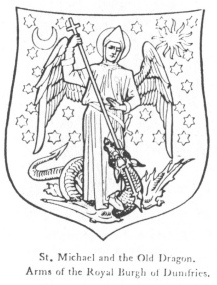
 Try noticing where the spear is placed.
 Why?
Why? One of the best loved Christmas Carols is "Good King Wenceslas." In 1853, John Mason Neale chose Wenceslas as the subject for a children’s song to exemplify generosity. It quickly became a Christmas favorite, even though its words clearly indicate that Wenceslas ‘looked out’ on St. Stephen’s Day, the day after Christmas. So Good King Wenceslas is actually a Boxing Day carol! For a tune, Neale picked up a spring carol, originally sung with the Latin text ‘Tempus adest floridum’ or ‘Spring has unwrapped her flowers’ (see below). This original spring tune was first published in 1582 in a collection of Swedish church and school songs.
 Jolly Old St. Wenceslas
Intergenerational Appeal
 Further, the appeal to walk in the steps that others have forged for us is being used in Benedict XVI's appeal - on this Feast of St. Winceslas - to Europe to recover her Christian patrimony before she reverts to barbarism.
In His Master’s Steps
| Good King Wenceslas (76.76D) | |
| | ||
| Found at bee mp3 search engine | |
 Sources 1, 2, 3, & 4.
 Feast of Our Lady of Walsingham
 Until the martyrdom of St. Thomas a Becket at Canterbury in 1170, Walsingham was England's most celebrated and visited shrine. Many miracles were attributed to Our Lady of Walsingham, including one in which Kind Edward I was saved from a piece of falling masonry. There constructed shrine was recently voted England's favourite spiritual place in a poll of BBC Radio 4 listeners.
 The Feast is also a time of strong intercession for Pro-Life, so join us in praying for the cause.