2010-03-04

Returning the favor

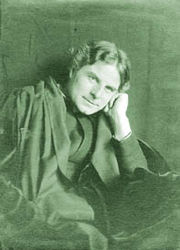
There's an old joke that runs "God made man in His own image...and we've been returning the favor ever since." As Calvin said, our hearts are idol factories. If we are not busy filling our minds with the person and work of the true God as He has revealed Himself in the Scriptures, we will paint a god of our own imagining. Hear the sage words of the venerable Bishop of Liverpool.

“Beware of manufacturing a god of your own: A god who is all mercy but not just, A god who is all love but not holy, A god who has a heaven for everybody but a hell for none. Such a god is an idol of your own. The hands of your own fancy and sentimentality have made him. He is not the God of the Bible.”

Bishop J.C. Ryle, DD


John Charles Ryle (1816-1900) served the Church of England from 1841 to the year of his death. Thoroughly evangelical and uncompromising in his principles, he became widely known for his prolific writing and his faithful service as a pastor. The last twenty years of his life he served as Bishop of Liverpool.

2010-03-03

Homeschooling WINSday

Okay...I know this is supposed to be "Worship Wednesday"...but I've sorta got that covered at the parish blog.

Today I just want to briefly highlight a that a German couple has been granted political asylum in the US because...get this...they wanted to home educate their children. Homeschooling is illegal in Germany. After having their children forcibly removed and taken to school, they contacted the HSDLA who filed on their behalf.

I was glad to hear that they'll be settling in what used to be my back yard, Morristown, TN.

2010-03-02

Mick Truman on Psalm 51

Listen to audio track of this song

Have mercy, O God

© 2008 Mick Truman
Credits: Mick Truman - vocals, acoustic guitars, piano

shedrecordings


Refrain:

  • Have mercy, O God,
    have mercy, O God
    1. Have mercy, O God, in your kindness,
      in love and compassion set me free,
      O wash me more and more from my guilt and my sin.
      O cleanse me, O God, O cleanse me, O God.
    2. A pure heart create for me, O God,
      your Spirit, O Lord, within my heart,
      your presence, O God, is my only desire.
      O heal me, O God, O heal me, O God.

    3. Salvation, the joy that you send to me,
      your presence and Spirit give me strength.
      Your glory and praise I will sing and proclaim.
      O save me, O God, O save me, O God.
    © 2008 Mick Truman

    downloaded from www.micktruman.com

    Copyright notice:

    Please contact us using the website contact form for permissions or email copyright@micktruman.com.

    2010-02-26

    Time for a new Vestarian Controversy

    From the you can't make this stuff up file...


    IVOR - In church, you come as you are. That's especially true inside the Whitetail Chapel in Ivor. Clothing is optional for everyone from the pastor to the congregation.
    "I really don't think God cares what you wear when you worship," said Richard Foley, a member of the congregation. "The thing is worship."
    Churchgoers like Foley have no problem getting the word of God from a pastor in his birthday suit.
    "Some of the biggest moments in Jesus' life he was naked," Pastor Allen Parker said. "When he was born he was naked, when he was crucified he was naked and when he arose he left his clothes in the tomb and he was naked. If God made us that way, how can that be wrong?"
    Pastor Allen says the congregation is a family-oriented one and is very involved in helping others.
    The Whitetail Chapel is part of the Whitetail Nudist Resort, the only year-round nudist resort in Virginia. It opened in 1984 and business is booming. More than 10,000 people visited last year and business is up 12 percent from a year ago.
    "Obviously, we're doing something people like," said Michael Dougherty, the resort's office manager.
    Visitors say being a nudist is about being free from societal judgments. They say it's a stress-free environment where everyone is equal and there's no pressure to be anything than who you really are.
    The pastor agrees.
    "I consider this a gift and a privilege God has given me," said Pastor Allen. "They're caring, they're understanding, and they're community and family oriented. We have one of the most involved chapels anyplace around. I'll put our church up against others around."

    2010-02-18

    Historical Anglicanism

    “The English Church happens to base herself in a special manner upon history–she appeals to the Scriptures and primitive antiquity for her theology, [* Articles VI., VIII., etc.] to the ancient Fathers for her ritual, [* The Preface Concerning the Service of the Church, Article XXIV., etc.] to Catholic tradition for her ceremonial; [* The Preface Of Ceremonies, Canon 30 (1603), Canon & (1640), etc.] she refers us to the second year of Edward VI for her ornaments, [* The Ornaments Rubric] and to the later middle ages for the arrangement of her chancels. [* "And the chancels shall remain as they have done in times past." (First inserted in 1552.)] [24/25] Her formularies, therefore, cannot be understood without a good deal of historical knowledge. Some people may object to this, and may ask–Why should they be bound by documents that are two or three hundred years old? But the fact remains that they are so bound, whether they like it or not; and that the whole intention of the Reformers, as shown from end to end of the Prayer Book, Articles, and Canons, was to bind them to principles that are nearer two thousand than two hundred years of age. Nor will they be released from this bondage to historic continuity till the same authority that imposed it shall have removed it,–which will not be for a long time to come. The attempts that have been hitherto made at throwing off this light yoke have not been so conspicuously successful in their results as to encourage us to proceed. Therefore I ask Churchmen to renounce those futile experiments of private judgment, and to throw themselves into the task of realising in its entirety that sound Catholic ideal which the defenders of the English Church preserved for us through the most troublous period of her history."
    – The Rev'd Dr. Percy Dearmer
    Loyalty to the Prayer Book

    2010-02-16

    Ryle on Frequent Communion & Sanctification


    "The person that goes regularly and intelligently to the Lord's Table finds it increasingly hard to yield to sin and conform to the world."

    ~ J.C. Ryle, first Bishop of Liverpool


    You will have multiple opportunities for Table Fellowship with Our Lord this Lent - on Sundays and Wednesdays. I have found that since joining a sacramental church, my personal holiness has increased. I attribute this directly to receiving the Body & Blood of Our Lord, with the assurances of an apostolic priesthood. (When I was in a non-apostolic church, we still received weekly - but I'd be more inclined to say "weakly" since it did not have the sanctifying effect it has on me now.)

    2010-02-15

    President's Day Tridentine Style

    Fidem meam obligo
    vexillo civitatum
    Americae Foederatarum,
    et rei publicae
    pro qua stat,
    uni nationi
    Deo ducente,
    non dividendae,
    cum libertate
    iustitiaque
    omnibus.

    2010-02-10

    CofE General Synod Affirms ACNA


    from ACNA:

    Today, the General Synod, the national assembly of the Church of England, meeting in London February 8-12, affirmed the Anglican Church in North America’s desire “to remain within the Anglican family.”

    The Most Rev. Robert Duncan, archbishop of the Anglican Church in North America, thanked Mrs. Lorna Ashworth of Chichester for bringing the church to the attention of the General Synod. “We are very grateful to Mrs. Ashworth and the scores of other friends in the Synod of the Church of England for all they did to give us this opportunity to tell our story to the mother church of the Anglican Communion. It is very encouraging that the synod recognizes and affirms our desire to remain within the Anglican family.” said Archbishop Duncan.

    A private member’s motion, put forward by Mrs. Ashworth, and subsequently amended by the Synod, states that “this synod…recognize and affirm the desire of those who have formed the Anglican Church in North America to remain within the Anglican family.” The motion passed by a resounding 309 – 69 margin (with seven abstentions).

    The motion was amended by the Right Reverend Michael Hill, the Bishop of Bristol. His purpose, in his own words, was “(1) to encourage those who are part of the Anglican Church in North America; (2) to commend the process of recognition afforded by the Instruments of the Anglican Communion; and (3) to ask the Archbishop of Canterbury to report progress back to Synod in a year’s time.”

    The discussion at Synod presented an important opportunity for members of the Anglican Church in North America, joined by many friends in the United Kingdom, to share the vision and mission of the church with fellow Anglicans. “We are deeply thankful that we were given the opportunity to tell the Synod about our church, and our vision for reaching North America with the transforming love of Jesus Christ. This chance to speak directly to our Anglican family was very rewarding. We look forward to working with the friends we made and reaching out to others in the years ahead,” said Bishop Donald Harvey, who, with Mrs. Cynthia Brust, Dr. Michael Howell, and the Rev. Dr. Tory Baucum, represented the Anglican Church in North America in preparation for the Synod vote.

    2010-02-09

    Thinking forward to Valentines Day

    Love Your Enemies Pictures, Images and Photos
    "Woe unto you, when all men shall speak well of you! for so did their fathers to the false prophets." Luke 6:26

    Beloved, believe not every spirit, but try the spirits whether they are of God: because many false prophets are gone out into the world. 1John 4:1


    Beloved, follow not that which is evil, but that which is good. He that doeth good is of God: but he that doeth evil hath not seen God. 3 John 1:11

    Prayer for Enemies

    Lord Jesus Christ, Who didst command us to love our enemies, and those who defame and injure us, and to pray for them and forgive them; Who Thyself didst pray for Thine enemies who crucified thee: grant us, we pray, the spirit of Christian reconciliation and meekness, that we may heartily forgive every injury and be reconciled with our enemies. Grant us to overcome the malevolence and offences of people with Christian meekness and true love of our neighbor. We further beseech Thee, O Lord, to grant to our enemies true peace and forgiveness of sins; and do not allow them to leave this life without true faith and sincere conversion. And help us repay evil with goodness, and to remain safe from the temptations of the devil and from all the perils which threaten us, in the form of visible and invisible enemies. Amen.


    From the Orthodox Christian Foundation

    Thanks to Ministry Growers Blog for some provocative art work.

    2010-02-05

    Ethical Blindness of Monism

    Within Liberal Gnostic Christianity, it has become popular to dabble with Eastern Mysticism and modern neo-paganism (i.e., panentheism and pantheism). Many on that track seem to think that the underlying monism* will lead to greater peace on earth. And they bolster it by making a neophyte error by claiming it is more monotheistic than classical transcendent Judaeo-Christian theism.

    *What is monism, you ask? It's the idea that there is only ONE. All differences we recognize are illusions, and thus the only truth is nonduality. That is, that all distinction, discrimination, differentiation is a lie. There is no difference between me & you, my good & your good, our good & the world's good. The reality of our interconnectedness is taken to an extreme form that collapses all distinction - within Hindu, this is known as seeing that all is Brahman (a monad); Buddhism sees this collapse of distinction as reaching enlightenment.

    But there's a huge ethical problem that gets little to no thought - what of GOOD and EVIL? Does saying they are the same make it so? Or does it simply try to step beyond that distinctive?

    If non-duality is the truth (and how this would be, I don't know - seeing as if it's TRUE it's also FALSE), then PEACE and WAR are also the same thing. Thus there is no meaningful distinction to be made in making war on your neighbor or helping them with aid. There is no difference between rape and marital love. There is no difference between a murderer with a knife and a surgeon with a scalpel - those would (under a monistic view) be false distinctions.

    Your common sense buzzer should be ringing pretty loud now, but for these starry-eyed educated idiots it just doesn't. In most cases, they've divorced themselves from historic Christianity and thus are left floating in the failed experiments of heresies past rather than the tried-and-true character of orthodox Christianity. Thus they commit errors out of their novelty, thinking they've come upon a new truth which - in fact - is just an old error that's already been long- consigned to the ash-heap of divine-human relations.

    A new study helps to show the dead end that is monism - and it focuses on the undeniable atrocities committed (and defended by) fervent Buddhist, Taoist, and Shintoist religious people. The horrors of the Japanese campaign in China were papered over by their religious inability to make any meaningful distinction between morality and immorality. Call it the Zen of violence. Will the "emergent church" wake up to the dead end of monism? Time will only tell. But the Church of Jesus Christ, indefectible and catholic, will continue - even if She is temporarily reduced in numbers while heretics occupy her territory.

    2010-02-04

    This explains the rise of EMO

    From World Magazine. At least now we know why emo came on the scene. Thanks, Dr. Spock.

    Spanking gets a good report card

    This just in (sorry, kids): Spanking children makes them happy.

    According to a recent Wall Street Journal article by Mollie Ziegler Hemingway, a new study by Calvin College’s Marjorie Gunnoe found that teens who were spanked as children ended up with a “sunnier outlook,” were “better students,” had “more positive academic records and optimism about their future,” and volunteered more than their unspanked peers. In fact, Hemingway wrote, “the never-spanked group never scored the best on any of the 11 behavioral variables analyzed.”

    Hemingway mentioned two extremes in the spanking camp, No Greater Joy’s Michael Pearl on the spanking side and ParentingInJesusFootsteps.org on the non-spanking side, as well as Scriptural proof texts for corporal discipline. Before anyone accuses her of abuse, Hemingway jumps in with admonitions of balance, reminders to use all of Scripture for discipline, not just the verses about the rod, and for this, we salute her. Too many—like the woman I know who swatted her children 400 times for telling a lie—vehemently adhere to passages on the rod outside of the context of their balancing counterparts: not provoking our children to wrath and being sure we put on humility, gentleness, and forgiveness in our parenting.

    Parents, Christian or not, will likely continue the spanking debate ad infinitum, the question being is spanking abuse or an effective tool in the parenting tool belt? No rational person would advocate lashing out in anger and beating a child (which is what most people in the anti-spanking camp call “spanking”). Yet many of those who claim to be against spanking because of its “abusive” nature think nothing of verbally tearing into their children, giving them the silent treatment, sending them to their rooms for hours on end to contemplate their misbehavior, shaming them, or scolding them within an inch of their life. Because no bruises are visible, they feel their form of discipline is less harmful than spanking.

    I recall a neighbor who vehemently vocalized her distaste for those who spank their children, yet regularly shouted so loudly at her little boy that my father once said, “Boy, it would be better if she shut her mouth and just gave that child a good spanking.”

    Is spanking abuse? It can be. But, with new studies like Gunnoe’s showing the upsides of corporal discipline, opponents might want to reevaluate their tired rhetoric, because the proof that spanking is good discipline is starting to show up in the parental pudding.


    If you need help in learning how to discipline properly (including limited, but realistic, use of corporal punishment), I advocate Dr. Dobson's classic Dare to Discipline. However, we also used child training (not just punishment, but positive training) inspired by To Train Up a Child and Above Rubies.

    2010-01-26

    Conversion to ProLife

    This report from Chuck Colson is an excellent follow up from yesterday's reflection on the Conversion of St. Paul.
    People often ask me if I believe in miracles. Of course I do! I see them every day. Because a changed heart is nothing short of a miracle.

    If your conscience required it, could you turn your back on the job you’d dedicated your entire adult life to?

    That’s what Abby Johnson did. After nine years as director of the Planned Parenthood clinic in Bryan, Texas, Johnson left in October to join the Coalition for Life, a group that holds prayer rallies outside that same clinic—and a group of which she had once been a vocal critic.

    Johnson cites two reasons for her decision to walk away from Planned Parenthood. First, she says, it bothered her that the organization was so focused on performing more and more abortions in order to bring in more and more money.

    Johnson had believed that pregnancy prevention was Planned Parenthood’s main goal. But, she says, “It seemed like maybe that’s not what a lot of people were believing any more, because that’s not where the money was. The money wasn’t in family planning, the money wasn’t in prevention, the money was in abortion.” And Johnson reports she had “a problem with that.”

    But as Johnson tells it, the moment that really changed her heart occurred when she was called in to help with an actual abortion procedure, which was not part of her regular duties.

    This was her first time watching the procedure on an ultrasound. She says, “I could see the whole profile of the baby...I could see the whole side profile. I could see the probe. I could see the baby try to move away from the probe....I just thought, ‘What am I doing?’...And then I thought, ‘Never again.’”

    Two weeks later, looking out the clinic window and seeing members of Coalition for Life outside praying, Johnson walked out of the clinic and joined them.

    She has never looked back.

    As you might expect, no one at Planned Parenthood knows quite what to make of Abby Johnson. The recriminations have been flying thick and fast. They’re accusing her of lying about why she left, of stealing files from the clinic where she used to work, of any number of other things.

    Apparently, they don’t know how to handle the idea that her conscience might have convicted her.

    But Johnson’s story should serve as a cautionary tale for pro-lifers. For all of us as a matter of fact. Especially when we’re dealing with polarizing issues like abortion, we Christians must remember that our fellow human beings are not the enemy. Here’s one where we thought the woman was. But she saw the truth.

    Remember, Paul spells it out so clearly for us in Ephesians: “For we wrestle not against flesh and blood, but against principalities, against powers, against the rulers of the darkness of this world, against spiritual wickedness in high places.”

    So even as we fight to save lives (and we’re reminded this week of the importance of that with the anniversary of Roe v. Wade) we must still keep our minds on our larger mission, which is to love the world. And it’s the only way we’re going to bring change.

    Martin Luther King said it beautifully: He whom you would change, you must first love. This means every human being—pro-life and pro-choice—because everyone is made in God’s image. And we all, as the result of the Fall, stand in need of redemption.

    So we need to do everything we can to reach out to the Abby Johnsons of the world, and pray that God will change their hearts—for their sake, and for His glory.

    If it happened here with Abby Johnson; it can happen again.

    Further Reading and Information

    Planned Parenthood Clinic Director Joins Anti-Abortion Group
    ABC News | November 5, 2009

    Abby Johnson, Ex-Abortionist
    Rod Dreher | Belief Net | November 3, 2009

    Changed: Making Sense of Your Own or a Loved One's Abortion Experience
    Michaelene Fredenburg | BreakPoint BookTrends | January 20, 2010

    Heroine for Life: Lila Rose Takes on Planned Parenthood
    Mark Earley | BreakPoint Commentary | August 20, 2009

    Mugged by Ultrasound
    David Daleiden and Jon A. Shields | Weekly Standard | January 25, 2010

    Taxman

    Obama mashup to the Beatle's "The Taxman."

    2010-01-25

    Conversion of St. Paul

    Lately, I've been dealing with some folks on another blog that, by their defense of a heresiarch and their own indifference to doctrine while holding office in a church, have become enemies of Christ and His gospel. My first, human reaction was to get angry. But God has been dealing with me - breaking my heart for those who find themselves breaking upon the Law of God.

    And today, in my Daily Office recitation, I come upon the story of Paul's conversion on this its feast. And in singing the office hymn, God reminded me that I should never give up hope for those who are now enemies of the Gospel. God may yet make them His greatest messengers. That's hope and change you can believe in!

    Lord God of our fathers, who in reconciling the world to yourself have made friends of your enemies, forgive me when I forget how I was your avowed enemy before you won my heart. Use me to reach those who are set against you, through the love and grace of Our Lord Jesus Christ, who lives and reigns with you and the Holy Spirit in everlasting unity. Amen.

    Clyde McLennan - We sing the glorious conquest .mp3


    Found at bee mp3 search engine

    We sing the glorious conquest,
    Before Damascus’ gate,
    When Saul, the Church’s spoiler,
    Came breathing threats and hate;
    The rav’ning wolf rushed forward
    Full early to the prey;
    But lo! the Shepherd met him,
    And bound him fast today.

    O glory most excelling
    That smote across his path!
    O light that pierced and blinded
    The zealot in his wrath!
    O voice that spake within him
    The calm, reproving word!
    O love that sought and held him
    The bondman of his Lord!

    O Wisdom ord’ring all things
    In order strong and sweet,
    What nobler spoil was ever
    Cast at the Victor’s feet?
    What wiser master builder
    E’er wrought at Thine employ
    Than he, till now so furious
    Thy building to destroy?

    Lord, teach thy Church the lesson,
    Still in her darkest hour
    Of weakness and of danger,
    To trust Thy hidden power;
    Thy grace by ways mysterious
    The wrath of man can bind,
    And in Thy boldest foeman
    Thy chosen saint can find.

    2010-01-23

    Remembering Egypt

    I've been interacting with my dear friend and sister in Christ, Viola Larson, at her blog. She broke the heart-wrenching news that heresiarch John Shuck has been named interim campus minister at ETSU's Presbyterian Student Fellowship (PSF).

    It breaks my heart with the irony. PSF was an outgrowth of the college ministry that First Presbyterian Church undertook to college students way back when my mom was on campus (and it was called ETSC)! When I went to ETSU, I didn't even know that my parents had been Presbyterians! (Dad wanted to go to the Methodist church of his boyhood, and that's what was happening by the time I came on the scene.)

    Later, it was at PSF that my sense of Christian community had been restored. (After wandering in the wilderness, I was trying to have a go at "lone ranger" self-styled Christianity - which was a mess!) There, I experienced a call to gospel ministry. There, I participated in faith-community leadership. There, I met my wife and made friends. There, I learned and taught the faith found in the Scriptures and articulated in the Creeds and Catechisms and Confessions of the Reformed Churches.

    The irony comes because it was my presbytery's impotence (juridically and personally with the elders) to act when faced with someone who is undeniably a heretic in the ministerial office that drove me out of the PCUSA. At that moment, I recognized that my presbytery was not a true local expression of the Christian Church - even if there were true individual churches within it. (Ordination is granted by the presbytery, and ministers are members of the presbytery - not an individual church.) That left me with two options: moving to another presbytery for relief of conscience, or leaving the PCUSA for a true Church. I opted for the latter, as there are virtually no presbyteries that take an interest in doctrinal rigor (even the so-called conservative ones, who year after year feign ignorance or disinterest in what happens around them).

    I'm glad to be out of Egypt, though her fleshpots are still remembered. I'm also glad that there are still people like Viola, Toby, Dave, and many others who soldier on in enemy territory. God speed to them. We are united by something far deeper than a denomination or distinctive. We share the faith once delivered in the Scriptures and expressed in the catholic creeds and definitions.

    And that makes all the difference in this world, and the next.

    2010-01-21

    461 Years of Biblical Beautiful Worship

    What Began in 1549 with an Act Of Parliament Endures Today!

    Archbishop Thomas Cranmer’s words of worship (and Merbecke’s chant settings of those words) will resonate Sunday in Anglican churches that value scripture and tradition — and are reasonable enough to practice “inclusion” regarding conservative Anglicans. “Conservative” in this sense means “conserving and practicing that which is good.”

    Cranmer’s Prayer Book was proclaimed the official liturgy of England by Parliament on January 21, 1549. The Act of Uniformity (text here), as the measure was called, addressed “The Book of the Common Prayer and Administration of the Sacraments and other Rites and Ceremonies of the Church after the use of the Church of England.”
    Several minor changes have been made over the centuries, but the towering language — great language for great things — and, more important, the core faith expressed by that language, remain the same in the 1928 BCP. This magnificent book is the keystone of our faith today in the Anglican Church as well as other churches that have adopted it or portions of it (normally through the 1662 version in legal at the time of the great missionary movement during the 18 & 19th centuries). Moreover, the classic Prayer Book is treasured as a jewel in the crown of the entire Western Canon by readers and scholars who appreciate the English language.
    It wasn’t until 1979 that the first major revisions appeared in the language and, consequently, in the meaning of the religion itself, chiefly in the secular “Baptismal Covenant.” This sociopolitical phrase is regarded by many revisionists, according to their own words, as the most important declaration in the liturgy. Another revision is a slight manipulation of language in the Creeds that denies the divine nature of Christ. If you haven’t noticed this sly edit hidden in plain sight, read it carefully and you’ll see.

    No small changes, these, and vexatious to the vast majority of Episcopalians, who will be happy to learn that, to paraphrase Mark Twain, reports of the death of the 1662 & 1928 BCP have been greatly exaggerated by liberal bishops and clergy. Although the 1979 book was adopted by General Convention as the official liturgy — and, as we learned at last summer’s General Convention, is now considered in revisionist circles terribly old-hat – the 1928 BCP is still in use throughout the Church wherever Episcopalians discern the difference. How quickly the 1979 went out of fashion! Yet the classic, scripture-based 1662 & 1928 BCP endures.

    If you are clergy, consider observing this pivotal day in Church history by conducting services this Sunday and next from the 1662 or 1928 BCP. You’ll leave church refreshed, renewed, and ready to take on whatever the coming week has in store.

    Cranmer Lives
    Cranmer Lives.

    2010-01-20

    Look MA, no Dems!


    It's probably the best thing that could happen to the Dems. Now they can bail on this Obamacare disaster, blame it on the Republicans, and get on track with addressing the problems we face while redirecting the ire of their extremist constituents back on the conservatives.

    Japheth lineal proof?

    An interesting study in the Daily Mail reports how Britons (and most Europeans) are descended from a group of migrating farmers out of the area now known as Syria / Iraq. I don't want to branch off into British Israelism or other nonsense, but this is a compelling vindication of Genesis 10 and the table of nations. Ancient Irish genealogies traced themselves back to Gomer (who also was the founder of the germanic peoples).

    Japheth is traditionally seen as the ancestor of Europeans, as well as some more eastern nations; thus Japhetic has been used as a synonym for Caucasians. Caucasian itself derives in part from the assumption that the tribe of Japheth developed its distinctive philogenic characteristics in the Caucasus, where Mount Ararat is located. The term Japhetic was also applied by the early linguists (brothers Grimm, William Jones, Rasmus C. Rask and others) to what later became known as the Indo-European language group, on the assumption that, if descended from Japheth, the principal languages of Europe would have a common origin, which apart from Finno-Ugric, Kartvelian, Pontic, Nakh, Dagestan, and Basque, appears to be the case.

    2010-01-18

    Upon this Rock

    Petros, Peter, which means “rock” made a rock-solid confession, when asked by Christ whom men say that he is, “You are the Christ, the Son of the Living God!” This is divine revelation, not given to us by flesh and blood, but by God the Holy Spirit.

    And our Lord said to Peter, “Upon this rock [petra], I will build my church and the gates of hell shall not prevail against it” [Matt. 16]. But shortly thereafter Christ was rebuking the rock-man when he wanted to resist, with all good intentions, the very rock upon which the church is built: Christ and Him crucified!

    It is an interesting paradox here portrayed for us in Matt. 16, a very wholesome and worthy lesson for us all. The rock of offense, is the rock upon which the church is built: a bloody, suffering and dying Jesus, scorned and rejected, cross and suffering, not some glorious triumph, at least not in the eyes of the world. Through the deepest and lowliest and most disdainful shame and suffering is how our Lord builds His church.

    And He uses weak, human vessels, like St. Peter, and the words of His confession. He used a man who would betray him in public, and denounce him through cussing like a sailor! And yet that man's mouth, through preaching, would later open the kingdom to the Gentiles.

    Upon the preaching of the confession of Peter, our Lord continues to call, gather, enlighten and sanctify the whole Christian Church on earth, and He promises, to the very end, to keep it with Jesus Christ, our head and master, in the one true faith.

    Praise God for the confession of St. Peter! Glory to Christ for the rock upon which the church is built and for the “rock-men” and “rock-women” who proclaim and share and teach and spread the Word abroad into all the world, in all the wonderful and various vocations given among us! Praise be to God for the confession of St. Peter, the confession of the church throughout all the world.

    The readings appointed for today are:
    First lesson: Acts 4:8-13
    Psalm: Psalm 23
    Epistle: 1 Pet. 5:1-4
    Gospel: Mark 8:27-9:1

    Let us pray:

    Almighty Father, who inspired Simon Peter, first among the apostles, to confess Jesus as Messiah and Son of the Living God: Keep your Church steadfast upon the rock of this faith, that in unity and peace we may proclaim the one truth and follow the one Lord, our Savior Jesus Christ; who lives and reigns with you and the Holy Spirit, one God, now and for ever.

    For a Roman perspective, look here.

    For an evangelical's perspective, see here (or this online master's thesis which provides patristic as well as exegetical support).