
4 minute video of 2000 years of church history!
The worst part...I know a seminary where you can get an MDiv and you don't even have to know as much history as is in this!
2009-10-05


2009-10-03

2009-10-02
Keeping the Tuna Safe
Hilarious video featuring curious cats and those automated Halloween candy bowls.
2009-10-01
Theology of Icons
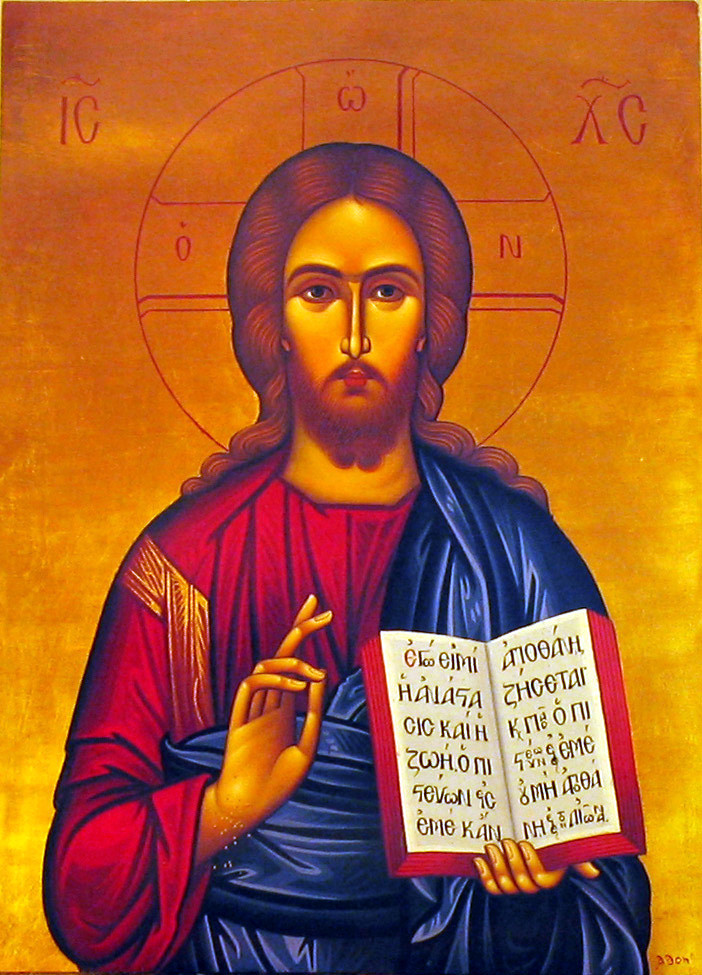
The standard charge of meticulously-Protestant Christians is that catholics are idolatrous because they will reverence icons, altars, the sacrament and other persons. If we thought that these things were gods, that would be a valid charge. Indeed, there are badly instructed catholics who may have superstitious ideas about such things (particularly in places like the Philippines, Latin America, etc.). However, the biblical case for holy images is, I believe, overwhelming when one takes everything into account. Furthermore, it’s been settled by the Seventh Ecumenical Council (Nicea II in 787), which many Protestants claim to adhere to!
Nicea II based its argumentation upon the writings and argumentation of Ss. Theodore of Studium, Germanus of Constantinople, and John of Damascus. St. John of Damascus’ famous treatise in defense of holy icons forms the basis for the argument below. I will also include some quotes from various Fathers defending images, showing that this is part of the undivided practice and faith of the church.
Nicea II based its argumentation upon the writings and argumentation of Ss. Theodore of Studium, Germanus of Constantinople, and John of Damascus. St. John of Damascus’ famous treatise in defense of holy icons forms the basis for the argument below. I will also include some quotes from various Fathers defending images, showing that this is part of the undivided practice and faith of the church.
1. Really the only apparent biblical argument against images is the Second Commandment. It is argued that there are to be no images made of God, or anything in heaven or earth. In response to this charge, it is important to note that this view is actually inconsistent and impossible. We should be careful to note that the literal wording of the Command forbids all making of any images of anything in heaven, earth, sea, etc. Reformed theologian Charles Hodge mentions a reformed colleague of his at Princeton who actually refused to use maps that pictured things like mountains, lakes, etc. This is a consistent outworking of the Protestants position. Such a position is totally ridiculous, but he was attempting to be as consistent with his heretical reading of the Second Command.
Two points refute this:
First, the Commandment specifically mentions heaven, earth, sea, etc. God seems to be pointing out the type of worship the Israelites encountered in their pagan neighbors like Egypt, Babylonia, Philistia, Canaan, etc. In other words, “heavens,” meaning astrology, “earth,” meaning animism and nature worship, and “sea” meaning various forms of aquatic idolatry, such as Nile worship. So, God is not railing against the inherent evil of an image, but against the practices of the Israelite neighbors, which included any or all of the above.
- Second, God himself commands many holy images to be placed inside the Holy of Holies! 1 Kings 6 describes how ornate the inside of the Holy of Holies was, replete with images of Cherubim and Seraphim, and of course the Ark itself had two huge, golden Cherubim over its lid.
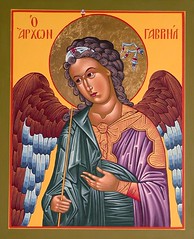
If images were inherently evil, God wouldn’t command His own tabernacle/temple to be full of them. Therefore, the Second Command cannot mean absolutely no religious images. It forbids pagan idolatry, and clearly the temple worship which had images was not idolatry.

(Ironically, many will allow an American flag - replete with eagle at the top, symbol of Roman power - to be in their places of worship without a peep!)
3. The Bible itself is full is symbolism, which is merely another form of the use of images. Thus, the Holy Spirit appears in the form of a dove at Christ’s baptism. A dove, then, is legitimately used as an image of the Holy Spirit. The paschal lamb is an image of Christ, and so on. God presents Himself to us in Scripture through a variety of images. Human fathers, then, are an image of our heavenly Father. St. Paul, in Colossians 1:15, says that Christ is the image (Greek is “ikon”) of the invisible God. It was, in fact, the Jews who were enraged at Christ’s claim of divinity, a claim that provoked their erroneous zeal against holy images. How could the invisible Jehovah be Incarnate in a human image? To the Pharisees this was idolatry. But the catholic view gives due honor to the Incarnation by recognizing the validity and holy nature of images as part and parcel of the Incarnation, and this was the reasoning of Nicea II.
4. Some Protestants may hold to the validity of images, but deny the reverence paid to them as idolatry. We must ask, then, does Scripture provide any warrant for reverencing anything created? All are agreed that worship (latria) is to be paid only to God. But what about reverence, as in dulia? Is it licit to give homage, reverence, even prostration to any created thing/image? I believe the biblical answer is yes, since we see several times in Scripture men in authority being reverenced. For example, Joseph, as a ruler in Egypt, deserves the homage of his brothers and sisters, and thus they “bowed themselves before him with their faces to the ground” (Gen. 42:7). The company of the Lord’s prophets bow down before Elijah in reverence in 2 Kings 2:15. Surely if it were inherently wrong to bow before a created thing (and Joseph and Elijah were created), they would have rebuked others for so doing. But, there are numerous examples of this in Scripture. St. Paul says to give “honor to whom honor is due” (Romans 13:7), and if anyone is due honor, it is the clergy - especially bishops - who labor in the word (of double honor according to Paul in 1 Tim. 5:17). And St. Augustine against Faustus the Manichaean:
5. In Acts 19:11-12, cloths and handkerchiefs are touched by St. Paul, and are then placed upon those possessed and the spirits are driven out by these “relics.” Likewise, the woman with an issue of blood touches the hem of Jesus’ garment and “virtue goes forth from him” to heal her. The bones of Elisha even resurrect a dead soldier (2 Kings 13): this is the entire principle behind relics. Things–matter–stuff can be consecrated/sanctified for a holy purpose. Thus, Jesus spits in the sand and makes clay, rubbing it on the blind man’s eyes to heal him. Jesus could have simply spoken a word and healed the man, but in this instance He chose to use mud–stuff, to do the miracle. We call this the “Incarnational Principle.” It is the same thinking behind all sacramental practice.
6. Likewise, in the OT period, even places were holy. Places like Mt. Sinai, the Temple, etc. But this practice is not rejected in the NT, contrary to what many Protestants may think. In John 5, there is a pool where an angel stirs up the water and the first to enter the pool is healed. This is the principle behind shrines and healing icons. In 2 Peter 1:16-18, St. Peter calls the mountain that he witnessed the transfiguration on the “holy mountain.” So, even in the New Testament the principle of holy places is not abolished as something strictly Old Testament. One sees, then, that there is biblical basis for the catholic practices of relics, images and icons. If there is discernment, it must lie not with strict prohibition, but with regard to application.

“We do not worship, we do not adore [non colimus, non adoramus], for fear that we should bow down to the creature rather than to the Creator, but we venerate [honoramus] the relics of the martyrs in order the better to adore Him whose martyrs they are.” Against Riparium -St. Jerome
“We by no means consider the holy martyrs to be gods, nor are we wont to bow down before them adoringly, but only relatively and reverentially.” Against Julian -St. Cyril of Alexandria
“We, the Christian community, assemble to celebrate the memory of the martyrs with ritual solemnity because we want to be inspired to follow their example, share in their merits, and be helped by their prayers. Yet we erect no altars to any of the martyrs, even in the martyrs’ burial chapels themselves.”
No bishop, when celebrating at an altar where these holy bodies rest, has ever said, “Peter, we make this offering to you”, or “Paul, to you”, or “Cyprian, to you”. No, what is offered is offered always to God, who crowned the martyrs. We offer in the chapels where the bodies of those he crowned rest, so the memories that cling to those places will stir our emotions and encourage us to greater love both for the martyrs whom we can imitate and for God whose grace enables us to do so. This is part of what we mean when we confess the communion of the saints.
But the honor strictly called “worship”, or latria, that is, the special homage belonging only to the divinity, is something we give and teach others to give to God alone. The offering of a sacrifice belongs to worship in this sense (that is why those who sacrifice to idols are called idol-worshipers), and we neither make nor tell others to make any such offering to any martyr, any soul, or any angel. If anyone among us falls into this error, he is corrected with words of sound doctrine and must then either mend his ways or else be shunned.
Even the incense that is sometimes burned in front of ikons is merely a reiteration that we believe the whole church triumphant prays for us and cheers us on in our run of faith. The saints themselves forbid anyone to offer them the worship they know is reserved for God, as is clear from the case of Paul and Barnabas. When the Lycaonians were so amazed by their miracles that they wanted to sacrifice to them as gods, the apostles tore their garments, declared that they were not gods, urged the people to believe them, and forbade them to worship them.
The truths we teach are one thing, the abuses thrust upon us are another.
heavy h/t to Jay Dyer
Even the incense that is sometimes burned in front of ikons is merely a reiteration that we believe the whole church triumphant prays for us and cheers us on in our run of faith. The saints themselves forbid anyone to offer them the worship they know is reserved for God, as is clear from the case of Paul and Barnabas. When the Lycaonians were so amazed by their miracles that they wanted to sacrifice to them as gods, the apostles tore their garments, declared that they were not gods, urged the people to believe them, and forbade them to worship them.
The truths we teach are one thing, the abuses thrust upon us are another.
heavy h/t to Jay Dyer
2009-09-30
Libera sings the Sanctus to Pachelbel
Here's what they're singing:
- Sanctus, Sanctus, Sanctus
- Dominus Deus Sabaoth.
- Pleni sunt caeli et terra gloria tua.
- Hosanna in excelsis.
- Benedictus qui venit in nomine Domini.
- Hosanna in excelsis.
Litany to Obama?
See for yourself.
I'm betting that lady pretending to be a presbyter is on the payroll somewhere in TEC.
I'm betting that lady pretending to be a presbyter is on the payroll somewhere in TEC.
2009-09-29
Iconography for Michaelmas
Today is Michaelmas (the feast of Michael and the Holy Angels). It's pronounced "MICK-el-mus" and is a traditional starting time for school. In God's providence, it also falls immediately after Yom Kippur this year.
Collect: Everlasting God, who have ordained and constituted in a wonderful Order the ministries of angels and mortals: Mercifully grant that, as your holy angels always serve and worship you in heaven, so by your appointment they may help and defend us here on earth; through Jesus Christ our Lord, who lives and reigns with you and the Holy Spirit, one God, for ever and ever.
Readings: Psalm 103; Genesis 28:10-17; Revelation 12:7-12; John 1:47-51
 | Cathedral Choral Society, Washington National Cathedral - Ye watchers and ye holy ones 17c |  |
 | ||
 | Found at bee mp3 search engine |  |
bright seraphs, cherubim, and thrones,
raise the glad strain,
Alleluia!
Cry out, dominions, princedoms, powers,
virtues, archangels, angels' choirs,
Refrain:
Alleluia! alleluia! alleluia!
Alleluia! alleluia!
O higher than the cherubim,
more glorious than the seraphim,
lead their praises,
Alleluia!
Thou bearer of the eternal Word,
most gracious, magnify the Lord, Refrain
Respond, ye souls in endless rest,
ye patriarchs and prophets blest,
Alleluia,
alleluia!
Ye holy twelve, ye martyrs strong,
all saints triumphant, raise the song, Refrain
O friends, in gladness let us sing,
supernal anthems echoing,
Alleluia,
alleluia!
To God the Father, God the Son,
and God the Spirit, Three in One, Refrain
 In the days before widespread literacy, the Church taught with images. Cultural commentators tell us that images are making a come-back (TV, YouTube, etc.) as the power of the written word seems to diminish among the hoi polloi. While this is to be lamented, all is not lost. Again - the Church taught the faith this way for over a millenium.
Today, as I reflect on the Feast of St. Michael and All Angels, I'm struck by what the iconography teaches about our spiritual warfare. Look at these pictures and tell me what you notice.


Seeing a common theme, yet?
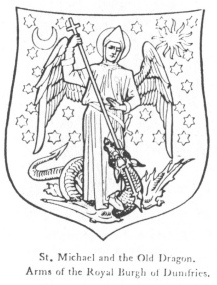
 Try noticing where the spear is placed.
Do you see it?
ALWAYS AT THE MOUTH.
(The same is true in the iconography of St. George, Patron protector of England, whose shield has been adopted as the symbol for the Anglican Church in North America.)
 Why?
Why?Because Satan's greatest tool is deception!
Our spiritual warfare consists of being sanctified in the truth and casting down arguments that hold themselves up against the truth of Christ. It's not easy - and in an age that appreciates the appearance of substance rather than substance itself - it can get you labeled as "mean" or "intolerant" or "narrow-minded."
But remember that the highest messenger of God (literal translation of archangel) is so because he constantly destroys the lies of the devil, robbing him of power in the world.
Go and do likewise.
(Here's some help.)
Holy Michael, the Archangel, defend us in battle. Be our safeguard against the wickedness and snares of the devil. May God rebuke him, we humbly pray; and do you, O Prince of the heavenly host, by the power of God cast into hell Satan and all the evil spirits who wander through the world seeking the ruin of souls. Amen.
The Prayer of Leo XIII
to be said after Mass
to be said after Mass
2009-09-28
Saintly Good King Wenceslas
 One of the best loved Christmas Carols is "Good King Wenceslas." In 1853, John Mason Neale chose Wenceslas as the subject for a children’s song to exemplify generosity. It quickly became a Christmas favorite, even though its words clearly indicate that Wenceslas ‘looked out’ on St. Stephen’s Day, the day after Christmas. So Good King Wenceslas is actually a Boxing Day carol! For a tune, Neale picked up a spring carol, originally sung with the Latin text ‘Tempus adest floridum’ or ‘Spring has unwrapped her flowers’ (see below). This original spring tune was first published in 1582 in a collection of Swedish church and school songs.
 Jolly Old St. Wenceslas
Who was King Wenceslas anyway? Wenceslas was the Duke of Bohemia who was murdered in 929 AD by his wicked younger brother, Boleslav. As the song indicates, he was a good, honest, and strongly principled man. The song expresses his high moral character in describing King Wenceslas braving a fierce storm in order to help feed a poor neighbour. Wenceslas believed that his Christian faith needed to be put into action in practical ways. Wenceslas was brought up with a strong Christian faith by his grandmother St. Ludmila (herself a convert of Saints Methodius and Cyril). Wenceslas’ own mother Drahomira, however, joined forces with an anti-Christian group that murdered Wenceslas’ grandmother, and seized power in Bohemia. Two years later in 922 AD, the evil Drahomira was deposed, and Good King Wenceslas became the ruler.
His mother secured the apostasy and alliance of her second son, Boleslas, who became henceforth her ally against the Christians. Wenceslas in the meantime ruled as the brave and pious king of Bohemia. When his kingdom was attacked, the prince of the invading army, which had been called in by certain seditious individuals, was approaching with a lance to slay him. This prince, named Radislas, saw two celestial spirits beside him; he had already seen him make the sign of the cross and then heard a voice saying not to strike him. These marvels so astonished him that he descended from his horse, knelt at the feet of Wenceslas and asked his pardon. Peace was then reestablished in the land.
In the service of God Saint Wenceslas was constant, planting with his own hands the wheat and pressing the grapes for Holy Mass, at which he never failed to assist each day. He provided for the poor and himself took what they needed to them at night, to spare them the shame they might incur if their poverty became public knowledge. He desired to introduce the Benedictine Order into his kingdom, but was struck down by a violent death before he could do so and himself enter a monastery, as he wished to do.
His piety provided the occasion for his death. After a banquet at his brother’s palace, to which he had been treacherously invited and where he manifested great gentleness towards his brother and mother, he went to pray at night before the tabernacle, as he was accustomed to do. There, at midnight on the feast of the Angels in the year 938, he received the crown of martyrdom by the sword, at the hand of his own brother.
He became Bohemia’s most famous martyr and patron saint. His picture appeared on Bohemian coins, and the Crown of Wenceslas became the symbol of Czech independence.
His mother secured the apostasy and alliance of her second son, Boleslas, who became henceforth her ally against the Christians. Wenceslas in the meantime ruled as the brave and pious king of Bohemia. When his kingdom was attacked, the prince of the invading army, which had been called in by certain seditious individuals, was approaching with a lance to slay him. This prince, named Radislas, saw two celestial spirits beside him; he had already seen him make the sign of the cross and then heard a voice saying not to strike him. These marvels so astonished him that he descended from his horse, knelt at the feet of Wenceslas and asked his pardon. Peace was then reestablished in the land.
In the service of God Saint Wenceslas was constant, planting with his own hands the wheat and pressing the grapes for Holy Mass, at which he never failed to assist each day. He provided for the poor and himself took what they needed to them at night, to spare them the shame they might incur if their poverty became public knowledge. He desired to introduce the Benedictine Order into his kingdom, but was struck down by a violent death before he could do so and himself enter a monastery, as he wished to do.
His piety provided the occasion for his death. After a banquet at his brother’s palace, to which he had been treacherously invited and where he manifested great gentleness towards his brother and mother, he went to pray at night before the tabernacle, as he was accustomed to do. There, at midnight on the feast of the Angels in the year 938, he received the crown of martyrdom by the sword, at the hand of his own brother.
He became Bohemia’s most famous martyr and patron saint. His picture appeared on Bohemian coins, and the Crown of Wenceslas became the symbol of Czech independence.
Intergenerational Appeal
Even as a young child, I remember feeling moved as I sung this jaunty, unusual carol. Recently the phrase ‘Fails my heart, I know not how, I can go no longer’ really spoke to me. It reminded me that sometimes there are times in our lives when life and its stresses seem to overwhelm us, and we feel that ‘we can go no longer.’ The response of Good King Wenceslas was most interesting. He said: ‘Mark my footsteps, my good page, Tread thou in them boldly: Thou shalt find the winter’s rage freeze thy blood less coldly.’ Wenceslas reminds us that when we are all alone, life can feel very bleak. It is at such times that solidarity with another human being can help ‘our blood freeze less coldly’. Wenceslas affirms that we are not alone, and subtly points to the basic Christmas message that Jesus our Master will never leave us in the cold.
 Further, the appeal to walk in the steps that others have forged for us is being used in Benedict XVI's appeal - on this Feast of St. Winceslas - to Europe to recover her Christian patrimony before she reverts to barbarism.
 Further, the appeal to walk in the steps that others have forged for us is being used in Benedict XVI's appeal - on this Feast of St. Winceslas - to Europe to recover her Christian patrimony before she reverts to barbarism.
In His Master’s Steps
In the last verse are the memorable words: ‘In his master’s steps he trod, where the snow lay dinted.’ The author John Neale, an Anglican priest, shows us here that the essence of true living is learning to walk in our Master’s steps. All of us need a Higher Power to help guide us along our journey. Jesus said: "If anyone would come after me (and tread in my steps), he must deny himself and take up his cross and follow me." Our challenge each Christmas is to look beyond the toys and tinsel, to see ‘the Master’s steps.’
| Good King Wenceslas (76.76D) | |
| | ||
| Found at bee mp3 search engine | |
 Sources 1, 2, 3, & 4.
2009-09-24
Prolife Piety
 Feast of Our Lady of Walsingham
Also known as Virgin by the Sea, site also known as England's Nazareth
Shrine established in 1061, priory in 1150
Commemorated September 24
In 1061 Lady Richeldis de Faverches, lady of the manor near the village of Walsingham, Norfolk, England, was taken in spirit to Nazareth. There Our Lady asked her to build a replica, in Norfolk, of the Holy House where she had been born, grew up, and received the Annunciation of Christ's impending birth. She immediately did, constructing a house 23'6" by 12'10" according to the plan given her. Its fame slowly spread, and in 1150 a group of Augustinian Canons built a priory beside it. Its fame continued to grow, and for centuries it was a point of pilgrimage for all classes, the recipient of many expensive gifts.
 Until the martyrdom of St. Thomas a Becket at Canterbury in 1170, Walsingham was England's most celebrated and visited shrine. Many miracles were attributed to Our Lady of Walsingham, including one in which Kind Edward I was saved from a piece of falling masonry. There constructed shrine was recently voted England's favourite spiritual place in a poll of BBC Radio 4 listeners.
You'll find more at the Shrine's CofE and RCC jointsite.
The Prayer of the Feast: Lord God, in the mystery of the Incarnation, Mary conceived your Son in her heart before she conceived Him in her womb. As we, your pilgrim people, rejoice in her patronage, grant that we also may welcome Him into our hearts, and so, like her, be made a holy house fit for His eternal dwelling. We ask this through Our Lord Jesus Christ, your Son, who lives and reigns with you in the unity of the Holy Spirit, one God for ever and ever. Amen.
 The Feast is also a time of strong intercession for Pro-Life, so join us in praying for the cause.
ROCK - N - spROUL
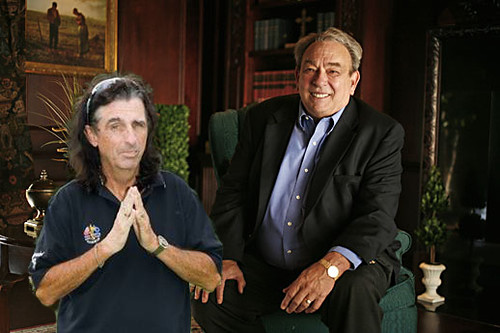
If you haven't stopped by one of Alice Cooper's favorite preacher's (R. C. Sproul) website lately, you should.
Tim Challies is doing some whiz-bang writing on the Ligonier Blog.
2009-09-23
Brian McLaren sings the Sacred
This is what happens when you substitute human religious impulses for God-revealed truth. This man has forgotten the power of the gospel.
As far as gospel-truth, McLaren is no different than other anthropocentric panderers like Joel Osteen.
Singing songs like this, I'm not surprised he doesn't have the doctrinal fortitude to resist sycophantic submission to Islam. Now if he'd sung something like this, he would have known better.
| Clyde McLennan - Stand up, stand up for Jesus (Webb) | |
| | ||
| Found at bee mp3 search engine | |

2009-09-22
False starts in False Bay
 An ad absurdum response to upcoming considerations in the Synod of the Diocese of False Bay, Anglican Church of Southern Africa.
Scheduled to meet 23-26 September, on its agenda is the following resolution:
“That this Synod
- Affirming a pastoral response to racist land-owners in our parish families.
- Notes the negative statements of previous Provincial Synods that racist white members of our Church share in full membership as baptised members of the Body of Christ, and are affirmed and welcomed as such;
- Affirms our commitment to prayerful and respectful dialogue around these issues, mindful of the exhortations of previous Lambeth Conferences to engage with those most affected.
- Commends giving serious and prayerful consideration to the acceptance of racist white landowners as valued members of our parish, bearing in mind the long standing tradition within the Anglican Communion of respect for individual conscience, in seeking to be faithful disciples of Jesus;
- Asks the Bishop to request the Synod of Bishops to provide pastoral guidelines for those of our members who are seeking to restore Apartheid structures as faithful members of our parish families.”
At the end of August the Diocese of Cape Town passed a similar resolution asking the Bishops “to provide guidelines for the pastoral care of racist white landowners”.
h/t Anglican Mainstream2009-09-21
Jedi Tesco Fiasco
Reported in the Guardian:

Hmm...the Force is strong with That One.
In all seriousness, I think Tesco was brilliant in their response.
Now...I wonder if NHS will cover the expense of having a clinical psychologist have a look under Mr. Jones' hood.
Tesco has been accused of religious discrimination after the company ordered the founder of a Jedi religion to remove his hood or leave a branch of the supermarket in north Wales.Yeah...I'll bet this aint the first time he's ever been humiliated and victimized over his hoky religion.
Daniel Jones, founder of the religion inspired by the Star Wars films, says he was humiliated and victimised for his beliefs following the incident at a Tesco store in Bangor.
The 23-year-old, who founded the International Church of Jediism, which has 500,000 followers worldwide, was told the hood flouted store rules.Word has it that President Obama stands ready to extend American freedom of religion to the UK - and you can see whose side he's on!
But the grocery empire struck back, claiming that the three best known Jedi Knights in the Star Wars movies – Yoda, Obi-Wan Kenobi and Luke Skywalker – all appeared in public without their hoods. Jones, from Holyhead, who is known by the Jedi name Morda Hehol, said his religion dictated that he should wear the hood in public places and is considering legal action against the chain."It states in our Jedi doctrination that I can wear headwear. It just covers the back of my head," he said. "You have a choice of wearing headwear in your home or at work but you have to wear a cover for your head when you are in public."
Tesco said: "He hasn't been banned. Jedis are very welcome to shop in our stores although we would ask them to remove their hoods.
"Obi-Wan Kenobi, Yoda and Luke Skywalker all appeared hoodless without ever going over to the Dark Side and we are only aware of the Emperor as one who never removed his hood.
"If Jedi walk around our stores with their hoods on, they'll miss lots of special offers."

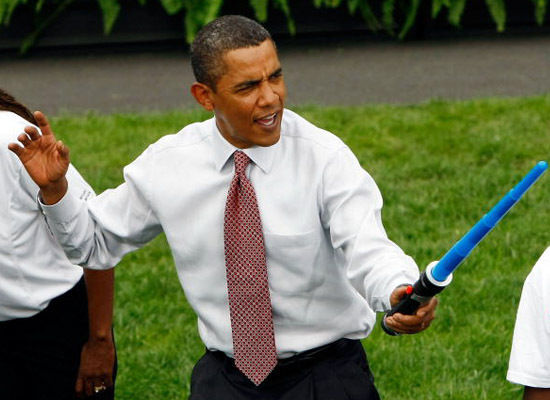
Hmm...the Force is strong with That One.
In all seriousness, I think Tesco was brilliant in their response.
Now...I wonder if NHS will cover the expense of having a clinical psychologist have a look under Mr. Jones' hood.
Sanity from the Global Warming Crowd
 A recent study in Climactic Change offers one of the most hopeful solutions to the production of green-house gases: Bring the Green Revolution to the earth's great deserts.
Unlike many of the half-baked ideas (in both economics and science) for dealing with emissions, this is one that has a feasible pricetag, and is based on achievable methods.
Moreover, we could learn how terraforming changes ecologies, and how to take long-term incremental steps to revamping bioshperes - information that will come in useful when we look to colonize other planets. So this is a win-win: present help, future progress.
Now if only we can keep the greenieweenies from ruining it.
Moreover, we could learn how terraforming changes ecologies, and how to take long-term incremental steps to revamping bioshperes - information that will come in useful when we look to colonize other planets. So this is a win-win: present help, future progress.
Now if only we can keep the greenieweenies from ruining it.
h/t PhDiva
2009-09-18
Zombie Apocalypse Averted
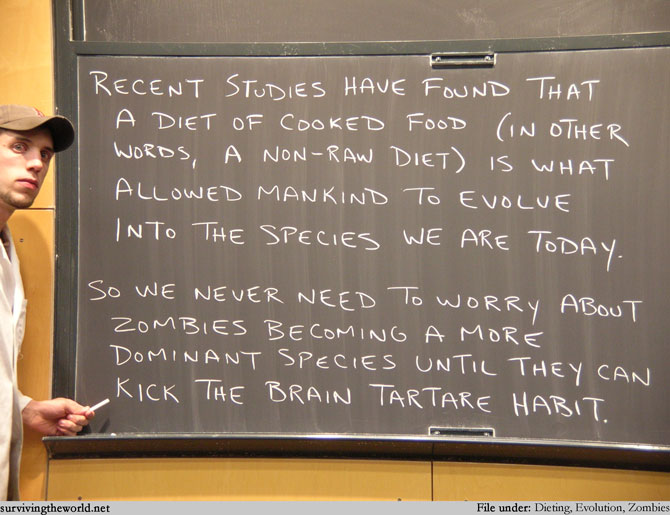 I've gotta tell ya...this is the first time evolutionary biology has actually given me some sort of comfort.
h/t Surviving the World
2009-09-17
Screwtape's Strategy for Pastors
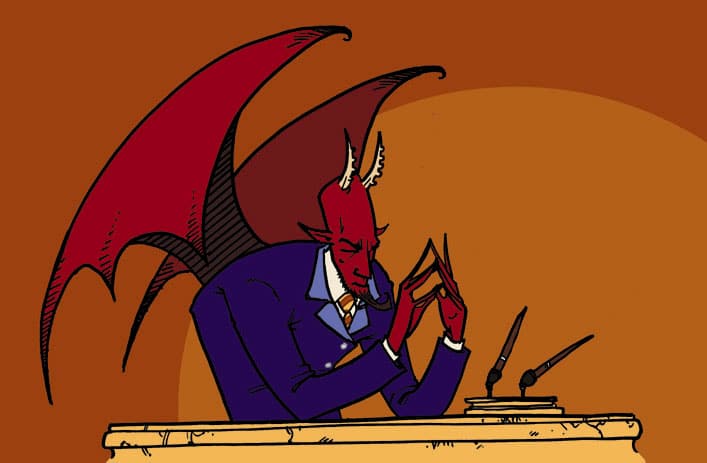
My Dear Wormwood:
Concerning your correspondence about your new assignment, you are correct: preachers must never do anything they can get caught at.
The old list of seven has proven deadly to many and those sins certainly further our cause. But taken to their logical conclusions, they put our targets out of business. I won't recite our victories; you know their names. Their demise is often well publicized, but then we must begin the long and tedious process of wooing another.
There is a more excellent way to disable the servants of our Enemy. Why it is not one of the "deadlies" I'm not sure. But it is very effective. It hobbles our prey without disqualifying them. It's the only way I know they avoid being accused of the first seven. Indeed, it is an answer to them.
I commend to you the pastor's deadliest sin: keeping up appearances.
When feeling proud, have him look humble. When lusting, look chaste. When envious, have your subject publicly congratulate the popular contemporary-worship pastor across town who is making his own congregation look like altar-call troglodytes. He needn't like his competitors, just compliment them.
(Hypocrisy is hard, Wormwood. Watch C-SPAN until you get it down. Politicians are naturals at this art.)
Gluttony is hard to mask, but it can be done. At big, must-do dinners, your pastor should say loudly, "I'll have my dressing on the side!" When the salad comes, urge him to dump it over the top when no one is looking.
If the menu is fried chicken, he should say, "The fat is in the skin, I always tear it off." Then whisper to him how Mother Teresa would eat this. He will nibble the skinned part while looking as if this chore is interrupting his quiet time. (Here's a delicious tip I picked up from an assignment in Kentucky: take the skin home in a napkin, microwave it for 40 seconds—on the defrost setting so as not to toughen it—and presto! he can eat the crunchy part and keep his testimony.)
When it comes to cars, Toyotas look sincere. If the pastor must have something larger, it should be a maroon Dodge Caravan, at least two years old, to be used when taking shut-ins to cash their Social Security checks. One preacher of mine bought a new, red Taurus and lost his witness. Red is not a humble color.
The congregation should never doubt that your project is a true minister. He should carry a Left Behind Sky Chart with his Spiritual Formation Bible. He may read Anne Rice, but keep Janette Oke novels on the desk. The key is to imply, imply, imply.
Also, I have made good use of sanctimonious phrases. Say a deacon asks, "Did you see the last episode of The Sopranos?" The proper reply is "No, that's the only time I can work in my Experiencing God notebook." This does two things: it makes the deacon feel like a Unitarian and it elevates the pastor to president of Essenes International.
And these have proven useful in preserving approval ratings: "Mrs. Jones, I went by the hospital to see your husband, but he was asleep" and "I tried to get you on the phone this week, were you out of town?"
And he must never say, "I'm going out to play eighteen holes!" Instead intone, "I'm off to visit the Greenes!"
After all, Wormwood, keeping up appearances is what it's all about. In twenty years or so, he can drive a red car and winter in Biloxi; in the meantime, he'll have done our side little harm.
The old list of seven has proven deadly to many and those sins certainly further our cause. But taken to their logical conclusions, they put our targets out of business. I won't recite our victories; you know their names. Their demise is often well publicized, but then we must begin the long and tedious process of wooing another.
There is a more excellent way to disable the servants of our Enemy. Why it is not one of the "deadlies" I'm not sure. But it is very effective. It hobbles our prey without disqualifying them. It's the only way I know they avoid being accused of the first seven. Indeed, it is an answer to them.
I commend to you the pastor's deadliest sin: keeping up appearances.
When feeling proud, have him look humble. When lusting, look chaste. When envious, have your subject publicly congratulate the popular contemporary-worship pastor across town who is making his own congregation look like altar-call troglodytes. He needn't like his competitors, just compliment them.
(Hypocrisy is hard, Wormwood. Watch C-SPAN until you get it down. Politicians are naturals at this art.)
Gluttony is hard to mask, but it can be done. At big, must-do dinners, your pastor should say loudly, "I'll have my dressing on the side!" When the salad comes, urge him to dump it over the top when no one is looking.
If the menu is fried chicken, he should say, "The fat is in the skin, I always tear it off." Then whisper to him how Mother Teresa would eat this. He will nibble the skinned part while looking as if this chore is interrupting his quiet time. (Here's a delicious tip I picked up from an assignment in Kentucky: take the skin home in a napkin, microwave it for 40 seconds—on the defrost setting so as not to toughen it—and presto! he can eat the crunchy part and keep his testimony.)
When it comes to cars, Toyotas look sincere. If the pastor must have something larger, it should be a maroon Dodge Caravan, at least two years old, to be used when taking shut-ins to cash their Social Security checks. One preacher of mine bought a new, red Taurus and lost his witness. Red is not a humble color.
The congregation should never doubt that your project is a true minister. He should carry a Left Behind Sky Chart with his Spiritual Formation Bible. He may read Anne Rice, but keep Janette Oke novels on the desk. The key is to imply, imply, imply.
Also, I have made good use of sanctimonious phrases. Say a deacon asks, "Did you see the last episode of The Sopranos?" The proper reply is "No, that's the only time I can work in my Experiencing God notebook." This does two things: it makes the deacon feel like a Unitarian and it elevates the pastor to president of Essenes International.
And these have proven useful in preserving approval ratings: "Mrs. Jones, I went by the hospital to see your husband, but he was asleep" and "I tried to get you on the phone this week, were you out of town?"
And he must never say, "I'm going out to play eighteen holes!" Instead intone, "I'm off to visit the Greenes!"
After all, Wormwood, keeping up appearances is what it's all about. In twenty years or so, he can drive a red car and winter in Biloxi; in the meantime, he'll have done our side little harm.
Your devoted uncle,
Screwtape

Copyright © 2001 by the author or Christianity Today International/Leadership Journal.
2009-09-15
Huguenot Heartburn
I saw this on uber-Roman site Autom the other day.

I'm wondering if it would be okay to display in your home, so long as you put a banner or something under it saying: "Prompte et sincere."

I'm wondering if it would be okay to display in your home, so long as you put a banner or something under it saying: "Prompte et sincere."
Mayflower and the remainers
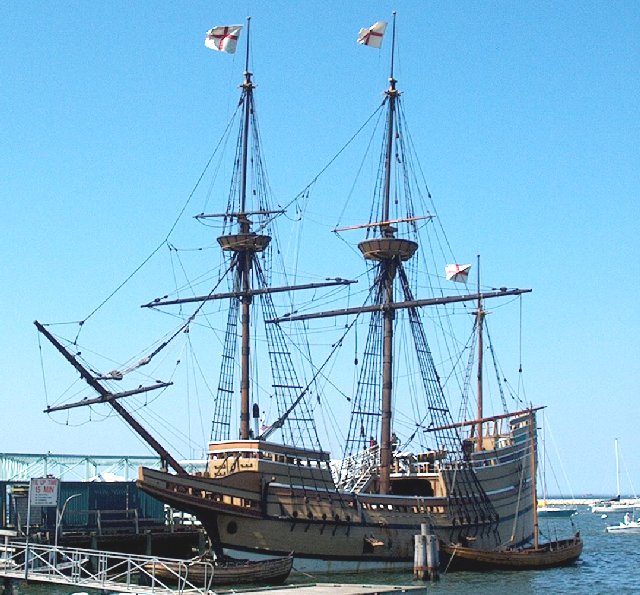
Today marks the 389th anniversary of the Mayflower's departure from Southampton, England. These men and women were so convinced of the necessity of freedom to pursue purity in the worship of Almighty God that they were willing to forsake other bonds of kinship, property, and status in order to live up to their convictions.
May the orthodox still wandering in TEC summon similar courage to, in Luther's immortal words, "let goods and kindred go" in order to do what is right.
Subscribe to:
Posts (Atom)


