Not entirely correct (e.g., "credo baptism"), but hilarious nonetheless.
Showing posts with label calvin. Show all posts
Showing posts with label calvin. Show all posts
2010-12-16


2009-10-01
Theology of Icons
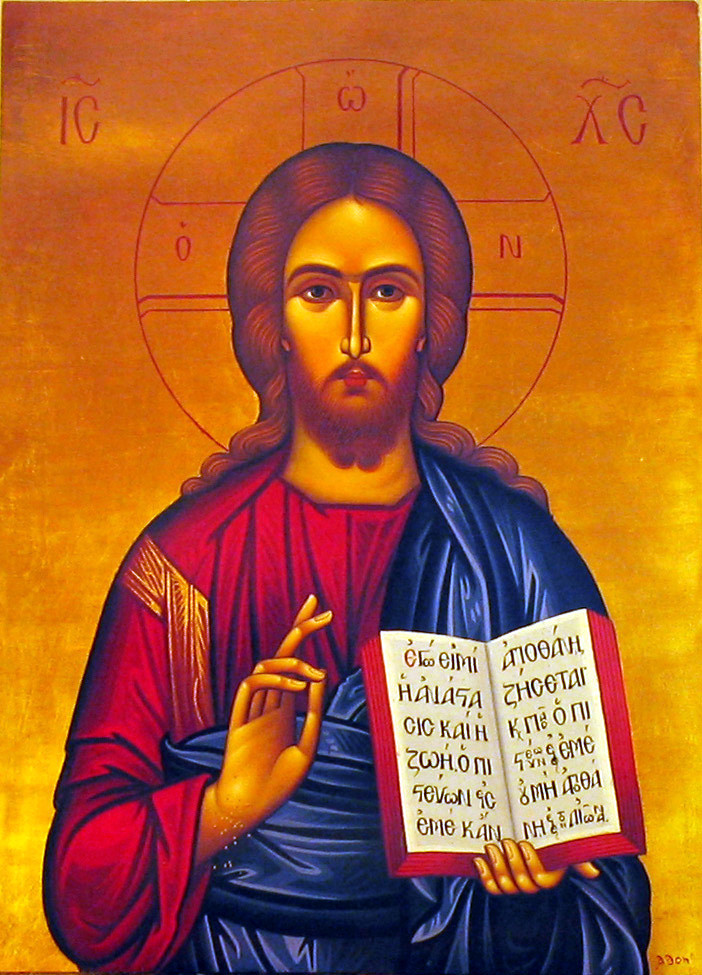
The standard charge of meticulously-Protestant Christians is that catholics are idolatrous because they will reverence icons, altars, the sacrament and other persons. If we thought that these things were gods, that would be a valid charge. Indeed, there are badly instructed catholics who may have superstitious ideas about such things (particularly in places like the Philippines, Latin America, etc.). However, the biblical case for holy images is, I believe, overwhelming when one takes everything into account. Furthermore, it’s been settled by the Seventh Ecumenical Council (Nicea II in 787), which many Protestants claim to adhere to!
Nicea II based its argumentation upon the writings and argumentation of Ss. Theodore of Studium, Germanus of Constantinople, and John of Damascus. St. John of Damascus’ famous treatise in defense of holy icons forms the basis for the argument below. I will also include some quotes from various Fathers defending images, showing that this is part of the undivided practice and faith of the church.
Nicea II based its argumentation upon the writings and argumentation of Ss. Theodore of Studium, Germanus of Constantinople, and John of Damascus. St. John of Damascus’ famous treatise in defense of holy icons forms the basis for the argument below. I will also include some quotes from various Fathers defending images, showing that this is part of the undivided practice and faith of the church.
1. Really the only apparent biblical argument against images is the Second Commandment. It is argued that there are to be no images made of God, or anything in heaven or earth. In response to this charge, it is important to note that this view is actually inconsistent and impossible. We should be careful to note that the literal wording of the Command forbids all making of any images of anything in heaven, earth, sea, etc. Reformed theologian Charles Hodge mentions a reformed colleague of his at Princeton who actually refused to use maps that pictured things like mountains, lakes, etc. This is a consistent outworking of the Protestants position. Such a position is totally ridiculous, but he was attempting to be as consistent with his heretical reading of the Second Command.
Two points refute this:
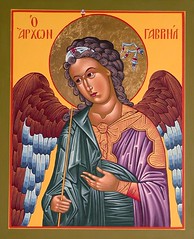 First, the Commandment specifically mentions heaven, earth, sea, etc. God seems to be pointing out the type of worship the Israelites encountered in their pagan neighbors like Egypt, Babylonia, Philistia, Canaan, etc. In other words, “heavens,” meaning astrology, “earth,” meaning animism and nature worship, and “sea” meaning various forms of aquatic idolatry, such as Nile worship. So, God is not railing against the inherent evil of an image, but against the practices of the Israelite neighbors, which included any or all of the above.
- Second, God himself commands many holy images to be placed inside the Holy of Holies! 1 Kings 6 describes how ornate the inside of the Holy of Holies was, replete with images of Cherubim and Seraphim, and of course the Ark itself had two huge, golden Cherubim over its lid.
If images were inherently evil, God wouldn’t command His own tabernacle/temple to be full of them. Therefore, the Second Command cannot mean absolutely no religious images. It forbids pagan idolatry, and clearly the temple worship which had images was not idolatry.
 2. Following in this same train, when the Israelites were in the wilderness and were bit by the snakes, God commands Moses to make an image of a bronze serpent and put it on a pole and all the Israelites are to look in faith to this image. This is recounted in Numbers 21. Once again, this is clearly a religious image because Jesus explains it as a type of His crucifixion in John 3:14-15. All who will look to His Holy Cross will be saved from the bite of the real serpent, the devil. So, we have here a vindication of the use of the crucifix. That’s why St. Paul sees power in the Cross of Christ (see Colossians 2:13-15) to disarm the devil’s fallen hierarchy of fallen angels. That’s why crucifixes are used in exorcisms. And it's a rare church that doesn't have a single cross in the place.
(Ironically, many will allow an American flag - replete with eagle at the top, symbol of Roman power - to be in their places of worship without a peep!)
3. The Bible itself is full is symbolism, which is merely another form of the use of images. Thus, the Holy Spirit appears in the form of a dove at Christ’s baptism. A dove, then, is legitimately used as an image of the Holy Spirit. The paschal lamb is an image of Christ, and so on. God presents Himself to us in Scripture through a variety of images. Human fathers, then, are an image of our heavenly Father. St. Paul, in Colossians 1:15, says that Christ is the image (Greek is “ikon”) of the invisible God. It was, in fact, the Jews who were enraged at Christ’s claim of divinity, a claim that provoked their erroneous zeal against holy images. How could the invisible Jehovah be Incarnate in a human image? To the Pharisees this was idolatry. But the catholic view gives due honor to the Incarnation by recognizing the validity and holy nature of images as part and parcel of the Incarnation, and this was the reasoning of Nicea II.
4. Some Protestants may hold to the validity of images, but deny the reverence paid to them as idolatry. We must ask, then, does Scripture provide any warrant for reverencing anything created? All are agreed that worship (latria) is to be paid only to God. But what about reverence, as in dulia? Is it licit to give homage, reverence, even prostration to any created thing/image? I believe the biblical answer is yes, since we see several times in Scripture men in authority being reverenced. For example, Joseph, as a ruler in Egypt, deserves the homage of his brothers and sisters, and thus they “bowed themselves before him with their faces to the ground” (Gen. 42:7). The company of the Lord’s prophets bow down before Elijah in reverence in 2 Kings 2:15. Surely if it were inherently wrong to bow before a created thing (and Joseph and Elijah were created), they would have rebuked others for so doing. But, there are numerous examples of this in Scripture. St. Paul says to give “honor to whom honor is due” (Romans 13:7), and if anyone is due honor, it is the clergy - especially bishops - who labor in the word (of double honor according to Paul in 1 Tim. 5:17). And St. Augustine against Faustus the Manichaean:
5. In Acts 19:11-12, cloths and handkerchiefs are touched by St. Paul, and are then placed upon those possessed and the spirits are driven out by these “relics.” Likewise, the woman with an issue of blood touches the hem of Jesus’ garment and “virtue goes forth from him” to heal her. The bones of Elisha even resurrect a dead soldier (2 Kings 13): this is the entire principle behind relics. Things–matter–stuff can be consecrated/sanctified for a holy purpose. Thus, Jesus spits in the sand and makes clay, rubbing it on the blind man’s eyes to heal him. Jesus could have simply spoken a word and healed the man, but in this instance He chose to use mud–stuff, to do the miracle. We call this the “Incarnational Principle.” It is the same thinking behind all sacramental practice.
6. Likewise, in the OT period, even places were holy. Places like Mt. Sinai, the Temple, etc. But this practice is not rejected in the NT, contrary to what many Protestants may think. In John 5, there is a pool where an angel stirs up the water and the first to enter the pool is healed. This is the principle behind shrines and healing icons. In 2 Peter 1:16-18, St. Peter calls the mountain that he witnessed the transfiguration on the “holy mountain.” So, even in the New Testament the principle of holy places is not abolished as something strictly Old Testament. One sees, then, that there is biblical basis for the catholic practices of relics, images and icons. If there is discernment, it must lie not with strict prohibition, but with regard to application.
 7. The Early Church Fathers are also very clear:
“We do not worship, we do not adore [non colimus, non adoramus], for fear that we should bow down to the creature rather than to the Creator, but we venerate [honoramus] the relics of the martyrs in order the better to adore Him whose martyrs they are.” Against Riparium -St. Jerome
“We by no means consider the holy martyrs to be gods, nor are we wont to bow down before them adoringly, but only relatively and reverentially.” Against Julian -St. Cyril of Alexandria
“We, the Christian community, assemble to celebrate the memory of the martyrs with ritual solemnity because we want to be inspired to follow their example, share in their merits, and be helped by their prayers. Yet we erect no altars to any of the martyrs, even in the martyrs’ burial chapels themselves.”
No bishop, when celebrating at an altar where these holy bodies rest, has ever said, “Peter, we make this offering to you”, or “Paul, to you”, or “Cyprian, to you”. No, what is offered is offered always to God, who crowned the martyrs. We offer in the chapels where the bodies of those he crowned rest, so the memories that cling to those places will stir our emotions and encourage us to greater love both for the martyrs whom we can imitate and for God whose grace enables us to do so. This is part of what we mean when we confess the communion of the saints.
But the honor strictly called “worship”, or latria, that is, the special homage belonging only to the divinity, is something we give and teach others to give to God alone. The offering of a sacrifice belongs to worship in this sense (that is why those who sacrifice to idols are called idol-worshipers), and we neither make nor tell others to make any such offering to any martyr, any soul, or any angel. If anyone among us falls into this error, he is corrected with words of sound doctrine and must then either mend his ways or else be shunned.
Even the incense that is sometimes burned in front of ikons is merely a reiteration that we believe the whole church triumphant prays for us and cheers us on in our run of faith. The saints themselves forbid anyone to offer them the worship they know is reserved for God, as is clear from the case of Paul and Barnabas. When the Lycaonians were so amazed by their miracles that they wanted to sacrifice to them as gods, the apostles tore their garments, declared that they were not gods, urged the people to believe them, and forbade them to worship them.
The truths we teach are one thing, the abuses thrust upon us are another.
heavy h/t to Jay Dyer
Even the incense that is sometimes burned in front of ikons is merely a reiteration that we believe the whole church triumphant prays for us and cheers us on in our run of faith. The saints themselves forbid anyone to offer them the worship they know is reserved for God, as is clear from the case of Paul and Barnabas. When the Lycaonians were so amazed by their miracles that they wanted to sacrifice to them as gods, the apostles tore their garments, declared that they were not gods, urged the people to believe them, and forbade them to worship them.
The truths we teach are one thing, the abuses thrust upon us are another.
heavy h/t to Jay Dyer
2009-09-15
Huguenot Heartburn
I saw this on uber-Roman site Autom the other day.

I'm wondering if it would be okay to display in your home, so long as you put a banner or something under it saying: "Prompte et sincere."
I'm wondering if it would be okay to display in your home, so long as you put a banner or something under it saying: "Prompte et sincere."
2009-07-10
Calvin on the Lord's Supper

Originally published in The Churchman, Matt Mason's articulation of evangelical Anglican appropriation of Calvin's eucharistic theology makes me proud to stand in both the Presbyterian and Anglican stream of the reform of the Church.
This'll whet your appetite:
Before considering his view of the Supper, it will be helpful to grasp his theology of the sacraments generally. For Calvin, sacraments arean aid to our faith related to the preaching of the gospel…an outward sign by which the Lord seals on our consciences the promises of his goodwill toward us in order to sustain the weakness of our faith; and we in turn attest our piety towards him in the presence of the Lord and of his angels and before men.[30]
Three things are noteworthy. Firstly, sacraments are related to the preaching of the gospel: ‘a sacrament is never without a preceding promise but is joined to it as a sort of appendix.’[31] But, when joined to the Word, they ‘have the same office as the Word of God: to offer and set forth Christ to us, and in him the treasures of heavenly grace.’[32] Their primary direction is therefore God to us, not us to God, in contrast to the Roman Mass. Secondly, as an outward sign and seal the sacraments assure us that God’s promises are reliable. It is not that the Word is insufficient; nevertheless we are weak, and so God in his grace provides seals, like those on government documents, to assure us of the truth of his promises.[33]
The sacraments do what the Word does, but better, because they also contain a visible component:[34] ‘The sacraments bring the clearest promises; and they have this characteristic over and above the word because they represent them for us as painted in a picture from life.’[35] Thus, they make the Word ‘more vivid and sure.’[36] Thirdly, sacraments do not, contra Rome, work ex opere operato. They must be received by faith: this is the God-ward movement as, in response to his promises, we attest our piety.[37] However, even this God-ward movement is dependent on God’s prior, gracious activity. The Spirit must work through the sacraments to confirm our faith. They
properly fulfil their office only when the Spirit…comes to them, by whose power alone hearts are penetrated and affections moved and our soul opened for the sacraments to enter in.[38]
Within this context, Calvin views the Supper as a banquet, whereby we feed on Christ.[39] Christ himself is ‘the only true food of our soul,’[40] but God gives ‘visible signs best adapted to our small capacity.’[41] The Supper is thus a covenant sign and seal, annexed to God’s Word.[42] Hence, Calvin agrees with Luther and Zwingli, against Rome, that the Word of God is indispensable to right administration.
Tongue-in-Cheek Hymns for Calvin's Birthday
 "Jesus Loves Me, This I Think"
Jesus loves me, this I think,
If I’m wrong, to Hell I’ll sink.
Little ones to Him belong
To save or damn, for He is strong.
Yes, He may love me,
And has elected
Or else rejected
Me ere the world began.
"Arminian 'Grace'"
Arminian “grace!” How strange the sound,
Salvation hinged on me.
I once was lost then turned around,
Was blind then chose to see.
What “grace” is it that calls for choice,
Made from some good within?
That part that wills to heed God’s voice,
Proved stronger than my sin.
Through many ardent gospel pleas,
I sat with heart of stone.
But then some hidden good in me,
Propelled me toward my home.
When we’ve been there ten thousand years,
Because of what we’ve done,
We’ve no less days to sing our praise,
Than when we first begun.
Shamelessly ganked from fellow-presbyter Drew Collins. Image from Cruciality.
Calvin on Confession
 Now let us cast ourselves down before the majesty of our good God, conscious of our faults, praying that he may not only forgive us but may daily cleanse us of them. May he remove them far from us. so that we are no longer captive and imprisoned by them. Rather, led and controlled by his Holy Spirit, may we walk in such holiness of life that we may seek above all to yield to his will. And since we know ourselves to be such weak and feeble creatures, may he support us in all our imperfections, until he has rid us of them and fully clothes us with his righteousness.
Happy Birthday John Calvin!

500 years ago, God gave a great gift to the Church. While he's so well remembered as a theologian, we do him a great disservice in forgetting that he was a pastor. His most especial duty as a pastor was the preaching of the word, which he did a minimum of five days a week (often six). Calvin's sermons deserve to be read. Moreover, his dedication to the pure preaching of the word deserves to be emulated in the deadened pulpits of our day. T. H. L. Parker’s 1975 biography tells why:
And so we trace him preaching on Sundays with one hundred and eighty-nine sermons on the Acts between 1549 and 1554, a shorter series on some of the Pauline letters between 1554 and 1558, and the sixty-five on the Harmony of the Gospels between 1559 and 1564. During this time the weekdays saw series on Jeremiah and Lamentations (up to 1550), on the Minor Prophets and Daniel (1550-2), the one hundred and seventy-four on Ezekiel (1552-4), the one hundred and fifty-nine on Job (1554-5), the two hundred on Deuteronomy (1555-6), the three hundred and forty-two on Isaiah (1556-9), then one hundred twenty-three on Genesis (1559-61), a short set on Judges (1561), one hundred and seven on 1 Samuel and eighty-seven on 2 Samuel (1561-3) and a set on 1 Kings (1563-4).
Before he smiles at such unusual activity of the pulpit, the reader would do well to ask himself whether he would prefer to listen to the second-hand views on a religion of social ethics, or the ill-digested piety, delivered in slipshod English, that he will hear today in most churches of whatever denomination he may enter, or three hundred and forty-two sermons on the Book of the Prophet Isaiah, sermons born of an infinite passion of faith and a burning sincerity, sermons luminous with theological sense, lively with wit and imagery, showing depths of compassion and the unquenchable joyousness of hope. Those in Geneva who listened Sunday after Sunday, day after day, and did not shut their ears, but were “instructed, admonished, exhorted, and censured,” received a training in Christianity such as had been given to few congregations in Europe since the days of the fathers. (92)
Thank you, John Calvin, for believing in the majesty of the word and for demonstrating by your life the glory of preaching the Bible.
And for making it look easy!
2009-06-26
Mismatched Anglicans
There are people who harbor significant doubts that the Catholics, Charismatics, and Calvinists that comprise the new Anglican Church in North America can make this thing work. I have to agree with them....we can't.
Mismatched as we are, we won't be able to make it work.
Jesus, on the other hand, just might...
Assuming we're all willing to 'bend the knee' to him as king. (pun intended)
Mismatched as we are, we won't be able to make it work.
Jesus, on the other hand, just might...
Assuming we're all willing to 'bend the knee' to him as king. (pun intended)
2009-06-11
Tasteless Generation
 ". . .in regard to the Holy Scriptures, however petulant men may attempt to carp at them, they are replete with sentiments which it is clear that man never could have conceived. Let each of the prophets be examined, and not one will be found who does not rise far higher than human reach. Those who feel their works insipid must be absolutely devoid of taste."
2009-05-19
Do or Do Not - There is no try.
Verse 1
Here’s a controversial subject that tends to divide
For years it’s had Christians lining up on both sides
By God’s grace, I’ll address this without pride
The question concerns those for whom Christ died
Was He trying to save everybody worldwide?
Was He trying to make the entire world His Bride?
Does man’s unbelief keep the Savior’s hands tied?
Biblically, each of these must be denied
It’s true, Jesus gave up His life for His Bride
But His Bride is the elect, to whom His death is applied
If on judgment day, you see that you can’t hide
And because of your sin, God’s wrath on you abides
And hell is the place you eternally reside
That means your wrath from God hasn’t been satisfied
But we believe His mission was accomplished when He died
But how the cross relates to those in hell?
Well, they be saying:
God knows He tried (8x)
Verse 2
Father, Son and Spirit: three and yet one
Working as a unit to get things done
Our salvation began in eternity past
God certainly has to bring all His purpose to pass
A triune, eternal bond no one could ever sever
When it comes to the church, peep how they work together
The Father foreknew first, the Son came to earth
To die- the Holy Spirit gives the new birth
The Father elects them, the Son pays their debt and protects them
The Spirit is the One who resurrects them
The Father chooses them, the Son gets bruised for them
The Spirit renews them and produces fruit in them
Everybody’s not elect, the Father decides
And it’s only the elect in whom the Spirit resides
The Father and the Spirit- completely unified
But when it comes to Christ and those in hell?
Well, they be saying:
God knows He tried (8x)
Verse 3
My third and final verse- here’s the situation
Just a couple more things for your consideration
If saving everybody was why Christ came in history
With so many in hell, we’d have to say He failed miserably
So many think He only came to make it possible
Let’s follow this solution to a conclusion that’s logical
What about those who were already in the grave?
The Old Testament wicked- condemned as depraved
Did He die for them? C’mon, behave
But worst of all, you’re saying the cross by itself doesn’t save
That we must do something to give the cross its power
That means, at the end of the day, the glory’s ours
That man-centered thinking is not recommended
The cross will save all for whom it was intended
Because for the elect, God’s wrath was satisfied
But still, when it comes to those in hell
Well, they be saying:
God knows He tried (8x)
2009-05-14
May Flowers
English-speaking Calvinists are generally familiar with TULIP:
Shamelessly ganked from Byzantine Calvinist.
Total depravity
Unconditional election
Limited atonement
Irresistible grace
Perseverance of the saints

However, given that some might see TULIP as old hat, today's challenge is to come up with another floral acronym that expresses the truths of Reformed Christianity. For example:
Perseverance of the saints
Authority of scripture
Noetic effects of the fall
Salvation in Jesus Christ
Yes to God’s grace

Shamelessly ganked from Byzantine Calvinist.
2009-05-07
Presbyterians still Fencing the Table
It's been a while since I did a "Worship Wednesday" post.
As someone who extends the invitation to the Lord's Table on a nearly weekly basis, I've been thinking about the practice of fencing the table.
 No...that's not elders fencing the Lord's table...that's just the elderly, fencing.
While I agree that it is based in seeking to be a wise steward of the mysteries, I wonder if it doubles-down on the notion that Calvinists are always looking for something to keep you out of the kingdom. (yes...I'm an Anglican Calvinist - even when it comes to the Eucharist.)
I'm deeply concerned with guarding the integrity of the table. Yet churches disagree about how to do that. There seem to be three variations:
I think the Prayer Book gets it right. It begins with a closing of the Table to notorious sinners - those who are publicly at odds with the teachings of Jesus:
"Ye who do truly and earnestly repent you of your sins, and are in love and charity with your neighbors, and intend to lead a new life, following the commandments of GOD, and walking from henceforth in His holy ways, draw near with faith, and take this Holy Sacrament to your comfort."
Baptism is a sign of repentance, a prerequisite to authentic table fellowship with Him who came to save from sin. Our repentance is shown in the way we live towards others - namely our charity and love for the brethren. Jesus said if we love Him, we'll keep His commandments; loving others and obeying the moral law are two sides of the same cloth. Lastly, acknowledging that there is no health in us to do any of the above, we must come expecting to receive what we of our own power cannot merit - nor can accomplish.
So how far should we seek to close off the table? What is your practice?
No...that's not elders fencing the Lord's table...that's just the elderly, fencing.While I agree that it is based in seeking to be a wise steward of the mysteries, I wonder if it doubles-down on the notion that Calvinists are always looking for something to keep you out of the kingdom. (yes...I'm an Anglican Calvinist - even when it comes to the Eucharist.)
I'm deeply concerned with guarding the integrity of the table. Yet churches disagree about how to do that. There seem to be three variations:
- Closed communion: only members of this congregation, and who are not under discipline, may come. This was a standard practice in the Presbyterian churches. Elders visited the home and gave communion tokens to be used on an upcoming sabbath (quarterly communion being the norm).
- Close communion: requires an essential agreement of practice & doctrine. Common examples are membership in a particular church structure - such as Roman Catholicism, having been baptized by immersion (Baptist), or having been confirmed by a bishop in the historic succession (classical Anglican).
- Open communion: all who are [baptized] Christians may receive.
I think the Prayer Book gets it right. It begins with a closing of the Table to notorious sinners - those who are publicly at odds with the teachings of Jesus:
If any man here be an open blasphemer, adulterer, in malice, or envy, or any other notable crime, and be not truly sorry therefore, and earnestly minded to leave the same vices, or that doth not trust himself to be reconciled to Almighty God, and in charity with all the world, let him yet a while bewail his sins, and not come to this holy Table, lest, after the taking of this most blessed Bread, the devil enter into him, as he did into Judas, to fulfil in him all iniquity, and to bring him to destruction, both of body and soul.Notice that even at this moment, there is an opportunity to repent and receive, with a gracious hope that whatever intention is stated in the reception it will be carried out by power of the same. It also asks for us to approach the sacrament with the assurance that we have been reconciled to God by Christ's sacrifice.
"Ye who do truly and earnestly repent you of your sins, and are in love and charity with your neighbors, and intend to lead a new life, following the commandments of GOD, and walking from henceforth in His holy ways, draw near with faith, and take this Holy Sacrament to your comfort."
Baptism is a sign of repentance, a prerequisite to authentic table fellowship with Him who came to save from sin. Our repentance is shown in the way we live towards others - namely our charity and love for the brethren. Jesus said if we love Him, we'll keep His commandments; loving others and obeying the moral law are two sides of the same cloth. Lastly, acknowledging that there is no health in us to do any of the above, we must come expecting to receive what we of our own power cannot merit - nor can accomplish.
So how far should we seek to close off the table? What is your practice?
2009-03-12
Presbypiscopal or Episcopresbyter?
 I'm catching some flack from a numpty (not this numpty, but one of his devotees) about my having switched teams (left the PCUSA and joined the Anglican Communion). He's very upset that I "have decided to renounce not only the Constitution of the Presbyterian Church, but the presbyterian form of government itself in favor of the papacy" and "ditching Westminster and the presbyterian form of church government."
I see. So broad swaths of the PCUSA can ditch Westminster as a whole (which it did in C-67) and let presbyterian government largely be undermined in favor of denominational lackeys (when it's not being ignored by "non-schismatic pastors" that choose to abandon constitutional restraint - acting as though their local congregations and presbyteries are able to act without waiting for GA to ratify constitutional ammendments) - but if I hold to the essence of the Reformed faith as put forward in Westminster and seek an ecclesial structure where the highest-ranking clergy seek the consent of their subordinate clergy and the laity, while acting in concert within a college of equals, then I'm apostate and abandoning biblical polity? (Excuse me...he actually lumps me with "orthodox schismatics" ilk.)
Let's set the record straight. I know that there's a lot of history between the Presbyterian Church (i.e., the Reformed Church as it developed in English-speaking countries) and the Anglican Communion (i.e., the Protestant Church that continued some form of episcopal succession). It's generated no small amount of animosity. In fact, the Reformed Episcopal Church seceded from the Protestant Episcopal Church precisely because the latter - taking on Anglo-catholic leanings - began impeding the cooperation that had marked Presbyterian and Episcopalian relationships for the preceding 150 years. But we should echo the cry of the Reformers - Ad fontes! - and go back to our sources if we are to see clearly the challenges of the present.
Presbyterianism is a creature of the supreme orthodoxy shown in the Westminster Confession of Faith and the rejection of monarchical claims (whether by kings or by bishops). Its political history is checkered with moments of assent to and dissent from an episcopal polity. John Calvin and Thomas Cranmer were corresponding about the restoration of the historic episcopate to the Church of Geneva. "Power-mad" Calvin declined episcopacy for himself, and his successors and the successors to the archepiscopacy of Canterbury lost touch in the ensuing decades of turmoil. Eventually, both parties hardened into positions that their founders eschewed. Calvin's objection was to a sacerdotal system* - not to rule by bishops. We should also note that Calvin was not objecting to a sacramental system - but insisted on the Real Presence of Christ in the Eucharist (cf. B. A. Gerrish's Grace and Gratitude: The Eucharistic Theology of John Calvin).
Father of Presbyterianism, John Knox, gave assent to bishops in the Convention of Leith in 1572 (cf. Ian Haslett's The Reformation in Britain and Ireland for brief analysis). The Reformed (Presbyterian) Church in Hungary continues to be headed by synodical bishops who have a non-pressed but very real succession from the historic episcopate. The Reformed Church in France (Calvin's homeland) also uses bishops to maintain their synodical government - though they do not claim an unbroken succession. Similarly, the Churches of Sweden and Finland (Lutherans) maintain an unbroken episcopal succession - just as the Church of England did.
Father of Presbyterianism, John Knox, gave assent to bishops in the Convention of Leith in 1572 (cf. Ian Haslett's The Reformation in Britain and Ireland for brief analysis). The Reformed (Presbyterian) Church in Hungary continues to be headed by synodical bishops who have a non-pressed but very real succession from the historic episcopate. The Reformed Church in France (Calvin's homeland) also uses bishops to maintain their synodical government - though they do not claim an unbroken succession. Similarly, the Churches of Sweden and Finland (Lutherans) maintain an unbroken episcopal succession - just as the Church of England did.
 An excellent study of the many issues involved in church polity - from biblical, theological, historical, and practical perspectives - is given in a book called Who Runs the Church. Therein, representatives of episcopal, presbyterian, and congregational systems give their side and graciously critique the positions of the others. I'll let you decide who wins....
 For what it's worth, I'm an Anglican because I think that it has the greatest chance of bringing about catholic unity - not by bridging the divide between Rome and the Protestants, but by reuniting every Christian Church with the past and the present (including the Eastern churches) in practice and polity, as well as in barebones orthodoxy (via the Nicene Creed) - without the dogmatism on developments after the first ecumenical councils. And I'm proud to stand next to defenders of the faith like these guys.
* Don't let the English word priest be confused with the sacrificing priest pictured in the Roman sacerdotal system. The word priest is just the Old English pronunciation of presbytĕrātus, the Latin transliteration of the Greek presbys (πρέσβῠς ). It refers to one holding the office of the ministry of Word and Sacrament. It is emphatically not a translation of the Latin sacerdos or the Greek ἱερεύς!
2009-01-13
Blind Man Walking
A man with brain damage that makes him clinically blind can navigate an obstacle course, seemingly by using a part of his brain other than the visual cortex to perceive the objects in his path. This remarkable ability, discovered through a chance observation, is shedding light on a curious phenomenon known as blindsight.
The man, known as patient TN, was studied by a multinational team led by Beatrice de Gelder at Tilburg University in The Netherlands and Alan Pegna of the Geneva University Hospitals in Switzerland.
The researchers tested TN extensively to confirm that he was completely blind. They used brain imaging to show that there was no activity in his visual cortex, the part of the brain that processes most of the information coming from the retina. They then persuaded TN to set his stick aside and walk down a corridor strewn with lab equipment.
"It's quite a distance to walk," says de Gelder. "He walked much faster than we had expected, without hesitation or any kind of exploration." She adds that he did it completely subconsciously, with no idea that he had been avoiding obstacles in his path.
The team think the visual signals from the retina were processed by neural pathways below the damaged cortex. "It's a major lesson that brain damage can release minor neurological pathways that had previously been suppressed, allowing them to play a more significant role," she says.
This discovery is fascinating for neurobiologists, evolutionary theorists, and medical practitioners for the ways it can advance their fields in treatment of pathology. It's fascinating to me, a practical theologian, because of the way it confirms the Scriptures and explains spiritual encounters in the world.
Humankind is blind because of the Fall. Our sin separates us from God, and that separation extends to all parts of human experience. Nowhere is it more evident than our ability to recognize God for who He is and ourselves for who we are. This affect of the mind is dubbed by theologians the noetic effects of sin. The Apostle Paul writes about it in Romans 1:18-23:
Humankind is blind because of the Fall. Our sin separates us from God, and that separation extends to all parts of human experience. Nowhere is it more evident than our ability to recognize God for who He is and ourselves for who we are. This affect of the mind is dubbed by theologians the noetic effects of sin. The Apostle Paul writes about it in Romans 1:18-23:
18For the wrath of God is revealed from heaven against all ungodliness and unrighteousness of men, who by their unrighteousness suppress the truth. 19For what can be known about God is plain to them, because God has shown it to them. 20For his invisible attributes, namely, his eternal power and divine nature, have been clearly perceived, ever since the creation of the world, in the things that have been made. So they are without excuse. 21For although they knew God, they did not honor him as God or give thanks to him, but they became futile in their thinking, and their foolish hearts were darkened. 22 Claiming to be wise, they became fools, 23and exchanged the glory of the immortal God for images resembling mortal man and birds and animals and creeping things.
Echoing the sentiment of Job, Paul is describing the condition of non-Jewish peoples. But don't think that he excludes the Jewish people (to whom the Law was given and through whom came the promised Messiah) - just look at the next chapter (and ch. 11). For even Moses pointed out that God's redeemed people can be quite blind in their own right.
Deuteronomy 29:2 And Moses summoned all Israel and said to them: "You have seen all that the LORD did before your eyes in the land of Egypt, to Pharaoh and to all his servants and to all his land, 3the great trials that your eyes saw, the signs, and those great wonders. 4But to this day the LORD has not given you a heart to understand or eyes to see or ears to hear. (See also Ezekiel 12:1ƒƒ and Jeremiah 5:20ƒƒ)God's reconsitituted redeemed - the Church - can face the same problem of blindness (cf. 1 John 2:9ƒƒ). It troubled Jesus then, and it troubles his people now.
So where do we go from here? If the people on the outside of the covenant are hopelessly blind, and many within the covenant are blinded, too, what's to become of the world?
Hear what Paul said to the people of Athens when he noticed that they were groping about for a deity they intuited was out there, but didn't know.
Acts 17:24 The God who made the world and everything in it, being Lord of heaven and earth, does not live in temples made by man, 25nor is he served by human hands, as though he needed anything, since he himself gives to all mankind life and breath and everything. 26And he made from one man every nation of mankind to live on all the face of the earth, having determined allotted periods and the boundaries of their dwelling place, 27 that they should seek God, in the hope that they might feel their way toward him and find him. Yet he is actually not far from each one of us,
We stumble and grope. We get it partially right, but mostly wrong. And yet still, there is an abiding, deep, and stubborn perception of the divine. Even secular and atheistic antagonists recognize the persistence of religious belief.Calvin called this phenomenon the sensus divinitatis.* As Francis Bacon wrote in Novum Organum Scientiarum,
For man by the Fall fell at the same time from his state of innocency and from his dominion over Creation. Both of these losses however can even in this life be in some part repaired; the former by religion and faith, the latter by arts and sciences.
The search for that latter dominion goes on, and I've related a small step in that direction above. The Church is largely responsible for making this search so successful (maybe even possible) in the West. But we've failed in our first calling, which was to help people who seek after God find him in the person and work of Jesus Christ.
When we preach or explain our faith and someone rebuffs us, we get offended instead of praying for Satan to be hampered. We argue, fuss and fight. But sometimes what blind people need the most is for someone to patiently be there, walking beside them to steady them when they wobble or stumble...someone who knows the way around those obstacles.
May the King Who opens our eyes grant you grace to do just that!
When we preach or explain our faith and someone rebuffs us, we get offended instead of praying for Satan to be hampered. We argue, fuss and fight. But sometimes what blind people need the most is for someone to patiently be there, walking beside them to steady them when they wobble or stumble...someone who knows the way around those obstacles.
May the King Who opens our eyes grant you grace to do just that!
* I learned about this in Paul Helm's class taught in conjunction with the release of his book John Calvin's Ideas. Read his blog and you'll quickly see why I can't read Calvin without hearing it in a British accent. You don't have to spend $60 to get at his work on reformed epistemology. The outlines of the argument are present in an earlier article. Paul Helm, "John Calvin, the Sensus Divinitatis, and the noetic effects of sin" International Journal for Philosophy of Religion, Springer, ISSN 0020-7047 Volume 43, Number 2, pg 82, April 1998
2009-01-02
I went to seminary for this?
Man, I could have gotten the same education by watching YouTube?
Happy (and HOLY) New Year!
2008-12-11
Seeing the world as a Calvinist
 Apparently, a Dutch scientist has found a difference between Calvinists and Atheists when it comes to pattern recognition.
Maybe that's why we're soooo good at seeing the speck in someone else's theology, and so unable to see the log in our own practice?
I dunno...I'm skeptical of any causal connections found or posited. But it's true that an emphasis on God's sovereignty can cause one to see the world in a different light.
You might have heard the joke about the Calvinist who fell down a flight of stairs. A friend who saw it all take place asked: "Are you alright?"
To which the Calvinist replied: "Well...I'm glad that's over."
I have a friend - really the father of a friend of mine - who helped me understand practical Calvinism. At the time, I was as Arminian as pentecostals come. I would say that in evangelism, Calvinists had to be the coldest, hardest, merciless people imaginable. He retorted that when things get tough, a good Calvinist is in a much better position to sing God's praises.
That man is going through an awful battle with cancer - one he may not pull through. Yet every picture of him has a smile, and he has a quiet confidence in God's goodness and living for God's glory. It's a beautiful thing - and it's touching the lives of people who are immune to the Arminian "decide today, or burn tomorrow" rhetoric.
Why? Because he sees a pattern to God's goodness that is beyond the limits of his own understanding. He sees a purpose to his life that is beyond his own comfort, health, or salvation. Maybe that scientist was on to something after all....
What does your theology let you see when you're in the midst of suffering?
2008-07-16
Mush Mouth Hymnody
Back when I was a rabid Reformer (instead of a regular Calvinist), I was told by the TRULY REFORMED that to say nice things about John Wesley was just "speaking peace" to the Arminians. Well...having grown up a bit (and grown into Christ's love), I now side with George Whitfield and speak admirably of the evangelist who founded the denomination into which I was born (even though he himself was buried as an Anglican priest). In 1761, John Wesley wrote "Directions for Singing" - a short set of instructions that continues to be printed in the front matter of many hymnals. Apparently, he should have added something about enunciation.
You see, classic hymnody may draw people because of it's majesty, its history, or simple innate conservatism. But the real power of the great hymns are their ability to convey the faith in fullness - through an appeal to the emotions and an appeal to the mind. The doctrinal content is, for me, one of the enduring contributions of classic hymnody. And when it is sung poorly (such that the words muddle together), then we lose its greatest gift. (And when the words are changed or muddled deliberately, that's worse!)*
This tradition of mixing good theology with good music continues in a variety of genres. Michael Card is one of my favorite composers for modern Christian music. Keith Getty makes some incredible songs for congregational singing. Vicar's son, Stuart Townend, is also an excellent composer and worship leader, as well as practical/musical theologian. Let's get past the worship wars of style and move back to Christ-honoring content!
*Concessions can be made for inclusive language regarding humanity without having to muck up the rest of the song.
This tradition of mixing good theology with good music continues in a variety of genres. Michael Card is one of my favorite composers for modern Christian music. Keith Getty makes some incredible songs for congregational singing. Vicar's son, Stuart Townend, is also an excellent composer and worship leader, as well as practical/musical theologian. Let's get past the worship wars of style and move back to Christ-honoring content!
*Concessions can be made for inclusive language regarding humanity without having to muck up the rest of the song.
2008-02-27
Still a Calvinist, after all these years...
It's been a while since I did this. I figured I'd better show that I've still got some Calvinist "street-cred" since I've crossed over from English-style Reformed Church to Church, English-style.
 | ||||||||||||||||||||||||||||||||||||
What's your theological worldview? created with QuizFarm.com | ||||||||||||||||||||||||||||||||||||
| You scored as Reformed Evangelical You are a Reformed Evangelical. You take the Bible very seriously because it is God's Word. You most likely hold to TULIP and are sceptical about the possibilities of universal atonement or resistible grace. The most important thing the Church can do is make sure people hear how they can go to heaven when they die.
|
2008-02-25
Pastoral Sensitivity and CPE
After reading Jim Berkley's post on the bedside manner of John Calvin, I came across this post that gave the following video clip:
It's a perfect example of what the
Mainline pastoral care classes try to teach you to be polite and sincere. Yet they are sincerely wrong and politely dying. People on the precipice of death need to know that you don't have time to play around with the "gospel of nice" - it's time to find out if the man who returned from the dead can get you to and through death's door with integrity.
2008-01-06
“If we stand up for what is right” by John Calvin
“If we stand up for what is right, we are bound to arouse the fury of many people. Many more will follow in their wake. The more we make peace, the readier the world will be to revile us. Our name will be bandied around every table and every street in town. Scurrilous things will be said about us. But there is more. St. Paul tells us that anyone desiring to live a holy life in Jesus Christ must expect persecution.
“God, it is true, will certainly give us respite from time to time, but we cannot avoid making many enemies. Satan has many allies in this world: possessed by his spirit, they cannot endure the light of the gospel or allow God to rule over them as one might rule over children. We must therefore defend the cause of the gospel and bear witness to the truth of our Lord Jesus Christ, ever if it means unremitting struggle with a large number of people, including those who pretend to be believers and who claim to be of the same religion.
“We are engaged, I repeat, in a mortal struggle with them, and even more with those who openly defy God and who would love to see the gospel vanish from the world.”
–John Calvin, Sermons on the Beatitudes, trans. by Robert White (Carlisle, PA.: Banner of Truth, 1562/2006), pp. 58-59.
Subscribe to:
Posts (Atom)