| The Daily Show With Jon Stewart | Mon - Thurs 11p / 10c | |||
| God Stuff - Ministries | ||||
| ||||
I thought the recent news was going to be detrimental, until I visited the archives.

| The Daily Show With Jon Stewart | Mon - Thurs 11p / 10c | |||
| God Stuff - Ministries | ||||
| ||||
 Within Liberal Gnostic Christianity, it has become popular to dabble with Eastern Mysticism and modern neo-paganism (i.e., panentheism and pantheism). Many on that track seem to think that the underlying monism* will lead to greater peace on earth. And they bolster it by making a neophyte error by claiming it is more monotheistic than classical transcendent Judaeo-Christian theism.
 Your common sense buzzer should be ringing pretty loud now, but for these starry-eyed educated idiots it just doesn't. In most cases, they've divorced themselves from historic Christianity and thus are left floating in the failed experiments of heresies past rather than the tried-and-true character of orthodox Christianity. Thus they commit errors out of their novelty, thinking they've come upon a new truth which - in fact - is just an old error that's already been long- consigned to the ash-heap of divine-human relations.
 | Clyde McLennan - We sing the glorious conquest .mp3 |  |
 | ||
 | Found at bee mp3 search engine |  |
 We sing the glorious conquest,
“We stand in the arena to fight for our common heritage, for the treasure of the sound faith, derived from our Fathers. Grieve with us, all you who love the brethren, at the shutting of the mouths of our men of true faith, and at the opening of the bold and blasphemous lips of all who utter unrighteousness against God. The pillars and foundation of the truth are scattered abroad. We, whose insignificance has allowed of our being overlooked, are deprived of our right and free speech. Enter into the struggle for the people’s sake. Do not think only of your being yourselves moored in a safe haven, where the grace of God gives you shelter from the tempest of the winds of wickedness. Reach out a helping hand to the churches that are being buffeted by the storm, lest if they are abandoned, they suffer complete shipwreck of the faith. Lament for us, in that the Only-Begotten is being blasphemed, and there is none to offer contradiction.”
--- Letter CCXLIII to the Bishops of Italy and Gaul
Today, there is hardly a church which is not being buffeted by the spirit of secularization. The faithful of the churches everywhere are being abandoned by thieves (John 10:1) to the wolves of this world and are in need of a helping hand, lest they suffer “complete shipwreck.” The Son of God and His Body are being blasphemed, so let us all “offer contradiction.”
Although this booklet reflects on the theological situation in the Church of England, and that at a particular time, some of the following observations hold good for more contemporary movements. For although there have been several historic forms of liberal theology there is also a liberal mood or mindset:
First, the basis of all forms of this position is the hypothesis that no universally right way of thinking about God is given in Christianity.Unable to accept what might be called a Chalcedonian view of Scripture (i.e. that it is fully human as well as fully divine, and fully divine as well as fully human), they have doubted both the reality of the Chalcedonian Christ to whom the New Testament witnesses and the propriety of reading Scripture as more than a rag-bag of traditions, intuitions, fancies and mythology whereby good men celebrated and shared their sense of being in touch with God - a contact occasioned for New Testament writers by a uniquely godly man named Jesus.
That prophets and apostles no less than creeds and churches can all be wrong on questions of reality and truth, is plank one in the liberal platform. Scripture and the Christian literary heritage are certainly stimulating, inspiring and effective in communicating God, but that does not make them true.
So the constant endeavour of the liberal fraternity from the start has been to go behind and beyond biblical witness to reformulate the faith in terms which to them, as modern men, seem truer, clearer and less inadequate (whether evolutionist, idealist, panentheist, deist, existentialist, Marxist; sociological, psychological, syncretistic; or whatever).
Certainly, for today’s liberals there are no fixed fundamentals; everything, not excluding the doctrine of God - indeed, some say, that first - is regarded as in principle open to review and change.
...liberals have no united platform or policy, for they hold in common only...negations...plus the sifting, reshaping methodology which these negations entail. They agree only in what they are against; beyond this it is every man for himself.
Sykes notes that ‘a “liberal” theological proposal is always in the form of a challenge to an established authority, and thus necessarily implies a dispute about the appropriate norms or criteria for any theology whatsoever.’ He notes too that ‘it is impossible to be merely a “liberal” in theology one’s theology … will be liberal in as much as it is a modification of an already existing type’ - liberal catholic, liberal evangelical, or even liberal latitudinarian.
And he rightly stresses that any church in which liberals do their thing, querying the traditional and jettisoning the conventional, will have to endure real divergences of belief as some negate what others affirm and affirm what others cannot but negate.
[A]ll forms of liberalism are unstable. Being developed in each case by taking some secular fashion of thought as the fixed point (evolutionary optimism, historical scepticism, Marxist sociology, or whatever), and remodelling the Christian tradition to fit it, they are all doomed to die as soon as the fashion changes, according to Dean Inge’ s true saying that he who marries the spirit of the age today will be a widower tomorrow.
It is not always realised that the history of the past century and a half is littered with the wreckage of dead liberalisms. Though liberalism as an attitude of mind (going back at least to the Renaissance, if not indeed to the temptation of Eve) has persisted, and persists still, particular liberalisms have so far been relatively short-lived, and can be expected to continue so. Some liberals cheerfully acknowledge this and never treat their current opinions as more than provisional, anticipating that they may think differently next week.
h/t Against Heresies
I have been part of this debate for years, but things do get settled and this issue is now settled for me. I do not debate any longer with members of the "Flat Earth Society" either.In the Episcopal Church - of which he remains some sort of high-ranking ecclesial officer in good standing - this is called "openness" and indaba. (In other words, you need to be open to our innovations on the faith and discipline of the Church, and then listen while we tell you you're an oppressive, morally bankrupt simpleton.) Here are some more excerpts:
I have made a decision. I will no longer debate the issue of homosexuality in the church with anyone. I will no longer engage the biblical ignorance that emanates from so many right-wing Christians about how the Bible condemns homosexuality, as if that point of view still has any credibility....I have been part of this debate for years, but things do get settled and this issue is now settled for me. I do not debate any longer with members of the "Flat Earth Society" either.Even advocates of the revisionist position* admit that the biblical evidence is on the side of the historic faith. But Mr. Spong cares little about the evidence, and even less about the authority of the Scriptures. (In spite of any vows he made to defend them as - some sort of high-ranking ecclesial officer in good standing.) Spong has already admitted that Scripture condemns homosexuality. You can watch it, but here's what he says:
Spong: But let me say that I do not disagree that homosexuality is condemned in Scripture. I do not agree with that.
Ankerberg: Yes, you’ve said that before.
Spong: I think that is obvious. It’s in Leviticus; it’s in the Sodom and Gomorrah story; it’s in the Pauline corpus at least, and probably some other places…
Ankerberg: All right, we’re…
Spong: The issue in my mind is not that. The issue is whether or not the people who lived at the time of the Bible and who wrote about homosexuality understood the scientific meaning of homosexuality.
10 But these people blaspheme all that they do not understand, and they are destroyed by all that they, like unreasoning animals, understand instinctively. 11Woe to them! For they walked in the way of Cain and abandoned themselves for the sake of gain to Balaam’s error and perished in Korah’s rebellion. 12These are hidden reefs at your love feasts, as they feast with you without fear, shepherds feeding themselves; waterless clouds, swept along by winds; fruitless trees in late autumn, twice dead, uprooted; 13 wild waves of the sea, casting up the foam of their own shame; wandering stars, for whom the gloom of utter darkness has been reserved forever.Speaking of casting up foam to their own shame...
Yeah...we conservative types are the sort that keep condemning the Jews with "high-sounding, pious rhetoric." Oh wait...that's the TEC revisionistas.I will no longer temper my understanding of truth in order to pretend that I have even a tiny smidgen of respect for the appalling negativity that continues to emanate from religious circles where the church has for centuries conveniently perfumed its ongoing prejudices against blacks, Jews, women and homosexual persons with what it assumes is "high-sounding, pious rhetoric."
I will dismiss as unworthy of any more of my attention the wild, false and uninformed opinions of such would-be religious leaders as Pat Robertson, James Dobson, Jerry Falwell, Jimmy Swaggart, Albert Mohler, and Robert Duncan.Yeah...real nuanced. All of those guys are so practically alike as to make no distinction possible, much less desirable.
| Woodley Ensemble - The Strife is O'er (Palestrina) | |
| | ||
| Found at bee mp3 search engine | |

Beloved in the Lord,
It was with the most profound sorrow that I received and read the twelve theses of John Spong, recently published. At point after point these few sentences contain an explicit denial of the Christian faith. The incarnation and atoning sacrifice of Jesus Christ are denied; the efficacy of prayer and the work of the Holy Spirit are declared null; scripture and creeds are no longer trustworthy guides.
The man set aside as Bishop of Newark for the last twenty years has placed his theses before the Christian world and called for debate. The debate will be between those who profess the Christian faith and one who offers some other religion.
As I travel about our diocese, I see the pain and confusion which this shepherd-become-wolf is causing my people, not to mention that wider fellowship which is all the baptized in Christ Jesus. What this errant brother is doing must be named for what it is, not apostolate but apostasy.
What John Spong proposes as a reformed Christianity abandons every revealed essential. It is not Christianity. It is a counterfeit.
Everything I promised to do at my ordination requires that I speak clearly at this moment. Most especially pastoral compassion and gospel witness require a timely word both to the people of God and to the world at large.
We in the Episcopal Diocese of Pittsburgh -- like Christians in every age -- have our disagreements about how the boundaries of Christian response to the cultures and peoples among which we minister are to be shaped. When we disagree here, it is because of our deep conviction for and experience of the One God -- both transcendent and immanent -- revealed in Scripture, Tradition and Reason as Father, Son, and Holy Spirit. This is not the circumstance with which John Spong confronts us. We are confronted now by one who has become an outsider, one who by his philosophical, intellectual and credal shifts no longer reasons out of that bedrock of Christian faith that always shapes our local debates.
Pray for the Episcopal Church and for our Anglican Communion as the bishops prepare to gather at Lambeth. We are a worldwide fellowship of immense missionary faithfulness and of magnificent local diversity. Nevertheless, we must also be a communion that can recognize when an apostle is one no longer, or when a teaching must be declared utterly false
Faithfully your bishop,
+Robert VII Pittsburgh

 Episcopal News Service reports that Dr. Katharine Jefferts Schori notified Bp. Keith Ackerman by mail and email October 16 that she has accepted the former Bishop of Quincy's voluntary renunciation of ordained ministry in the Episcopal Church.
In a statement released by the Presiding Bishop's office October 16, JeffertsSchori cited Title III, Section 7 of the Canons: "I have accepted the renunciation of the Ordained Ministry of this Church, made in writing to me in July 2009 by the Rt. Rev. Keith L. Ackerman, Bishop of Quincy, Resigned who is, therefore, removed from the Ordained Ministry of this Church and released from the obligations of all Ministerial offices, and is deprived of the right to exercise the gifts and spiritual authority as a Minister of God's Word and Sacraments conferred on him in Ordinations.”According to the statement, Jefferts Schori had thanked Ackerman in an October 7 letter "for your follow up note regarding your plans to function as a bishop in the Diocese of Bolivia in the Province of the Southern Cone. As you know, there is no provision for transferring a bishop to another Province. I am therefore releasing you from the obligations of ordained ministry in this Church.”
The full text of the her October 7 letter may be read here.
 From an Anglo-Catholic perspective, I've got to chuckle a bit. Since his firm conviction is that Dr. Schori cannot be a presbyter, much less a bishop in the Church of God, what effect can this possibly have? The only thing it means is that if someone catches him confirming or ordaining or otherwise acting episcopally or sacerdotally in a TEC-affiliated building, he might be escorted out by police (should locals be inclined to report it).
 “Not to oppose error is to approve it; and not to defend truth is to suppress it, and, indeed, to neglect to confound evil men - when we can do it - is no less a sin than to encourage them”

 “The Scriptures are God's Voice, The Church is His echo.”
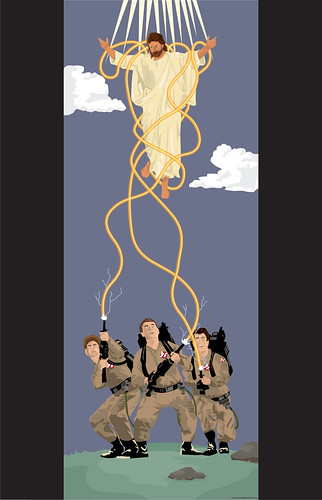 Okay...I can be sacrilegious sometimes. And when I saw this, I snickered pretty hard.


“Lord, to whom shall we go? You have the words of eternal life, and we have believed, and have come to know, that you are the Holy One of God.” John 6
 Stand Firm and The Living Church are reporting that an ordained priest in the ECUSA, who has described himself as having undergone Buddhist 'lay ordination,' is now positioned to run for bishop of the diocese in an unusual election. The others have covered both sides of the issue well enough. All that's left for me is small-minded snark...so here goes.
PASTORAL: Effeminate; an attribute lacking in a man who demonstrates overt masculine attributes of clarity, decisiveness, and orthodoxy: G.K. Chesterton was not pastoral.
RIGID: Your view is not my view; normally, the rigid person has a simplistic view of Catholic doctrine (see SIMPLISTIC); for example, a rigid person holds that the ordination of women is not possible; a flexible person holds that to fail to ordain women is an example of sexism. Evelyn Waugh was rigid: “It is better to be narrow-minded than to have no mind, to hold limited and rigid principles than to have none at all. That is the danger which faces so many people today ‚ to have no considered opinions on any subject, to put up with what is wasteful and harmful with the excuse that there ‘is good in everything’ ‚ which in most cases means an inability to distinguish between good and bad.”
VISION: The quality of agreeing with me.
JUDGMENTAL: A person who judges the sin but not the sinner. A non-judgmental person utters not a word on the morality of the usual sexual sins, but tries to determine “where a person’s at” so that the person’s motives can be judged accordingly; a non-judgmental person judges the sinner but not the sin.
SIMPLISTIC: Having to do with common sense.
CATHOLIC FUNDAMENTALIST: A simplistic person who tries to live the Faith in a docile and pious way; also a Catholic who frequently prays the Rosary.
FLEXIBLE: You agree with me; a flexible person is open and dialogues on any issue, smiles knowingly and does precisely what he started out to do.
CHALLENGE: To recognize that my views are better than your views.
GROWTH: For you to assimilate my way of thinking into your life.
ENABLE: An essential attribute of a priest whereby he is able to convince others to do things his way without parishioners catching on to the deception.
NETWORKING: Allowing nuns to run parishes.
I HEAR YOU: A clever way of telling you that I don’t agree with you but I don†t want to sound dogmatic, rigid or inflexible.
WE HAVE NO RIGHT ANSWERS/WE DON’T HAVE MANY ANSWERS: Except this one (cf. Archbishop Rembert Weakland on homosexuality: “...I would like to state that I do not have all the answers on this highly complex issue…” (The Catholic Herald, July19, 1980.)
YOU’RE NOT LISTENING: The way a flexible, non-judgmental person expresses disappointment that a rigid, dogmatic person doesn’t agree with him; example: the Pope is “not listening” to the American Church.
OPEN AND HONEST: Telling religious superiors what they want to hear.
WOUNDED HEALER: The term used to convince a person who doesn’t “feel good about himself” to feel good about himself without Confession.
WHERE YOU’RE AT: Your psychological condition when you’re in the state of mortal sin calling for acceptance and a non-judgmental attitude.
WHERE ARE THOSE TEARS COMING FROM?: The standard question to ask troubled or sick persons when you have nothing else to fill up the unnerving silence.
COMPLEX TECHNOLOGICAL WORLD: The reason for resisting one’s conscience when opposing the teaching of the Catholic Church; also, the standard response a flexible person uses when a rigid person seems to be winning an argument.
VALUING YOUR SEXUALITY: Obsession with the usual adolescent preoccupations.
WE ARE ALL SEXUAL BEINGS: The reason to overlook sexual misbehavior in seminaries.
CELIBACY: Refraining from heterosexual genital activity.
PROCESS: The spontaneous movement in the dialogue of group therapy sessions never to be disrupted by thinking.
FEELING: The highest faculty of the human person left fully untouched by original sin.
ORIGINAL SIN: See SEXISM.
LOVE: A nice feeling.
THINKING: The most dangerous activity in a seminary; cause for psychological counseling; those who think “disrupt the process”; see PROCESS.
TOUCH, MINISTRY OF: Physical contact to demonstrate that one has the capacity of intimacy; does not necessarily involve an exchange of bodily fluids.
IN TOUCH WITH FEELINGS: Using the intellect to explicitly identify what one is feeling so that speech patterns can be altered to communicate one’s sensitivity and compassion; not to be confused with “intellectualizing your feelings.”
INTELLECTUALIZING YOUR FEELINGS: Controlling one’s temper.
COMPASSION: The warm feeling one has for oneself at any given time; one who has compassion needs to tell others he/she has compassion, otherwise compassion isn’t present; see also IN TOUCH WITH FEELINGS.
COMPASSION BURNOUT: The loss of the warm feeling one has for oneself when charitable works become wearisome or otherwise costly.
SENSITIVITY: The ability to identify and agree with the conventional wisdom of left-wing political issues such as feminism, gay rights, dissent,etc. Tim Unsworth of the National Catholic Reporter describes a sensitive priest: “But Vince Connery also cries a lot. He cries openly and
unashamedly in private conversation and in public. He doesn’t cover his face or hide it in the crook of his elbow. He simply stands there and cries, letting the tears flow and the voice break; and if someone reaches out even slightly, Connery will share an embrace while he cries some more. It soon becomes clear that this is an emotionally healthy priest in an emotionally unhealthy church” (NCR April, 1987).
TOTAL COMMITMENT: The intensity of involvement in charitable works until one finds that one “doesn’t feel good” about oneself; total commitments usually last six months to a year.
LEGALISM: Accepting at face value and obediently implementing what a document, law, or guideline reads.
OBEDIENCE: A word which doesn’t exist.
RULES: A word that once was operative but was done away with by the Second Vatican Council.
EXPECTATIONS: Flexible guidelines which change as frequently as the feelings of the Rector; not to be confused with RULES or LEGALISM.
REPRESSED ANGER: If detected, a cause for dismissal from the seminary; probable cause of both world wars, the Holocaust, and the election of Ronald Reagan [and George H.W. Bush and George W. Bush]; a technique absolutely essential for an orthodox seminarian to get ordained.
FORMATION: Kindergarten.
AFFIRMATION: The flattery due to someone who is in a position of authority.
AUTHORITY: Cannot exist or be invoked unless vested in a sensitive, flexible, non-judgmental and compassionate person (see SENSITIVE, FLEXIBLE, and JUDGMENTAL).
SEXISM: The sin associated with being male.
MALE DOMINATION: The irritating interest men have in sports, cigars, and male-bonding, especially in the hierarchy of the Church; the only mortal personal sin.
FEMININITY: A word created by a sexist, male-dominated society to subjugate women in the maternal role; the presence of femininity in women religious is a cause to recommend psychological counseling.
GETTING IN TOUCH WITH ONE’S FEMININE SIDE: An essential requirement for ordination to the priesthood.
NEGATIVE: The bad attitude having to do with the recognition of personal sin; also, any disposition which is not happy with the policies and views of sensitive, flexible and non-judgmental people.
CHANGE: Mandated by the Second Vatican Council; must be open to all change unless instituted recently; see WE HAVE NO RIGHT ANSWERS.
CONCERN: The response that a sensitive, flexible, non-judgmental and compassionate people in authority have when someone doesn’t agree with them.
HUMANKIND: The human race free of sexism (see SEXISM).
PARENTING: The activity of humankind in begetting children (see HUMANKIND).
SPIRIT OF VATICAN II: Church activities and programs which have absolutely no relationship to the letter of the documents of Vatican II.
ONGOING: The period of time between the Second Vatican Council and the implementation of the Spirit of Vatican II (see SPIRIT OF VATICAN II).
RELEVANT: Anything to do with dissent from Church teaching.
PAIN: The focus of Church dissent; felt by the editors of the National Catholic Reporter and inflicted by the editors of The Wanderer.
REDEFINING THE CHURCH: Defining the Church according to the Spirit of Vatican II (see SPIRIT OF VATICAN II).
LIBERATION: The replacement of existing structures of constraint with new and improved structures of constraint.
CONSCIENCE: The final arbiter of the correctness of one†s action always to be guided by the latest in Church dissent.
PRE-VATICAN II: A person who accepts at face value the teaching of the Church and who reads the documents of the Second Vatican Council without reference to a commentary.
CHURCH: Me.
MACROCHURCH: The male-dominated, sexist, oppressive, authoritarian hierarchical Church.
MICROCHURCH: The pastoral, flexible, open and honest, compassionate, open-to-change, local Christian community.
COLLEGIALITY: The doctrine defined by the Spirit of Vatican II stating that bishops have exactly the same authority as the Bishop of Rome.
BISHOP OF ROME: The local ordinary of an obscure diocese in Italy.
RADICALLY CONSERVATIVE: Reason to ignore the current discipline of the Church.
THE FUTURE: The last and enduring hope of Church dissenters.
WE CAN’T GO BACK: An absolutely efficacious and disarming argument.
HUMANAE VITAE: The biggest mistake the Church has made since the Council of Trent.
COUNCIL OF TRENT: A convenient summary of medieval myths and superstitions.
ECUMENISM: The process of transforming the liturgical rites of the mainline Christian denominations into a single rite of coffee, donuts and dialogue.
TRADITION: A practice established before the Middle Ages or after the Second Vatican Council.
THE LAITY: The future of the Church; cannot be ignored unless associated with ultra-conservative groups.
ULTRA-CONSERVATIVE: Anyone who disagrees with the National Catholic Reporter.
TRADITIONAL NUN: Irrelevant; an embarrassment to women religious.
WOMEN RELIGIOUS: Feminist nun; an oxymoron.
SOCIAL JUSTICE: The realignment of social structures according to the platform of the Democratic Party.
PROGRESSIVE: Pouring the wine of old heresies into new wineskins.
CONSCIOUSNESS RAISING: The method of argumentation used by radical feminists moving adult males to action: “Better to live in a corner of the house-top than have a nagging wife and a brawling household” (Prov.21:9).
EXPERIENCE: The only valid way to substantiate one’s opinions and beliefs; there’s no such thing as a “bad experience.”
SPEAKOUT: The activity springing from the virtue of Social Justice whereby sensitive and compassionate persons, with great emotion, promote the platform of the Democratic Party.
SHRILL: The nasty habit rigid and judgmental people have when they dare to disagree with the demands of Social Justice (see SOCIAL JUSTICE).
PREFERENTIAL OPTION FOR THE POOR: Socialism.
MINISTRY: All human activity.
COMFORT, COMFORTABLE: The final cause and proper object of ministry.
PLURALISM: The acceptance of all points of view except those with a point of view which doesn’t accept all points of view.
CLERICALISM: The attitude of priests who knowingly and willingly practice the sacramental aspects of the priesthood with diligence, reverence and joy.
HOMOPHOBIC: The psychological condition of those who witness and report acts of homosexuality to seminary authorities.
GAY: Deeply sensitive person who naturally possesses the skills for effective pastoral ministry; oppressed minority; in no way connected with pederasty: cf. Fr. James L. Arimond: “Don’t confuse homosexual orientation with other sexual minorities: transexual; pederasty; bafoonery; etc.” from an Archdiocese of Milwaukee workshop in Gay Ministry.
SEXUAL PREFERENCE: Feeling good about some or all objects of desire whether animal, vegetable or mineral.
MISSION STATEMENT: A written objective or goal of a pastoral program upon which the success of the Gospel of Jesus Christ depends.
INTERFACE: A term, borrowed from computer technology, where sensitive and compassionate people dialogue among themselves; similar to the dialogue that the farmers and pigs engaged in in George Orwell’s Animal Farm.
ORDINATION: An archaic celebration in the Church still useful to mark the beginning of full-time ministry.
SEMINARY: School where men and women are prepared for full-time ministry.
OUTREACH: Any program for whatever reasons; also known as reach out; usually involves fundraising.
VOCATIONS CRISIS: Refers to the Church†s failure to relax the rules on celibacy and failure to ordain women.
SHARE: The practice of discussing the deepest intimacies of one’s life in front of complete strangers.
WORKSHOP: A church-sponsored meeting to ensure that the issues of optional celibacy, women’s ordination, the Sandinistas and leisure suits are still being addressed.
SELF-ACTUALIZATION: Salvation; no longer a mortal sin.
DIALOGUE: The deft use of banal clichés in conversation.
PROPHETIC/PROPHET: One who has the courage to speak out on one’s behalf; e.g., Charlie Curran.
CURRAN, CHARLIE: Twentieth century saint; went into debt defending his faith.
EMPOWER: To encourage others to think for themselves; cf., Evelyn Waugh: “Every effort was made to encourage the children at the public schools to think for themselves. When they should have been whipped and taught Greek paradigms, they were set arguing about birth control and nationalization. Their crude little opinions were treated with respect. Preachers in the school chapel week after week entrusted the future to their hands. It is hardly surprising that they were Bolshevik at 18 and bored at 20.”
POWERFUL: A spontaneous exclamation from hearing one†s own views restated in a more banal fashion.
LITURGISTS: “A society of men among us, bred from their youth in the art of proving by words multiplied for the purpose, that white is black, and black is white, according as they are paid” (Swift, Gulliver’s Travels).
EASTER DUTY: Annual sacrilege.
PSYCHOLOGIST: Infallible teaching authority in the Church.
OFFICIAL CHURCH TEACHING: “I don’t expect it to change anybody’s mind one way or another. Catholics today have learned what it means to be selectively obedient to the Church†s teaching” (Father Richard McBrien, Washington Post, December16,1981).
CHASTITY: Safe sex.
SAFE SEX: Taking appropriate precautions during high risk sexual activity; not to be confused with responsible love.
RESPONSIBLE LOVE: Sexual relations only within marriage with a spouse; an ideal impossible to sustain in a complex technological world.
HIGH RISK SEXUAL ACTIVITY: Sodomy; the term neo-Victorian Catholics use when referring to the kinds of sexual activity St. Paul warned against.
CLOWN MASS: Liturgical innovation comparable to the innovation of Gregorian chant; relevant: “A clown liturgy may sound sacrilegious but those who attended a special Mass at St. Agnes Church described it as moving, uplifting, spirited and colorful” (Catholic Herald, Milwaukee, February 16, 1984).
LITURGICAL DANCE: Liturgical innovation comparable to the innovation of Gregorian chant: “Today’s procession into the altar by the priest and some members of the laity was a dance in the early church” (Sister Barbara Linke); relevant: “For me, my body is my instrument - it’s my way of expressing myself,” she said, gesturing frequently with hand to convey her thoughts. “I feel free when I dance; it’s a natural expression.” (Sister Barbara Linke, quoted in the Milwaukee Sentinel, August 3, 1985).

Refrain
Rejoice, pro-choice! Emmanuel
has cabinet and judges seats to sell.
O come, desire of nations, blind
Us with your soaring rhetoric, sublime.
Bid rising waters hasty retreat,
And be the presidential Prince of Peace.
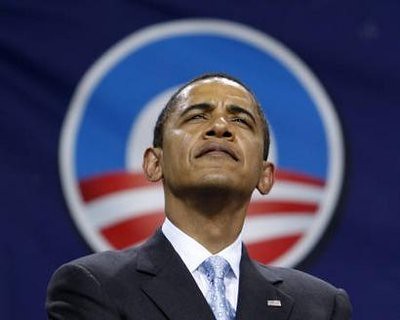 Rejoice, pro-choice! Emmanuel
has cabinet and judges seats to sell.