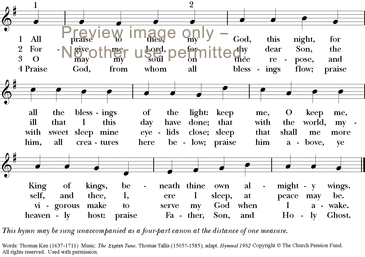
| O Worship the King - Lyons |  |
 | ||
 | Found at bee mp3 search engine |  |

Or the Chris Tomlin style?
| O Worship the King | |
| | ||
| Found at bee mp3 search engine | |

| O Worship the King - Lyons | |
| | ||
| Found at bee mp3 search engine | |
| O Worship the King | |
| | ||
| Found at bee mp3 search engine | |
 Why would the Chinese be so interested in our deficit? Well, for all intents and purposes, China is the official banker of the United States government. China is the number one foreign holder of U.S. Treasury securities. This has MAJOR implications on our independence and security, as well as our stance on issues of human rights.


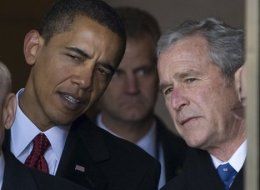
President Barack Obama pointedly nudged China on Monday to stop censoring Internet access, offering an animated defense of the tool that helped him win the White House and suggesting Beijing need not fear a little criticism.Yeah. Ask Fox News how well Obama takes a little criticism. Anita Dunn, the White House communications director, was interviewed last month and said: “We’re going to treat them the way we would treat an opponent. As they are undertaking a war against Barack Obama and the White House, we don’t need to pretend that this is the way that legitimate news organizations behave.” (Source: NYT)
It was a delicately balanced message and Obama couched his admonitions with words calling for cooperation, heavy with praise and American humility.Our country needs to apologize to China? When did that happen? We've stood up for their freedom for 70 years! And our economies energize each other, raising the standard of living for both countries.
"I think that the more freely information flows, the stronger the society becomes, because then citizens of countries around the world can hold their own governments accountable," Obama told students during his first-ever trip to China. "They can begin to think for themselves."

Counterfeit Gods: The Empty Promises of Money, Sex, and Power, and the Only Hope That Matters
A talk and book signing by the author, Dr. Timothy Keller (Excellent book review here.)
 Free and open to the public - No reservation needed
As pastor of Redeemer Presbyterian Church (PCA) in New York City, Dr. Timothy J. Keller makes a point of reaching out to immigrants, urban professionals and artists, offering an intellectually compelling case for belief in God. Newsweek magazine called Keller “a C.S. Lewis for the 21st century, a defender of orthodox Christianity.” He is the author of the best sellers, “The Reason for God: Belief in an Age of Skepticism” and, “The Prodigal God: Recovering the Heart of the Christian Faith.” He will be at Calvin for a talk about his just released book, “Counterfeit Gods.” Books will also be available for purchase and signing by Dr. Keller.
This presentation is the final event of the annual Festival of Faiths, and is sponsored by Carmichael’s Bookstore.

“I am amazed that church officials would threaten to stop helping the disadvantaged because they are being asked to treat all citizens of the District fairly,” he continued. “They seem to have lost all perspective. How strong is their commitment to helping the poor if they’re willing to take this hardline stance?It seems that everybody is required to take a break from any opinions that religious persons may have, but religious people don't have the same right of reprieve?
Sen. John Ensign (R-Nev.) received a handwritten note Thursday from Joint Committee on Taxation Chief of Staff Tom Barthold confirming the penalty for failing to pay the up to $1,900 fee for not buying health insurance.
Violators could be charged with a misdemeanor and could face up to a year in jail or a $25,000 penalty, Barthold wrote on JCT letterhead. He signed it "Sincerely, Thomas A. Barthold."
 What is this? Does anybody remember the STAMP ACT??? Let's not lose sight of the fact that Congress has no constitutional authority to make us buy their program. Government intervention is one of the biggest aggravating factors in this crisis, and more government intervention is not going to help.
ROME (Reuters) – An Italian inventor has combined faith and ingenuity to come up with a way to keep church traditions alive for the faithful without the fear of contracting swine flu -- an electronic holy water dispenser.
The terracotta dispenser, used in the northern town of Fornaci di Briosco, functions like an automatic soap dispenser in public washrooms -- a churchgoer waves his or her hand under a sensor and the machine spurts out holy water.
"It has been a bit of a novelty. People initially were a bit shocked by this technological innovation but then they welcomed it with great enthusiasm and joy. The members of this parish have got used to it," said Father Pierangelo Motta.
Catholics entering and leaving churches usually dip their hands into fonts full of holy water -- which has been blessed by a priest -- and make the sign of the cross.
But fear of contracting the H1N1 virus has led many in Italy -- where some 15 people have died of swine flu -- not to dip their hands in the communal water font.
"It's great," said worshipper Marta Caimm as she entered the church. "Thanks to this we are not worried about catching swine flu. It is the right thing for the times," she said.
Luciano Marabese, who invented the dispenser, said he did so out of concern that fear of swine flu was eroding traditions.
And he is now blessing himself all the way to the bank.
"After all the news that some churches, like Milan's cathedral, were suspending the use of holy water fonts as a measure against swine flu, demands for my invention shot to the stars. I have received orders from all over the world," he said.
(Reporting by Eleanor Biles; Writing by Philip Pullella; Editing by Louise Ireland)

Our Church has two aspects: On the one hand we claim to be a Church possessing Catholic Tradition and continuity from the ancient Church, and our Catholic Tradition and continuity includes the belief in the real Presence of Christ in the Blessed Sacrament; the order of Episcopacy and the Priesthood, including the Power of a priestly absolution. We possess various institutions belonging to Catholic Christendom like monastic orders for men and women. Our Anglican Tradition has another aspect as well. We are a Church which has been through the Reformation, and values many experiences derived from the Reformation, for instance, the Open Bible: great importance is attached to the authority of the Holy Scriptures, and to personal conviction and conversion through the work of the Holy Spirit.8What we have said about the Orthodox attitude towards Rome applies to some extent also to the Orthodox attitude towards Anglicanism. The Orthodox belief that their Church is the one Holy, Catholic, and Apostolic Church on earth, gives the impression that Orthodox theology is even more exclusive than Roman Catholic. But the Orthodox Church has shown some recognition of the sacraments of other churches. For instance, her practice of receiving converts from Rome or Anglicanism by Chrismation without Re-baptism (though this has not always been the case in the past) 'is a clear indication that the sacramental limits of the Church do not coincide with its ceremonial boundaries'.9
though there is High Church and Low Church, it is all the time One Church with a single life, and all the members of the Church of England share together in the Creeds, Holy Scriptures, the Sacraments, the rule of the Bishops and the Liturgy; so do not think of High Church and Low Church as utterly separate factions but as two aspects of the life of a Church which is all the time one.10Some Orthodox theologians judge the Church of England from the Thirty-Nine Articles alone, which prevents them from having a true appreciation of this Church from an Orthodox point of view. 11
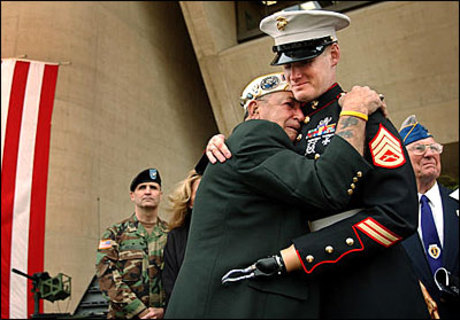 can say WAY MORE than 1,000 words.

 Also, today in 1992, the General Synod of the Church of England voted to abandon catholic order and permit the ordination of women to the presbyterate. At the time, I was in high school. Having grown up pentecostal (which always allowed for women as pastors), I didn't see what the big deal was. In America, women had served as deacons, priests, and even bishops for years in the Episcopal Church. I now have a different view. (ooh...looks like someone somewhere is missing pieces of a white picket fence)
On Saturday, after Catholic lobbyists had finalized a deal with House Speaker Nancy Pelosi, the most prominent Catholic in the U.S. Government, the Politico reported that the United States Conference of Catholic Bishops had "delivered a critical endorsement" to Pelosi "by signing off on late-night agreement to grant a vote on an amendment barring insurance companies that participate in the exchange from covering abortions."Anybody taking bets on whether or not Barry Lynn and the folks at Americans United for Separation of Church & State are going to sue? Or is their defamation only when they also politically oppose the "meddling"?The Hill newspaper reported that Energy and Commerce Chairman Henry Waxman (D-Calif.) had been trying to broker a deal and appealed to the Catholic Bishops. "I would like the [U.S. Conference of Catholic] Bishops, who as I understand it want a bill, to help us work out a plan where we don't have winners and losers," Waxman was quoted as saying. "Because the losers will make us lose the bill and the winners won't have won anything."
NBC's Doug Adams reported that the Catholic Bishops were "lobbying hard."
The shocking turn of events once again demonstrates the extreme left-wing drift of the Catholic Church, which is the nation's largest religious denomination with 67 million members and run by the U.S. Conference of Catholic Bishops. But their role in passing Pelosicare is not the only evidence of such a turn. The Bishops poured more than $7.3 million of parishioners' money into the corrupt left-wing organization ACORN over the last decade before publicity over the organization's scandals forced suspension of the funding.
 The wife is outta town so I'm parenting without a net. Here's something to make it go better. Technically, these are more of a dinner biscuit (yes - Southerners have different biscuits for different occasions), but they're so good with butter or jelly that I can't resist!

My bias is to be against the whole idea of apparitions in general. I know some Christians of a catholic bent live by them, but since they aren't something seen in all branches of Christendom, I treat them with some skepticism.Jonesborough resident Jim Stevens admits he’s not a particularly religious person, but even he is awed by what he has seen nearly every morning for the last couple of weeks on the driver’s side window of his Isuzu pickup truck.
It was two weeks ago today that an image, resembling the face of Jesus, made its first appearance on the window. Stevens, who said he has a “bum shoulder,” was having friends from Rogersville help move some items. He entered his truck from the passenger’s side to put his drink inside the vehicle. He said when he went around the truck to the driver’s side, the image was there. Initially, Stevens said he figured the image would go away and that would be the end of it.
But since it first showed up, a morning dew has led to the appearance of the image. Later in the day, when the dew from the morning evaporates, Stevens said the image goes with it. However, when the dew returns the next morning so does the image on the window. Even rolling the window up and down has not stopped it from reappearing.


The Good Funeral: Recovering Christian practices, by Dr. Tom Long
(taken from the Christian Century)
When Elizabeth Janzen died in a Minneapolis nursing home, the staff immediately notified the closest relative, her daughter Sarah in St. Louis. Sarah, who had faithfully visited her mother once a month, arranged for Elizabeth to be cremated, for the ashes to be sent to St. Louis and for an obituary to be placed in the Minneapolis newspaper. A month later, Sarah took the ashes to a lake in rural Minnesota, where Elizabeth and her family had often vacationed, and scattered them on the water.
A week later, a memorial service was held in the chapel of the Minneapolis church where Elizabeth had kept her membership, though her health had prevented her from attending for a number of years. On a table at the entrance to the chapel were placed several photographs of Elizabeth at various stages in her life, her Bible, a ceramic vase she had made, and a few other personal mementos.
At the service, Sarah read one of her mother's favorite poems, Elizabeth's younger sister told an amusing story about their childhood, the chaplain from the nursing home read Psalm 23 and prayed a brief prayer giving thanks for Elizabeth's life, and two of Elizabeth's former students (she had taught high school for more than 30 years) read fond reminiscences of her as a teacher. After a time of quiet reflection, during which they listened to a recording of Judy Collins's rendition of "Amazing Grace" (one of Elizabeth's favorite hymns), the small group in the chapel silently dispersed.
Elizabeth Janzen is fictitious, but the rituals marking her death represent a rapidly emerging trend in Christian funeral practices. With surprising swiftness and dramatic results, a significant segment of American Christians has over the past 50 years abandoned previously established funeral customs in favor of an entirely new pattern of memorializing the dead. This new pattern is not firmly fixed (indeed, variations, improvisations and personal customizations are marks of the new rituals) but it generally includes the following characteristics:
• a memorial service instead of a funeral (i.e., a service focused on remembering the deceased, often held many days after the death, with the body or the cremated remains of the deceased not present)
• a brief, simple, highly personalized and customized service, often involving several speakers (as opposed to the standard church funeral liturgies presided over primarily by clergy)
• a focus on the life of the deceased (often aided by a physical display of photos and other mementos)
• an emphasis on joy rather than sadness, a celebration of life rather than an observance of the somber reality of death
• a private disposition of the body, often done before the memorial service, with an increasing preference for cremation
The shift toward this new pattern has not happened everywhere, of course. It is most pronounced among white, suburban Protestants, and the older customs often still prevail in rural areas, among nonwhites and in many Catholic parishes. But these differences seem more a matter of lag time than anything else. The trend lines are clear, and it is apparent that funeral practices for all Christians, as a part of the larger culture, are moving at various rates of speed toward this new pattern.
A significant number of Christian clergy, especially those who are more progressive and better educated, applaud many of these changes. While they may be troubled somewhat by the open-mike atmosphere of these new services or by the inevitable banalities of some of the poems, songs, readings and other elements imported into them, they nevertheless find them preferable to the older, often depersonalized and more somber rituals of the past—primarily for two reasons.
First, the preference for memorial services, the emphasis on joy or even on laughter, the de-emphasis on the body of the deceased, and the celebration of the personal aspects of the life of the one who has died all seem more commensurate with the Christian witness to the resurrection. Second, the valuing of simpler, less formal services provides leverage for people to break loose from the stranglehold of showy, expensive and burdensome funeral practices so prized by the funeral industry.
These clergy are unquestionably well intentioned, and they are right to find some encouraging signs here, but I want to raise some basic theological questions about this emerging pattern of death practices. I would like to suggest that these newer rituals, for all of their virtues of freedom, simplicity and seeming festivity, are finally expressions of a corrupted understanding of the Christian view of death. These newer practices are attractive mainly because they seem to offer relief from the cosmeticized, sentimental, impersonal and often costly funerals that developed in the 1950s, which were themselves parodies of authentic Christian rituals. Contemporary Christian funeral practices certainly need to be changed, but change should be more a matter of recovery and reformation than innovation and improvisation.
In the early years of the Christian movement, Christians developed distinct funeral practices that, while woven from local customs, still reflected Christian theology. At the beginning of the third century, Tertullian could already speak of an "appointed office" for Christian burial in North Africa, and certainly by the late fourth century the contours of a distinct Christian funeral rite began to appear. This rite was composed of three movements: preparation, processional and burial.
In the preparation movement, the body was washed, anointed and clothed in garments representing baptism. In the processional phase, the body was carried to the grave, and sometimes the procession entered the church on the way for prayer and the reading of scripture. The burial phase took place at graveside and included the commendation of the deceased to God and the actual burial of the body. During each movement, the church prayed, chanted psalms and sang hymns of joy. Often a Eucharist was held, either in the church or at the grave.
The theme of the service was the completion of baptism, and the church accompanied a brother or sister to the place of union with God through the resurrection of Christ. Taken as a whole, the early Christian funeral was based on the conviction that the deceased was a saint, a child of God and a sister or brother of Christ, worthy to be honored and embraced with tender affection. The funeral itself was deemed to be the last phase of a lifelong journey toward God, and the faithful carried the deceased along the way to the place of final departure with singing and a mixture of grief and joyful hope.
In subsequent centuries, this basic funeral pattern sometimes struggled for visibility against cultural and theological changes. For example, the joyful Easter motif of the early Christian funeral was nearly submerged by a gloomy "Day of Wrath" theology of the late Middle Ages, and the Puritans, offended by what they saw as excesses in Anglican funerals, tried, unsuccessfully as it turns out, to get rid of funeral ceremony altogether. Nevertheless, the basic pattern and practices of Christian burial managed to weather the storms and continued to exert a strong force on Christian funerals until the late 19th century.
This review of the development of classic Christian funeral practices should make it evident that the pattern for funerals now appearing is not simply a modernization and adaptation of traditional customs but a radical, and finally diminished, replacement of Christian ritual.
For example, the current shift to a memorial service with the body absent means that Christian death practices are no longer metaphorical expressions of the journey of a saint to be with God. The saint is not even present, except as a spiritualized memory, a backdrop for the real action, which happens in the psyches of the mourners. The mourners are the only actors left, and the ritual now is really about them. Funerals are "for the living," as we are prone to say. Instead of the grand cosmic drama of the church marching to the edge of eternity with a fellow saint, singing songs of resurrection victory and sneering in the face of the final enemy, we now have a much smaller, more privatized psychodrama, albeit often couched in Christian language. If we take the plot of the typical memorial service at face value, the dead are not migrating to God; the living are moving from sorrow to stability.
How did the church shift from the understanding of a funeral as the joyful accompanying of a saint on "the last mile of the way" to a reflective, disembodied, quasi-Gnostic cluster of customs and ceremonies? What happened in the latter part of the 19th century?
Because this is precisely the time that embalming became widespread and the modern funeral parlor developed, it is almost irresistible to blame the newly minted funeral professionals for all the mischief. As the argument goes, undertakers reinvented themselves as funeral directors and rode the technological advances in embalming all the way to the bank. They first took the dead away from us in order to embalm them, and then they took the funeral itself away and turned it from a worship service into a vulgar display of conspicuous consumption.
The truth, however, is that a guild of embalming technicians could never have become directors of any sacred Christian ritual, could never have taken the funeral away, had not church and culture been more than ready to hand it over. Almost every developed society, even ancient Rome, has had "undertakers" who assist with the preparation of the dead, but even if 19th-century undertakers had hatched a plot to hijack the Christian funeral, it would have failed if our death rituals had been healthy and full of meaning.
If Christian funerals today are impoverished, we must look primarily to the church's own history and not look with scorn at the funeral director. The fact is that many educated Christians in the late 19th century, the forebears of today's white suburban Protestants, lost their eschatological nerve and their vibrant faith in the afterlife, and we are their theological and liturgical heirs. It was not, of course, as if the whole of 19th-century Christian society woke up one morning and suddenly found that they no longer believed in eternal life. The loss of conviction about the otherworld came slowly and gradually.
In the decades after the Civil War, the quite literal views of many American Christians regarding heaven, hell, the end of the world, the resurrection of the body and the second coming of Jesus began to ebb away. A recent study by Drew Gilpin Faust points out that the sheer devastation of the Civil War itself, the staggering number of dead, the violence and loss of life out of all proportion to the ability of most people to make meaning from it, accelerated the 19th century's already growing crisis of faith. She writes:Civil War carnage transformed the mid-nineteenth century's growing sense of religious doubt into a crisis of belief that propelled many Americans to redefine or even reject their faith in a benevolent and responsive deity. But Civil War death and devastation also planted seeds of a more profound doubt about human ability to know and understand. . . . The Civil War compelled Americans to ask with intensified urgency, "What is Death?" and in answering to find themselves wondering why is death, what is life, and can we ever hope to know? We have continued to wonder ever since.
Part of the crisis of faith was about eschatology. In the 1840s, some Christians confidently calculated the exact date of Jesus' return, only to have their hopes, and for many of them their naive faith, crushed when Jesus did not come—a time that came to be called the Great Disappointment. Even less advent-minded Christians of the time had to reckon with the impact of the rising sciences, of Darwinism, and of the new skeptical philosophies imported from Europe. Consequently, the literalisms of the past came under severe stress. Pictures of Jesus coming in the clouds, of the dead rising bodily from the graves, of the saints arrayed in glory, became less and less imaginable, less and less plausible.
The notion of heaven was not altogether abandoned. Instead, it was revised and domesticated. Heaven was reimagined as a place very much like the best of earth, sometimes not a place at all but simply an intensification of earthly delights, and the idea of the resurrection of the body yielded to the more gentle and continuous notion of the immortality of the soul. One late-19th-century member of the clergy characteristically said, "To me, heaven means only myself with larger opportunity. It means this earth-life grown into perfection." Lucy Larcom, in a devotional essay characteristic of the period, wrote:Surprises doubtless await us all, across the boundaries of this earthly existence. But none, perhaps, will be more surprised than those humble, faithful, self-sacrificing souls who have often almost dreaded the strange splendors that might open upon them beyond the gates of pearl, when they find that it is the same familiar sunshine in which they have been walking all their days, only clearer and serener. They will wonder that they have no new language to learn, no new habits to form, almost no new acquaintances to make. They will at last discover what their humility hid from them here, that while on earth, without knowing it, they had already been living in heaven.
No wonder the metaphor of journeying to be with God began to break apart at the seams. If people had "already been living in heaven," then there was, after all, nowhere for the dead to travel, and without letting go of the vocabulary of the otherworld, mainline Protestants in the late 19th century, long before John Lennon, could well "imagine there's no heaven."
A second significant development was the creation of rural cemeteries located some distance away from towns and villages. At first, cemeteries were separated from the living because of the notion that putrefying bodies produced miasmas, noxious gases that caused disease, but by the end of the 19th century, rural cemeteries were less about avoiding pollution and more about aesthetics. They were landscaped, gardenlike environments designed to encourage quiet and restful contemplation of nature, immortality and the meaning of life.
The more practical effect of these remote cemeteries, as Susan J. White has pointed out, was the division of the previously unified funeral ritual into two discrete parts: the funeral in the church and the burial in the distant cemetery. It was not long before this separation in distance became a separation in liturgical fact and in theological symbolism. The funeral was no longer a journey to the place of burial; it became a stationary event completely contained within the church building. The graveside ritual became a mere optional afterword. As White observes, "The removal of the gravesite to a location far away from the precincts of the church depletes a fund of theological and communal images and severely reduces the sense . . . that the living and the dead are part of one 'holy communion.'" So, with heaven gone and with the cemetery miles away, neither the dead nor the living had anywhere to go, and the metaphor of the journey to God collapsed.
Surely the task before the church now is to retrace our steps and to recover the grand liturgical theater in which Christians embrace their dead with tender affection, lift up their voices in hymns of resurrection and accompany the saints to the edge of mystery. This will not involve a mere repristinating of funeral practices or a rejection of cremation, but a recovery in our time and in contemporary forms of the governing symbols of the communion of saints, the resurrection of the body, and the journey of Christian dead toward the life everlasting.
In the meantime, the seeds planted in the 19th century continue to bear weeds. Since literalistic views of heaven and the saintly journey are no longer plausible to us, and since we lack the theological imagination to grasp the poetic truth and power of these metaphors, dead Christians have nowhere to go but to evaporate into the spiritual ether and into our frail memory banks. With heaven domesticated, the soul morphed into an immortal gas, the corpse become a shell and the cemetery moved out of sight, it was almost inevitable that the dead with their embarrassing bodies would be banned from their own funerals and the living would be condemned to sit motionless, contemplating the meaning of it all and pretending to celebrate life as the nephew of the deceased sings "When Irish Eyes Are Smiling."
Surely our culture will eventually weary of such liturgical and spiritual thinness and be ready for more depth, for more truth—for our sake and for the sake of those we love. When we are, the great drama of the journey to God will be there, beckoning us to join the procession of the saints. We will travel toward eternity with those we have loved, singing as we go and calling out to the distant shore in words of confident hope, like these from an ancient Coptic funeral prayer:Let the shadows of darkness be full of light. Let the angels of light walk before him.
Let the gate of righteousness be opened to him. Let him join the heavenly choir.
Bring him into the paradise of delight. Feed him from the tree of life.
Let him rest in the bosom of our ancestors, Abraham, Isaac and Jacob, in your kingdom.
| This article is excerpted from Thomas G. Long's book Accompany Them with Singing: The Christian Funeral, just published by Westminster John Knox. |
 |
| Thomas G. Long is professor of preaching at Emory University's Candler School of Theology in Atlanta and the author of Preaching from Memory to Hope (Westminster John Knox). |
...is a Christian Dance Routine. (Just epic.)
If you want some lasting renewing of your mind, I suggest going to something a little more meaty.
 Now the VATICAN has gone the way of the charismaniacs. According to the Telegraph:
I'd be more worried about the spread of clown masses and the proliferation of Marty Haugen / David Haas' tripe, tyvm.The Holy See has warned that parents should not allow their children to dress up as ghosts and ghouls on Saturday, calling Hallowe'en a pagan celebration of "terror, fear and death".
The Roman Catholic Church has become alarmed in recent years by the spread of Hallowe'en traditions from the US to other countries around the world.
Earlier this week the Catholic Church in Spain also condemned the growing popularity of Halloween, saying it threatened to overshadow the Christian festival of All Saints' Day.
The Bishop of Siguenza-Guadalajara, Jose Sanchez, said there was a risk that Halloween could "replace Christian customs like devotion to saints and praying for the dead."
Yeah...nothing overturns superstition like...more superstition. Ever been to El Día de los Muertos celebracíon? I'd hardly call it Christian. Ancestor worship comes to mind, though.
 Just look at that.
 Yessirree. Chock-full to brimmin' with Christianity.
 Kimberly Daniels, a guest writer for CBN Online, has written an article supposedly exposing the forces of evil and their use of the secularized All-Hallow's E'en celebration (Halloween). Unfortunately, the only not-so-hidden truth the article exposed was that this woman desperately needs to go to seminary before she ever speaks as a public Christian leader again. I don't mean to be mean, but she starts with error, and goes downhill from there.
First, she seems to think there's an unholy godhead - consisting of a perverse trinity:
Lucifer is a part of the demonic godhead. Remember, everything God has, the devil has a counterfeit. Halloween is a counterfeit holy day that is dedicated to celebrating the demonic trinity of : the Luciferian Spirit (the false father); the Antichrist Spirit (the false holy spirit); and the Spirit of Belial (the false son).Didja get that? Yeah...me neither. The Trinity is oneness of being in three self-submitting persons. That's absolutely antithetical to the "me-first"-ness of the fallen one. I don't think Ms. Daniels knows what she's talking about - either on the trinity or on demonology.
During this period demons are assigned against those who participate in the rituals and festivities. These demons are automatically drawn to the fetishes that open doors for them to come into the lives of human beings. For example, most of the candy sold during this season has been dedicated and prayed over by witches.Seriously? I mean...as a homeschooler, I've been to candy-making plants. A friend of mine grew up in the Presbyterian church that the owner of Spangler Candy (maker of Dum-Dum Pops) attended. I've seen plenty of ovens, but nary a coven in those places.I do not buy candy during the Halloween season. Curses are sent through the tricks and treats of the innocent whether they get it by going door to door or by purchasing it from the local grocery store. The demons cannot tell the difference.
Even the colors of Halloween (orange, brown and dark red) are dedicated. These colors are connected to the fall equinox, which is around the 20th or 21st of September each year and is sometimes called "Mabon." During this season witches are celebrating the changing of the seasons from summer to fall. They give praise to the gods for the demonic harvest.
 Oh...it's worse. She claims to be an apostle.
The gods of harvest that the witches worship during their fall festivals are the Corn King and the Harvest Lord.Um...I think anyone who would publish this tripe deserves to be crowned Corn King.
Halloween is much more than a holiday filled with fun and tricks or treats. It is a time for the gathering of evil that masquerades behind the fictitious characters of Dracula, werewolves, mummies and witches on brooms. The truth is that these demons that have been presented as scary cartoons actually exist.
There is no doubt in my heart that God is not calling us to replace fall festivals and Halloween activities; rather, He wants us to utterly destroy the deeds of this season. If you or your family members have opened the door to any curses that are released during the demonic fall festivals, renounce them and repent.
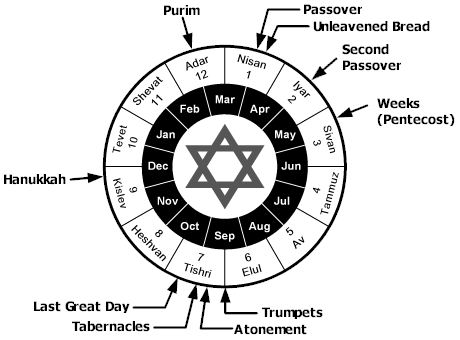 Remember, this is God's inspired Word we're talking about. And He told His people to hold these festivals during times when the pagan Canaanites around them would be having similar harvest festivals. He even talks about the ingathering of humans to the Kingdom as a harvest.
Although this booklet reflects on the theological situation in the Church of England, and that at a particular time, some of the following observations hold good for more contemporary movements. For although there have been several historic forms of liberal theology there is also a liberal mood or mindset:
First, the basis of all forms of this position is the hypothesis that no universally right way of thinking about God is given in Christianity.Unable to accept what might be called a Chalcedonian view of Scripture (i.e. that it is fully human as well as fully divine, and fully divine as well as fully human), they have doubted both the reality of the Chalcedonian Christ to whom the New Testament witnesses and the propriety of reading Scripture as more than a rag-bag of traditions, intuitions, fancies and mythology whereby good men celebrated and shared their sense of being in touch with God - a contact occasioned for New Testament writers by a uniquely godly man named Jesus.
That prophets and apostles no less than creeds and churches can all be wrong on questions of reality and truth, is plank one in the liberal platform. Scripture and the Christian literary heritage are certainly stimulating, inspiring and effective in communicating God, but that does not make them true.
So the constant endeavour of the liberal fraternity from the start has been to go behind and beyond biblical witness to reformulate the faith in terms which to them, as modern men, seem truer, clearer and less inadequate (whether evolutionist, idealist, panentheist, deist, existentialist, Marxist; sociological, psychological, syncretistic; or whatever).
Certainly, for today’s liberals there are no fixed fundamentals; everything, not excluding the doctrine of God - indeed, some say, that first - is regarded as in principle open to review and change.
...liberals have no united platform or policy, for they hold in common only...negations...plus the sifting, reshaping methodology which these negations entail. They agree only in what they are against; beyond this it is every man for himself.
Sykes notes that ‘a “liberal” theological proposal is always in the form of a challenge to an established authority, and thus necessarily implies a dispute about the appropriate norms or criteria for any theology whatsoever.’ He notes too that ‘it is impossible to be merely a “liberal” in theology one’s theology … will be liberal in as much as it is a modification of an already existing type’ - liberal catholic, liberal evangelical, or even liberal latitudinarian.
And he rightly stresses that any church in which liberals do their thing, querying the traditional and jettisoning the conventional, will have to endure real divergences of belief as some negate what others affirm and affirm what others cannot but negate.
[A]ll forms of liberalism are unstable. Being developed in each case by taking some secular fashion of thought as the fixed point (evolutionary optimism, historical scepticism, Marxist sociology, or whatever), and remodelling the Christian tradition to fit it, they are all doomed to die as soon as the fashion changes, according to Dean Inge’ s true saying that he who marries the spirit of the age today will be a widower tomorrow.
It is not always realised that the history of the past century and a half is littered with the wreckage of dead liberalisms. Though liberalism as an attitude of mind (going back at least to the Renaissance, if not indeed to the temptation of Eve) has persisted, and persists still, particular liberalisms have so far been relatively short-lived, and can be expected to continue so. Some liberals cheerfully acknowledge this and never treat their current opinions as more than provisional, anticipating that they may think differently next week.
h/t Against Heresies