2009-10-20


2009-10-17
Bp. Ackerman and Suspicion of Deposition
Everytime I see this picture I'm more and more convinced that she's cackling "I'll get you my pretty! You and your little dog, too!"
 Episcopal News Service reports that Dr. Katharine Jefferts Schori notified Bp. Keith Ackerman by mail and email October 16 that she has accepted the former Bishop of Quincy's voluntary renunciation of ordained ministry in the Episcopal Church.
 From an Anglo-Catholic perspective, I've got to chuckle a bit. Since his firm conviction is that Dr. Schori cannot be a presbyter, much less a bishop in the Church of God, what effect can this possibly have? The only thing it means is that if someone catches him confirming or ordaining or otherwise acting episcopally or sacerdotally in a TEC-affiliated building, he might be escorted out by police (should locals be inclined to report it).
He had maintained his position as a retired TEC bishop specifically so that he could continue to provide confirmations, dedications, chrism masses, etc. for FiF churches in TEC (only at the invitation of the ordinary, of course). In case Dr. Schori isn't familiar with these functions, this is what bishops do in the church.
I think the most that can be said about her unilateral action is that Bp. Keith is no longer under any obligation to advocate for the Millenium Developmental Goals. Now he can get back to praying for God's reign, rather than trying to pretend.
Episcopal News Service reports that Dr. Katharine Jefferts Schori notified Bp. Keith Ackerman by mail and email October 16 that she has accepted the former Bishop of Quincy's voluntary renunciation of ordained ministry in the Episcopal Church.In a statement released by the Presiding Bishop's office October 16, JeffertsSchori cited Title III, Section 7 of the Canons: "I have accepted the renunciation of the Ordained Ministry of this Church, made in writing to me in July 2009 by the Rt. Rev. Keith L. Ackerman, Bishop of Quincy, Resigned who is, therefore, removed from the Ordained Ministry of this Church and released from the obligations of all Ministerial offices, and is deprived of the right to exercise the gifts and spiritual authority as a Minister of God's Word and Sacraments conferred on him in Ordinations.”According to the statement, Jefferts Schori had thanked Ackerman in an October 7 letter "for your follow up note regarding your plans to function as a bishop in the Diocese of Bolivia in the Province of the Southern Cone. As you know, there is no provision for transferring a bishop to another Province. I am therefore releasing you from the obligations of ordained ministry in this Church.”
The full text of the her October 7 letter may be read here.
From an Anglo-Catholic perspective, I've got to chuckle a bit. Since his firm conviction is that Dr. Schori cannot be a presbyter, much less a bishop in the Church of God, what effect can this possibly have? The only thing it means is that if someone catches him confirming or ordaining or otherwise acting episcopally or sacerdotally in a TEC-affiliated building, he might be escorted out by police (should locals be inclined to report it).He had maintained his position as a retired TEC bishop specifically so that he could continue to provide confirmations, dedications, chrism masses, etc. for FiF churches in TEC (only at the invitation of the ordinary, of course). In case Dr. Schori isn't familiar with these functions, this is what bishops do in the church.
I think the most that can be said about her unilateral action is that Bp. Keith is no longer under any obligation to advocate for the Millenium Developmental Goals. Now he can get back to praying for God's reign, rather than trying to pretend.
2009-10-14
This is the Feast
New setting for "This is the Feast" from Alleluia! -- a brand new setting for the communion mass, performed by The Braeded Chord.
Alleluia! is filled with memorable melodies and beautiful instrumentation set to upbeat rhythms. While it is fully scored for acoustic instruments-- piano, guitar, flute, and violin, it easily translates to contemporary instruments like drum, bass, and electric guitar (lead sheets available), as this recording demonstrates. Alleluia! bridges the gap between ancient tradition and modern worship.
While I appreciate its upbeat tempo, I'd like to hear the whole service. Also, it strikes me that with the writing duo's natural harmonies, something might be lost in trying to sing this in unison. Since I haven't seen the lead, I don't know how well this is compensated for, but I try to eschew service music that can only be performed by skilled singers / harmonists.
(Nothing wrong with uber-complicated introits, sequences, offertories, etc., but I think the modern church music trend runs the danger of the Medieval & baroque choral tradition of taking singing away from the people through needless complexity.)
(I'm also unrepentantly satisfied with the two - count'em, TWO - settings of this hymn already in the 1982 Hymnal /1979 LBW.)
Alleluia! is filled with memorable melodies and beautiful instrumentation set to upbeat rhythms. While it is fully scored for acoustic instruments-- piano, guitar, flute, and violin, it easily translates to contemporary instruments like drum, bass, and electric guitar (lead sheets available), as this recording demonstrates. Alleluia! bridges the gap between ancient tradition and modern worship.
While I appreciate its upbeat tempo, I'd like to hear the whole service. Also, it strikes me that with the writing duo's natural harmonies, something might be lost in trying to sing this in unison. Since I haven't seen the lead, I don't know how well this is compensated for, but I try to eschew service music that can only be performed by skilled singers / harmonists.
(Nothing wrong with uber-complicated introits, sequences, offertories, etc., but I think the modern church music trend runs the danger of the Medieval & baroque choral tradition of taking singing away from the people through needless complexity.)
(I'm also unrepentantly satisfied with the two - count'em, TWO - settings of this hymn already in the 1982 Hymnal /1979 LBW.)
2009-10-12

2009-10-09
How to Win the Nobel Peace Prize In 12 Days

I can hardly believe it took them that long. He'd already written an autobiography at 30...surely he already knew how great he was, right? After nominating Hitler and Tookie the Cop-Killah, and actually awarding this prize to Yassir (strap-a-bomb-to-a-kid) Arafat, I can hardly see how this award has any credibility left.
Editor's Note: Although President Obama had only been in office for 12 days before the nominations for this year's Nobel Peace prize closed the entire process actually takes a full year. According to the official Nobel Prize Web site invitation letters are sent out in September. Every year, the Norwegian Nobel Committee sends out thousands of letters inviting a qualified and select number of people to submit their nominations for the Nobel Peace Prize. The deadline to submit nominations is February 1. -- Two hundred five names were submitted for the 2009 Nobel Peace Prize, 33 of which are organizations. A short list of nominees is prepared in February and March. The short list is subject to adviser review from March until August. At the beginning of October, the Nobel Committee chooses the Nobel Peace Prize Laureates through a majority vote. The decision is final and without appeal. The names of the Nobel Peace Prize Laureates are then announced."
Barack Obama won the Nobel Peace Prize this morning. Over the last decade the only requirement to win the prize was that the nominee had to be critical of George W. Bush (see Al Gore, Mohamed El Baradei and Jimmy Carter).
President Obama has broken new ground here. Nominations for potential winners of the 2009 Nobel Peace Prize ended on February 1. The president took office only 12 days earlier on January 20.
Let’s take a look at the president’s first 12 days in the White House according to his public schedule to see what he did to deserve a Nobel Peace Prize:
January 20: Sworn in as president. Went to a parade. Partied.
January 21: Asked bureaucrats to re-write guidelines for information requests. Held an “open house” party at the White House.
January 22: Signed Executive Orders: Executive Branch workers to take ethics pledge; re-affirmed Army Field Manual techniques for interrogations; expressed desire to close Gitmo (how’s that working out?)
January 23: Ordered the release of federal funding to pay for abortions in foreign countries. Lunch with Joe Biden; met with Tim Geithner.
January 24: Budget meeting with economic team.
January 25: Skipped church.
January 26: Gave speech about jobs and energy. Met with Hillary Clinton. Attended Geithner's swearing in ceremony.
January 27: Met with Republicans. Spoke at a clock tower in Ohio.
January 28: Economic meetings in the morning, met with Defense secretary in the afternoon.
January 29: Signed Ledbetter Bill overturning Supreme Court decision on lawsuits over wages. Party in the State Room. Met with Biden.
January 30: Met economic advisers. Gave speech on Middle Class Working Families Task Force. Met with senior enlisted military officials.
January 31: Took the day off.
February 1: Skipped church. Threw a Super Bowl party.
So there you have it. The short path to the Nobel Peace Prize: Party, go to meetings, skip church, release federal funding to pay for abortions in foreign countries, party some more.
Good grief.
Read more Tommy De Seno at www.JustifiedRight.com.
h/t Bp. Chuck

UNINSURED
Some quarters are screaming because "44,789 Americans die every year because they have no health insurance."
How humanitarian of them.
Now, since that's 1/30th the number of Americans every year who are murdered in the womb, can we get some perspective on the moral opprobrium?
How humanitarian of them.
Now, since that's 1/30th the number of Americans every year who are murdered in the womb, can we get some perspective on the moral opprobrium?
2009-10-08
From the Homily Against Idolatry
I want to give full vent to the breadth of Anglican experience, so in contrast to my post from the Allentown Tracts, I offer this selection from the Book of Homilies: The whole is available here.
...Wee should not worship Images, and that we should not have Images in the Temple, for fear and occasion of worshiping them, though they be of themselves things indifferent: for the Christian is the holy Temple and lively Image of GOD, as the place well declareth, to such as will read and weigh it. And whereas all godly men did ever abhor that any kneeling and worshiping or offering should bee used to themselves when they were alive (for that it was the honour due to GOD only) as appeareth in the Acts of the Apostles by S. Peter forbidding it to Cornelius (Acts 10.25-26), and by S. Paul and Barnabas forbidding the same to the Citizens in Lystra (Acts 14.14-15): Yet wee like mad men fall down before the dead idols or images of Peter and Paul, and give that honour to sticks and stones, which they thought abominable to be given to themselves being alive.
...For they were then Preaching Bishops, and more often seen in Pulpits, than in Princes palaces, more often occupied in his legacy, who said, "Go ye into the whole world, and preach the Gospel to all men," than in Embassies and affairs of Princes of this world....
Now it remaineth for the conclusion of this Treatise, to declare as well the abuse of Churches and Temples, by too costly and sumptuous decking and adorning of them, as also the lewd painting, gilding, and clothing of Idols and Images, and so to conclude the whole treatise.
...True Religion then and pleasing of GOD, standeth not in making, setting up, painting, gilding, clothing and decking of dumb and dead images (which be but great puppets and babies for old fools in dotage, and wicked idolatry, to dally and play with) nor in kissing of them, capping, kneeling, offering to them, in sensing of them, setting up of candles, hanging up of legs, arms, or whole bodies of wax before them, or praying, and asking of them or of Saints, things belonging only to GOD to give. But all these things bee vain and abominable, and most damnable before GOD. Wherefore all such do not only bestow their money and labor in vain: but with their pains and cost purchase to themselves GODS wrath and utter indignation, and everlasting damnation both of body and soul. For ye have heard it evidently proved in these Homilies against idolatry, by GODS word, the Doctors of the Church, Ecclesiastical histories, reason, and experience, that Images have been and be worshiped, and so idolatry committed to them by infinite multitudes, to the great offense of GODS Majesty, and danger of infinite souls, and that idolatry can not possibly be separated from Images set up in Churches and Temples, gilded and decked gloriously, and that therefore our Images be indeed very Idols, and so all the prohibitions, laws, curses, threatenings of horrible plagues, as well temporal as eternal, contained in the holy Scripture, concerning idols, and the makers, and maintainers, and worshipers of them, appertain also to our Images set vp in Churches and Temples, and to the makers, maintainers, and worshipers of them.
I'm struck by several things. First, that the attack seems more on their use in public worship than on their use in private piety. Late medieval practice was replete with solemn processions of statues and images and icons - with flowers and food laid at their feet. You can still see this in some Latin American countries and in the Philippines. If that's what the homileticians had in mind, I agree that it binds mens consciences and corrupts true worship.
However, as St. John of Damascus was to defend, a properly formed conscience and intellect does not stumble at this and instead elevates the mind and spirit to God upon these reminders. (Much as the most iconoclastic Presbyterian would be wont to do upon seeing the rainbow, God's covenant - and material - reminder of his promised goodness.) These excesses are not seen in even the most 'anglo-catholic' parishes. Rarely is incense used with them (as it almost always is in the Eastern tradition); instead, you normally find a candle burning near them, but not in front of them. Similarly, perhaps the homily - removed from the excesses of late medieval piety - does not speak with similar comprehensiveness. For even God's own law against idolatry was couched in the very book that gave command to fashion images of angels and natural objects for use in the divinely-appointed Tabernacle / Temple.
Secondly, there is an undercurrent of populist scorn for opulence and wealth. The Roman Church had long meddled in the affairs of princes (sometimes a good thing, sometimes a bad thing). One of the abuses that caused a rift between England and Rome was the appointment of French or Italian clergy to wealthy benefices in England. Absentee clergy were paid well on the tithes of the land, but were not there to provide any pastoral care or preaching. Several episcopal sees were even thus abused. Thus, there is a concern in the homily for the clergy to be present as the chief preachers & teachers, rather than to let images instruct the unlearned (i.e. the illiterate). Moreover, wealth was not to be used in gilding buildings and images, but rather turned toward the glory of God by upbuilding his people - the true church, and habitation of the Most High.
Is this still a problem today? I'm sure it is in some places - whether it be a little catholic parish that insists on silvered images or a megachurch that cuts outreach budget in order to install the newest sound system and LCD screens. But by and large, I think Anglican churches of all stripes do their best to maintain a balance here between providing for the people a place of dignity to worship, and providing services that restore people to dignity. Sometimes a sound system could be just the thing. (A little lady in our parish can barely hear me because our mic system is messed up.) Sometimes a beautiful ambo to show the honor we give to the unadorned reading of the Word of God can serve that purpose.
Third, I want to point out that the reform of the English Church was at its best when handled synodically by her pastors - whether the presbytery or the episcopacy. Church reforms can be hijacked by small but influential cabals of persons, and thus the gradual transformation and growth in grace is tampered with. In TEC, you see this with a small, but vocal and well-placed minority pushing for a new religion to supplant Christianity. I think we also saw it too, in the English Reformation. While I admire Cranmer a great deal, I can't help but think that his proximity to the King made his (and his associates) voices disproportionately strong. It was a hard time, and maybe that's what it took, but history has to have a say as well regarding the natural (supernatural?) development of the Church.
I think the way that the church was rocked back and forth between positions for nearly 125 years is proof that the reform was not to be the work of one man - or one generation. Just as Reformed Scholasticism refined (and in some ways departed from) the positions of the first Reformers (Calvin, Luther, Zwingli), so also the succession of Elizabeth I (and her compromise), the reforms of Abp. Laud, and the patristic work of the Caroline divines had a necessary and definitive stamp to leave on the character of the Church of England as it grew into her recovered identity as a Reformed, Evangelical, Catholic, Apostolic Church. While I'm not necessarily a Tractarian, they also had a fundamental place in helping the Church recover her spiritual nature - and prepared her to counter the ugliness of modernized secular life with the comprehensive beauty of the catholic faith.
This is still a work in progress for me, as I get over my presbyterian allergy to "all things catholic" and avoid the excess enthusiasm of my pentecostal upbringing that says "just jump in head first and let God sort it all out!" I appreciate your patience with me.
However, as St. John of Damascus was to defend, a properly formed conscience and intellect does not stumble at this and instead elevates the mind and spirit to God upon these reminders. (Much as the most iconoclastic Presbyterian would be wont to do upon seeing the rainbow, God's covenant - and material - reminder of his promised goodness.) These excesses are not seen in even the most 'anglo-catholic' parishes. Rarely is incense used with them (as it almost always is in the Eastern tradition); instead, you normally find a candle burning near them, but not in front of them. Similarly, perhaps the homily - removed from the excesses of late medieval piety - does not speak with similar comprehensiveness. For even God's own law against idolatry was couched in the very book that gave command to fashion images of angels and natural objects for use in the divinely-appointed Tabernacle / Temple.
Secondly, there is an undercurrent of populist scorn for opulence and wealth. The Roman Church had long meddled in the affairs of princes (sometimes a good thing, sometimes a bad thing). One of the abuses that caused a rift between England and Rome was the appointment of French or Italian clergy to wealthy benefices in England. Absentee clergy were paid well on the tithes of the land, but were not there to provide any pastoral care or preaching. Several episcopal sees were even thus abused. Thus, there is a concern in the homily for the clergy to be present as the chief preachers & teachers, rather than to let images instruct the unlearned (i.e. the illiterate). Moreover, wealth was not to be used in gilding buildings and images, but rather turned toward the glory of God by upbuilding his people - the true church, and habitation of the Most High.
Is this still a problem today? I'm sure it is in some places - whether it be a little catholic parish that insists on silvered images or a megachurch that cuts outreach budget in order to install the newest sound system and LCD screens. But by and large, I think Anglican churches of all stripes do their best to maintain a balance here between providing for the people a place of dignity to worship, and providing services that restore people to dignity. Sometimes a sound system could be just the thing. (A little lady in our parish can barely hear me because our mic system is messed up.) Sometimes a beautiful ambo to show the honor we give to the unadorned reading of the Word of God can serve that purpose.
Third, I want to point out that the reform of the English Church was at its best when handled synodically by her pastors - whether the presbytery or the episcopacy. Church reforms can be hijacked by small but influential cabals of persons, and thus the gradual transformation and growth in grace is tampered with. In TEC, you see this with a small, but vocal and well-placed minority pushing for a new religion to supplant Christianity. I think we also saw it too, in the English Reformation. While I admire Cranmer a great deal, I can't help but think that his proximity to the King made his (and his associates) voices disproportionately strong. It was a hard time, and maybe that's what it took, but history has to have a say as well regarding the natural (supernatural?) development of the Church.
I think the way that the church was rocked back and forth between positions for nearly 125 years is proof that the reform was not to be the work of one man - or one generation. Just as Reformed Scholasticism refined (and in some ways departed from) the positions of the first Reformers (Calvin, Luther, Zwingli), so also the succession of Elizabeth I (and her compromise), the reforms of Abp. Laud, and the patristic work of the Caroline divines had a necessary and definitive stamp to leave on the character of the Church of England as it grew into her recovered identity as a Reformed, Evangelical, Catholic, Apostolic Church. While I'm not necessarily a Tractarian, they also had a fundamental place in helping the Church recover her spiritual nature - and prepared her to counter the ugliness of modernized secular life with the comprehensive beauty of the catholic faith.
This is still a work in progress for me, as I get over my presbyterian allergy to "all things catholic" and avoid the excess enthusiasm of my pentecostal upbringing that says "just jump in head first and let God sort it all out!" I appreciate your patience with me.
THE VENERATION OF HOLY IMAGES
In English cathedrals these days it is common to find stands of lighted candles. In York Minster there is just such a stand.On a table nearby there is a notice saying that it is a nice idea to light a candle and pray. The use of candles has become very popular, not only as a symbol of prayer, but to mark various kinds of aspirations-for the freedom of hostages, to emphasize all manner of political and social issues, and as a mark of public sorrow. Lights of various kinds are used in a number of world religions. and Christians are heirs, to a certain extent, of ancient Jewish customs. Is there, then, a specific Christian use of candles and lamps?
THE LIGHT OF CHRIST.
Beyond the obvious practical need to give light in dark buiIdings, there are two uses which have special Christian significance. The first is the symbolic use, representing Christ as the Light of the world. The gift of a lighted candle at Baptism, the blessing of candles at Candlemass and the ceremonies of the New Fire and the Easter Candle are all examples of this use of lights.
LIGHTS OF HONOUR.
The second use is that of candles and lamps in the sanctuaries of churches and those which are placed in front of statues and pictorial images (icons). It is thought that this custom originated in the ancient Roman manner of honouring their chief magistrates, the Consuls, by carrying lighted candles or torches before them in public. This honorific custom was adopted by the Roman emperors, and then passed over into the ceremonies of the Church. The candIes which now stand on our altars are permanent versions of the candles carried in procession at the beginning of Mass and in full ceremonial, the solemn reading of the Gospel is still attended by portable lights. This second use is intended to mark out with honour objects and actions of special sacredness-for this reason we keep a light burning permanently before the Blessed Sacrament when it is reserved.
LIGHTS BEFORE THE IMAGES.
The same idea of paying honour is attached to the lighting of candles or lamps before the images which depict Our Lord and His Holy Mother, and the Saints. Such acts have a special significance and history attached to them.
THE THREAT TO THE GOSPEL.
We are only too familiar with the unhappy fact that most Churches are sliding toward secularism. Faith in the living Christ becomes a mere philosophy. The joy of the Holy Spirit is replaced by the dullness of humanistic moralism. This is not the first time the Gospel has been threatened in this way-although, in our day, it may have been taken to greater lengths than before.
THE ATTACK ON THE IMAGES.
The threat appeared clearly for the first time some twelve hundred years ago and the distance in time makes no difference to the effect. A Byzantine Emperor, Leo Ill, unleashed an attack on the use of images in the worship of the Church. Leo and his followers accused orthodox Christians of idolatry, and demanded that, in obedience to the Second of the Ten Commandments, the use of the images should cease. Many people agreed with Leo-his message seemed simple, honest, and pious too. It was true that there were people who acted as though the images had some supernatural power of their own. The supporters of Leo's movement became known as "The Destroyers of the images (icons)" or 'Iconoclasts'. Few realised that Iconoclasm was actually an attack on the True Faith. For one thing it put the clock back to the Old Testament-making Christianity a religion of rules and not of salvation through grace. Again it made Christianity out to be either a coldly intellectual thing, or a mere matter of emotional response.
HONOUR NOT WORSHIP.
Those who wished to honour the images knew that they had centuries of Christian tradition to support them. They knew also that the honour they paid to the icons was quite different from their worship of the Holy Trinity (they even had distinct words to make sure that there was no confusion). There was, though, need for someone to point out to orthodox believers the deeper significance of honouring the icons. The man who did this was a Christian monk who had at one time been a high government official representing the Christian subjects of the Caliph of Damascus.
ST. JOHN OF DAMASCUS.
St John of Damascus pointed out that the Incarnation of the Son of God as Jesus of Nazareth changed completely our understanding of God's relationship with His creation and of the Second Commandment against idolatry. "In earlier times, he wrote, "God, who is without form or body, could never be depicted. But now, when God is seen in the flesh conversing with men, I make an image of the God I see. I do not worship matter: I worship the Creator of matter Who became matter for my sake. Who willed to take His abode in matter: Who worked out my salvation through matter. Never will I cease honouring the matter which wrought my salvation. I honour it, but not as God ... Because of this I salute all remaining matter with reverence, because God has filled it with grace and power." St John could see that the attack on the images concealed a denial of the reality of the Incarnation of Christ and a rejection of the sacramental way in which the new life in Christ is received by us. At the Seventh Ecumenical Council, which restored the place of images in the life of the Church, a senior bishop exclaimed of Iconoclasm. "This is the worst of heresies because it includes them all."
THE REVIVAL OF ICONOCLASM.
The calling of the Seventh Ecumenical Council proved a turning point in the struggle against Iconoclasm-a battle which, nevertheless, still had many years to run. In the later Middle Ages when the true significance and use of the images tended to be obscured by superstition, there was a revival of Iconoclasm and this attitude became part of the Reformation programme. In consequence the older formularies of post-Reformation Anglicanism are definitely Iconoclastic in character and this is why Anglicanism has never accepted officially the decisions of the Seventh Council.
MODERN ICONOCLASM.
The modern influence of Iconoclasm is not to be seen in church buildings with plain walls and clear glass, but in a reducing of the Faith to 'rational' principles, an emphasis on secular issues at the expense of spiritual need. The lighting of a candle in a cathedral becomes an expression of the human need to pray, not an acknowledgement of the Christ to Whom we pray. In an Anglican Catholic Church we find should always find an opportunity provided to light a candle before an image of Christ, His Holy Mother, or one of the Saints. Here we have prayer meaningfully directed and honour rightly bestowed. Such shrines are a practical fulfilment of the decrees of the Seventh Council which the ACC has never hesitated to accept.
A WINDOW ON HEAVEN.
An image is never an invitation to idolatry. It may depict Our Lord. or His Holy Mother. It may represent Our Lady with the Child Jesus, again it may represent one of the Saints, a scene from the Scriptures. or an incident in the subsequent life of the Church. In all cases the image is a window upon the realities of the Heavenly Kingdom, never an object of adoration in itself. St. Basil the Great said that the honour paid to the image passes to the original. So when we light candle in front of an image we are honouring Christ Himself, recalling his Incarnation and the way in which, through His Death and Resurrection, He lives, by the power of the Holy Spirit, in the lives of His Saints. Our prayers through or to the Saints are prayers to Christ Himself and, in Christ, to the Holy Trinity.
THE FULLNESS OF THE GOSPEL.
When we honour the images we are honouring the fullness of the Gospel Faith. The proclaiming of this Gospel, in word and deed, is our task as members of the Body of Christ. It is to the fullness of the Gospel that, as members of the ACC in fellowship with all Catholic believers, we have a joyful commitment-a commitment we renew every time we light a candle before the holy images.
2009-10-07
Favorite Setting of the Aaronic Blessing
Facebookers & email subscribers will need to visit the original post.
2009-10-06
Troubled Teen Tuesday
Some people seem to think that abstinence-focused sex education is somehow behind the times, or even dangerous. The only thing I have to say to that is, besides the weight of history, scientific research backs us up every time.
We didn’t know until recently that the brain area that is responsible for making rational, thought-out decisions, the area that considers the pros and cons and consequences of decisions, is immature in teens. The circuits aren’t complete; the wiring is unfinished. Sex educators insist that, like adults, teens are capable of making responsible decisions, they just lack information about sexuality and access to contraceptives. So the way to fight sexually transmitted infections and teen pregnancies, these authorities argue, is to provide teens with information and contraceptives, and teach them skills like how to say “no” and how to put on a condom. But current neuropsychological research does not support this stance. We know now that teens’ poor decisions are likely due not to lack of information, but to lack of judgement. And there is only one thing that will bring that: time.
See more at MercatorNet.
2009-10-05
Church History on the Quick
4 minute video of 2000 years of church history!
The worst part...I know a seminary where you can get an MDiv and you don't even have to know as much history as is in this!
The worst part...I know a seminary where you can get an MDiv and you don't even have to know as much history as is in this!
2009-10-03

2009-10-02
Keeping the Tuna Safe
Hilarious video featuring curious cats and those automated Halloween candy bowls.
2009-10-01
Theology of Icons
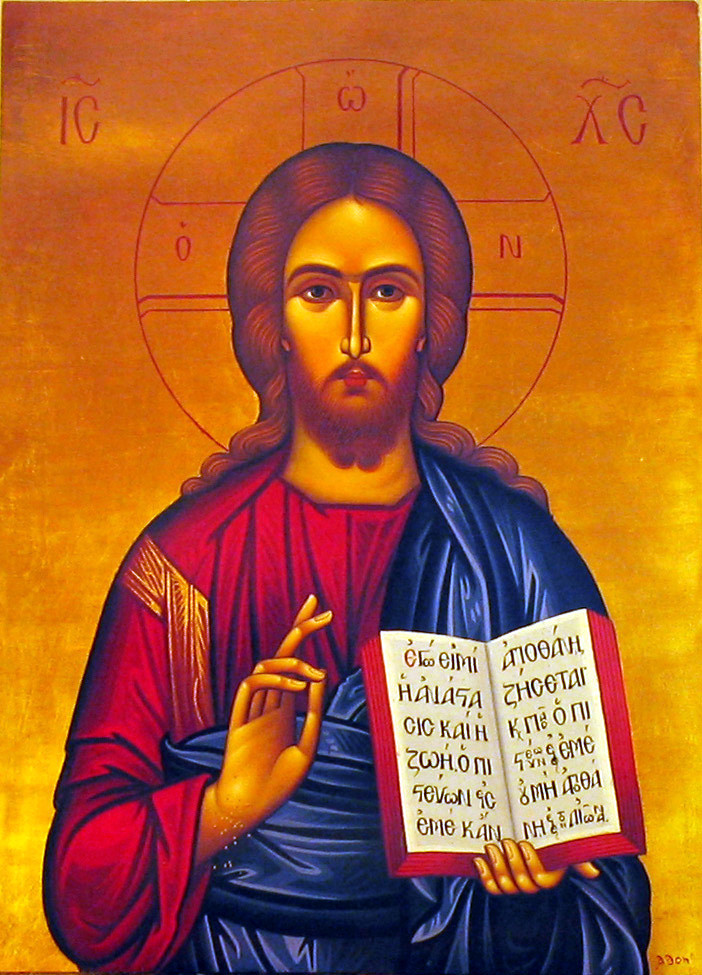
The standard charge of meticulously-Protestant Christians is that catholics are idolatrous because they will reverence icons, altars, the sacrament and other persons. If we thought that these things were gods, that would be a valid charge. Indeed, there are badly instructed catholics who may have superstitious ideas about such things (particularly in places like the Philippines, Latin America, etc.). However, the biblical case for holy images is, I believe, overwhelming when one takes everything into account. Furthermore, it’s been settled by the Seventh Ecumenical Council (Nicea II in 787), which many Protestants claim to adhere to!
Nicea II based its argumentation upon the writings and argumentation of Ss. Theodore of Studium, Germanus of Constantinople, and John of Damascus. St. John of Damascus’ famous treatise in defense of holy icons forms the basis for the argument below. I will also include some quotes from various Fathers defending images, showing that this is part of the undivided practice and faith of the church.
Nicea II based its argumentation upon the writings and argumentation of Ss. Theodore of Studium, Germanus of Constantinople, and John of Damascus. St. John of Damascus’ famous treatise in defense of holy icons forms the basis for the argument below. I will also include some quotes from various Fathers defending images, showing that this is part of the undivided practice and faith of the church.
1. Really the only apparent biblical argument against images is the Second Commandment. It is argued that there are to be no images made of God, or anything in heaven or earth. In response to this charge, it is important to note that this view is actually inconsistent and impossible. We should be careful to note that the literal wording of the Command forbids all making of any images of anything in heaven, earth, sea, etc. Reformed theologian Charles Hodge mentions a reformed colleague of his at Princeton who actually refused to use maps that pictured things like mountains, lakes, etc. This is a consistent outworking of the Protestants position. Such a position is totally ridiculous, but he was attempting to be as consistent with his heretical reading of the Second Command.
Two points refute this:
 First, the Commandment specifically mentions heaven, earth, sea, etc. God seems to be pointing out the type of worship the Israelites encountered in their pagan neighbors like Egypt, Babylonia, Philistia, Canaan, etc. In other words, “heavens,” meaning astrology, “earth,” meaning animism and nature worship, and “sea” meaning various forms of aquatic idolatry, such as Nile worship. So, God is not railing against the inherent evil of an image, but against the practices of the Israelite neighbors, which included any or all of the above.
- Second, God himself commands many holy images to be placed inside the Holy of Holies! 1 Kings 6 describes how ornate the inside of the Holy of Holies was, replete with images of Cherubim and Seraphim, and of course the Ark itself had two huge, golden Cherubim over its lid.
If images were inherently evil, God wouldn’t command His own tabernacle/temple to be full of them. Therefore, the Second Command cannot mean absolutely no religious images. It forbids pagan idolatry, and clearly the temple worship which had images was not idolatry.
 2. Following in this same train, when the Israelites were in the wilderness and were bit by the snakes, God commands Moses to make an image of a bronze serpent and put it on a pole and all the Israelites are to look in faith to this image. This is recounted in Numbers 21. Once again, this is clearly a religious image because Jesus explains it as a type of His crucifixion in John 3:14-15. All who will look to His Holy Cross will be saved from the bite of the real serpent, the devil. So, we have here a vindication of the use of the crucifix. That’s why St. Paul sees power in the Cross of Christ (see Colossians 2:13-15) to disarm the devil’s fallen hierarchy of fallen angels. That’s why crucifixes are used in exorcisms. And it's a rare church that doesn't have a single cross in the place.
(Ironically, many will allow an American flag - replete with eagle at the top, symbol of Roman power - to be in their places of worship without a peep!)
3. The Bible itself is full is symbolism, which is merely another form of the use of images. Thus, the Holy Spirit appears in the form of a dove at Christ’s baptism. A dove, then, is legitimately used as an image of the Holy Spirit. The paschal lamb is an image of Christ, and so on. God presents Himself to us in Scripture through a variety of images. Human fathers, then, are an image of our heavenly Father. St. Paul, in Colossians 1:15, says that Christ is the image (Greek is “ikon”) of the invisible God. It was, in fact, the Jews who were enraged at Christ’s claim of divinity, a claim that provoked their erroneous zeal against holy images. How could the invisible Jehovah be Incarnate in a human image? To the Pharisees this was idolatry. But the catholic view gives due honor to the Incarnation by recognizing the validity and holy nature of images as part and parcel of the Incarnation, and this was the reasoning of Nicea II.
4. Some Protestants may hold to the validity of images, but deny the reverence paid to them as idolatry. We must ask, then, does Scripture provide any warrant for reverencing anything created? All are agreed that worship (latria) is to be paid only to God. But what about reverence, as in dulia? Is it licit to give homage, reverence, even prostration to any created thing/image? I believe the biblical answer is yes, since we see several times in Scripture men in authority being reverenced. For example, Joseph, as a ruler in Egypt, deserves the homage of his brothers and sisters, and thus they “bowed themselves before him with their faces to the ground” (Gen. 42:7). The company of the Lord’s prophets bow down before Elijah in reverence in 2 Kings 2:15. Surely if it were inherently wrong to bow before a created thing (and Joseph and Elijah were created), they would have rebuked others for so doing. But, there are numerous examples of this in Scripture. St. Paul says to give “honor to whom honor is due” (Romans 13:7), and if anyone is due honor, it is the clergy - especially bishops - who labor in the word (of double honor according to Paul in 1 Tim. 5:17). And St. Augustine against Faustus the Manichaean:
5. In Acts 19:11-12, cloths and handkerchiefs are touched by St. Paul, and are then placed upon those possessed and the spirits are driven out by these “relics.” Likewise, the woman with an issue of blood touches the hem of Jesus’ garment and “virtue goes forth from him” to heal her. The bones of Elisha even resurrect a dead soldier (2 Kings 13): this is the entire principle behind relics. Things–matter–stuff can be consecrated/sanctified for a holy purpose. Thus, Jesus spits in the sand and makes clay, rubbing it on the blind man’s eyes to heal him. Jesus could have simply spoken a word and healed the man, but in this instance He chose to use mud–stuff, to do the miracle. We call this the “Incarnational Principle.” It is the same thinking behind all sacramental practice.
6. Likewise, in the OT period, even places were holy. Places like Mt. Sinai, the Temple, etc. But this practice is not rejected in the NT, contrary to what many Protestants may think. In John 5, there is a pool where an angel stirs up the water and the first to enter the pool is healed. This is the principle behind shrines and healing icons. In 2 Peter 1:16-18, St. Peter calls the mountain that he witnessed the transfiguration on the “holy mountain.” So, even in the New Testament the principle of holy places is not abolished as something strictly Old Testament. One sees, then, that there is biblical basis for the catholic practices of relics, images and icons. If there is discernment, it must lie not with strict prohibition, but with regard to application.
 7. The Early Church Fathers are also very clear:
“We do not worship, we do not adore [non colimus, non adoramus], for fear that we should bow down to the creature rather than to the Creator, but we venerate [honoramus] the relics of the martyrs in order the better to adore Him whose martyrs they are.” Against Riparium -St. Jerome
“We by no means consider the holy martyrs to be gods, nor are we wont to bow down before them adoringly, but only relatively and reverentially.” Against Julian -St. Cyril of Alexandria
“We, the Christian community, assemble to celebrate the memory of the martyrs with ritual solemnity because we want to be inspired to follow their example, share in their merits, and be helped by their prayers. Yet we erect no altars to any of the martyrs, even in the martyrs’ burial chapels themselves.”
No bishop, when celebrating at an altar where these holy bodies rest, has ever said, “Peter, we make this offering to you”, or “Paul, to you”, or “Cyprian, to you”. No, what is offered is offered always to God, who crowned the martyrs. We offer in the chapels where the bodies of those he crowned rest, so the memories that cling to those places will stir our emotions and encourage us to greater love both for the martyrs whom we can imitate and for God whose grace enables us to do so. This is part of what we mean when we confess the communion of the saints.
But the honor strictly called “worship”, or latria, that is, the special homage belonging only to the divinity, is something we give and teach others to give to God alone. The offering of a sacrifice belongs to worship in this sense (that is why those who sacrifice to idols are called idol-worshipers), and we neither make nor tell others to make any such offering to any martyr, any soul, or any angel. If anyone among us falls into this error, he is corrected with words of sound doctrine and must then either mend his ways or else be shunned.
Even the incense that is sometimes burned in front of ikons is merely a reiteration that we believe the whole church triumphant prays for us and cheers us on in our run of faith. The saints themselves forbid anyone to offer them the worship they know is reserved for God, as is clear from the case of Paul and Barnabas. When the Lycaonians were so amazed by their miracles that they wanted to sacrifice to them as gods, the apostles tore their garments, declared that they were not gods, urged the people to believe them, and forbade them to worship them.
The truths we teach are one thing, the abuses thrust upon us are another.
heavy h/t to Jay Dyer
Even the incense that is sometimes burned in front of ikons is merely a reiteration that we believe the whole church triumphant prays for us and cheers us on in our run of faith. The saints themselves forbid anyone to offer them the worship they know is reserved for God, as is clear from the case of Paul and Barnabas. When the Lycaonians were so amazed by their miracles that they wanted to sacrifice to them as gods, the apostles tore their garments, declared that they were not gods, urged the people to believe them, and forbade them to worship them.
The truths we teach are one thing, the abuses thrust upon us are another.
heavy h/t to Jay Dyer
2009-09-30
Libera sings the Sanctus to Pachelbel
Here's what they're singing:
- Sanctus, Sanctus, Sanctus
- Dominus Deus Sabaoth.
- Pleni sunt caeli et terra gloria tua.
- Hosanna in excelsis.
- Benedictus qui venit in nomine Domini.
- Hosanna in excelsis.
Litany to Obama?
See for yourself.
I'm betting that lady pretending to be a presbyter is on the payroll somewhere in TEC.
I'm betting that lady pretending to be a presbyter is on the payroll somewhere in TEC.
2009-09-29
Iconography for Michaelmas
Today is Michaelmas (the feast of Michael and the Holy Angels). It's pronounced "MICK-el-mus" and is a traditional starting time for school. In God's providence, it also falls immediately after Yom Kippur this year.
Collect: Everlasting God, who have ordained and constituted in a wonderful Order the ministries of angels and mortals: Mercifully grant that, as your holy angels always serve and worship you in heaven, so by your appointment they may help and defend us here on earth; through Jesus Christ our Lord, who lives and reigns with you and the Holy Spirit, one God, for ever and ever.
Readings: Psalm 103; Genesis 28:10-17; Revelation 12:7-12; John 1:47-51
 | Cathedral Choral Society, Washington National Cathedral - Ye watchers and ye holy ones 17c |  |
 | ||
 | Found at bee mp3 search engine |  |
bright seraphs, cherubim, and thrones,
raise the glad strain,
Alleluia!
Cry out, dominions, princedoms, powers,
virtues, archangels, angels' choirs,
Refrain:
Alleluia! alleluia! alleluia!
Alleluia! alleluia!
O higher than the cherubim,
more glorious than the seraphim,
lead their praises,
Alleluia!
Thou bearer of the eternal Word,
most gracious, magnify the Lord, Refrain
Respond, ye souls in endless rest,
ye patriarchs and prophets blest,
Alleluia,
alleluia!
Ye holy twelve, ye martyrs strong,
all saints triumphant, raise the song, Refrain
O friends, in gladness let us sing,
supernal anthems echoing,
Alleluia,
alleluia!
To God the Father, God the Son,
and God the Spirit, Three in One, Refrain
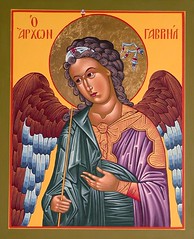
 In the days before widespread literacy, the Church taught with images. Cultural commentators tell us that images are making a come-back (TV, YouTube, etc.) as the power of the written word seems to diminish among the hoi polloi. While this is to be lamented, all is not lost. Again - the Church taught the faith this way for over a millenium.
Today, as I reflect on the Feast of St. Michael and All Angels, I'm struck by what the iconography teaches about our spiritual warfare. Look at these pictures and tell me what you notice.


Seeing a common theme, yet?
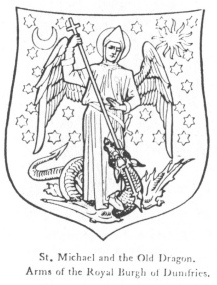
 Try noticing where the spear is placed.
Do you see it?
ALWAYS AT THE MOUTH.
(The same is true in the iconography of St. George, Patron protector of England, whose shield has been adopted as the symbol for the Anglican Church in North America.)
 Why?
Why?Because Satan's greatest tool is deception!
Our spiritual warfare consists of being sanctified in the truth and casting down arguments that hold themselves up against the truth of Christ. It's not easy - and in an age that appreciates the appearance of substance rather than substance itself - it can get you labeled as "mean" or "intolerant" or "narrow-minded."
But remember that the highest messenger of God (literal translation of archangel) is so because he constantly destroys the lies of the devil, robbing him of power in the world.
Go and do likewise.
(Here's some help.)
Holy Michael, the Archangel, defend us in battle. Be our safeguard against the wickedness and snares of the devil. May God rebuke him, we humbly pray; and do you, O Prince of the heavenly host, by the power of God cast into hell Satan and all the evil spirits who wander through the world seeking the ruin of souls. Amen.
The Prayer of Leo XIII
to be said after Mass
to be said after Mass
2009-09-28
Saintly Good King Wenceslas
 One of the best loved Christmas Carols is "Good King Wenceslas." In 1853, John Mason Neale chose Wenceslas as the subject for a children’s song to exemplify generosity. It quickly became a Christmas favorite, even though its words clearly indicate that Wenceslas ‘looked out’ on St. Stephen’s Day, the day after Christmas. So Good King Wenceslas is actually a Boxing Day carol! For a tune, Neale picked up a spring carol, originally sung with the Latin text ‘Tempus adest floridum’ or ‘Spring has unwrapped her flowers’ (see below). This original spring tune was first published in 1582 in a collection of Swedish church and school songs.
 Jolly Old St. Wenceslas
Who was King Wenceslas anyway? Wenceslas was the Duke of Bohemia who was murdered in 929 AD by his wicked younger brother, Boleslav. As the song indicates, he was a good, honest, and strongly principled man. The song expresses his high moral character in describing King Wenceslas braving a fierce storm in order to help feed a poor neighbour. Wenceslas believed that his Christian faith needed to be put into action in practical ways. Wenceslas was brought up with a strong Christian faith by his grandmother St. Ludmila (herself a convert of Saints Methodius and Cyril). Wenceslas’ own mother Drahomira, however, joined forces with an anti-Christian group that murdered Wenceslas’ grandmother, and seized power in Bohemia. Two years later in 922 AD, the evil Drahomira was deposed, and Good King Wenceslas became the ruler.
His mother secured the apostasy and alliance of her second son, Boleslas, who became henceforth her ally against the Christians. Wenceslas in the meantime ruled as the brave and pious king of Bohemia. When his kingdom was attacked, the prince of the invading army, which had been called in by certain seditious individuals, was approaching with a lance to slay him. This prince, named Radislas, saw two celestial spirits beside him; he had already seen him make the sign of the cross and then heard a voice saying not to strike him. These marvels so astonished him that he descended from his horse, knelt at the feet of Wenceslas and asked his pardon. Peace was then reestablished in the land.
In the service of God Saint Wenceslas was constant, planting with his own hands the wheat and pressing the grapes for Holy Mass, at which he never failed to assist each day. He provided for the poor and himself took what they needed to them at night, to spare them the shame they might incur if their poverty became public knowledge. He desired to introduce the Benedictine Order into his kingdom, but was struck down by a violent death before he could do so and himself enter a monastery, as he wished to do.
His piety provided the occasion for his death. After a banquet at his brother’s palace, to which he had been treacherously invited and where he manifested great gentleness towards his brother and mother, he went to pray at night before the tabernacle, as he was accustomed to do. There, at midnight on the feast of the Angels in the year 938, he received the crown of martyrdom by the sword, at the hand of his own brother.
He became Bohemia’s most famous martyr and patron saint. His picture appeared on Bohemian coins, and the Crown of Wenceslas became the symbol of Czech independence.
His mother secured the apostasy and alliance of her second son, Boleslas, who became henceforth her ally against the Christians. Wenceslas in the meantime ruled as the brave and pious king of Bohemia. When his kingdom was attacked, the prince of the invading army, which had been called in by certain seditious individuals, was approaching with a lance to slay him. This prince, named Radislas, saw two celestial spirits beside him; he had already seen him make the sign of the cross and then heard a voice saying not to strike him. These marvels so astonished him that he descended from his horse, knelt at the feet of Wenceslas and asked his pardon. Peace was then reestablished in the land.
In the service of God Saint Wenceslas was constant, planting with his own hands the wheat and pressing the grapes for Holy Mass, at which he never failed to assist each day. He provided for the poor and himself took what they needed to them at night, to spare them the shame they might incur if their poverty became public knowledge. He desired to introduce the Benedictine Order into his kingdom, but was struck down by a violent death before he could do so and himself enter a monastery, as he wished to do.
His piety provided the occasion for his death. After a banquet at his brother’s palace, to which he had been treacherously invited and where he manifested great gentleness towards his brother and mother, he went to pray at night before the tabernacle, as he was accustomed to do. There, at midnight on the feast of the Angels in the year 938, he received the crown of martyrdom by the sword, at the hand of his own brother.
He became Bohemia’s most famous martyr and patron saint. His picture appeared on Bohemian coins, and the Crown of Wenceslas became the symbol of Czech independence.
Intergenerational Appeal
Even as a young child, I remember feeling moved as I sung this jaunty, unusual carol. Recently the phrase ‘Fails my heart, I know not how, I can go no longer’ really spoke to me. It reminded me that sometimes there are times in our lives when life and its stresses seem to overwhelm us, and we feel that ‘we can go no longer.’ The response of Good King Wenceslas was most interesting. He said: ‘Mark my footsteps, my good page, Tread thou in them boldly: Thou shalt find the winter’s rage freeze thy blood less coldly.’ Wenceslas reminds us that when we are all alone, life can feel very bleak. It is at such times that solidarity with another human being can help ‘our blood freeze less coldly’. Wenceslas affirms that we are not alone, and subtly points to the basic Christmas message that Jesus our Master will never leave us in the cold.
 Further, the appeal to walk in the steps that others have forged for us is being used in Benedict XVI's appeal - on this Feast of St. Winceslas - to Europe to recover her Christian patrimony before she reverts to barbarism.
Further, the appeal to walk in the steps that others have forged for us is being used in Benedict XVI's appeal - on this Feast of St. Winceslas - to Europe to recover her Christian patrimony before she reverts to barbarism.In His Master’s Steps
In the last verse are the memorable words: ‘In his master’s steps he trod, where the snow lay dinted.’ The author John Neale, an Anglican priest, shows us here that the essence of true living is learning to walk in our Master’s steps. All of us need a Higher Power to help guide us along our journey. Jesus said: "If anyone would come after me (and tread in my steps), he must deny himself and take up his cross and follow me." Our challenge each Christmas is to look beyond the toys and tinsel, to see ‘the Master’s steps.’
| Good King Wenceslas (76.76D) | |
| | ||
| Found at bee mp3 search engine | |
 Sources 1, 2, 3, & 4.
Subscribe to:
Posts (Atom)