2008-10-24


2008-10-23
ProChoice Hotels
Clarion Hotels - a family of hotels owned by the Choice Hotels international network - is now offering a discount to victims clients of the Cherry Hill Abortion Mill Women's Center.
 Got an upcoming vacation? Business trip looming on the horizon? Church retreat? Let the manager know that you won't be staying at:
 Got an upcoming vacation? Business trip looming on the horizon? Church retreat? Let the manager know that you won't be staying at:
- Comfort Inn
- Comfort Inn by Journey's End (formerly Journey's End Motel)
- Comfort Suites
- Quality Inn/Quality Suites
- Sleep Inn/Sleep Inn and Suites
- Rodeway Inn
- Econo Lodge
- Mainstay Suites
- Suburban Extended Stay Hotel
- Cambria Suites
2008-10-22
Worship Wednesdays - The Collect
Something that helped me fall in love with the Anglican tradition was the didactic and liturgical use of the collect. The collect (opening prayer, pronunciation here) has four parts. The collect I believe is a key to liturgy. However, it is regularly abused - a few seconds of just another little prayer near the start of a service, even read together from a printed pew-sheet for the day (reducing it to merely one part).
The word “collect” in Latin is collecta - gathering together. A collect gathers a litany (list of petitions) together into a final, single prayer. Or a collect gathers silent (or even sung) prayer together into a single prayer. This is what the collect is in the Entrance Rite - the Gathering of the Community. As it gathers the silent (or sung) prayers of everyone it functions to gather the individuals into a praying community.
The bidding: The presider invites the community to prayer - “Let us pray”. Or in a more extended way, something like: “Let us pray in silence that God will make us one in mind and heart”.
The silence: This is the heart of the collect. This deep silent praying of the community is what the collect is collecting. If there is no silent prayer, it is not a collect because there is nothing to collect. Without this silence the “collect” is reduced to merely another little prayer cluttering the vestibule at the start of our service.
The collect:* After sufficient silent prayer the presider proclaims the collect, gathering the prayers of the community, and articulating the prayer of the church - the body of Christ. As Christ’s body the collect is addressed in Christ’s name, on Christ’s behalf, to God the Source of all Being, in the power and unity of the Holy Spirit.
Amen: The community makes the collect its own by a strong “Amen” - “so be it”.
The collect when well understood and aptly used can powerfully gather the community, deepen our prayerfulness, and profoundly express much at the heart of Christian spirituality.

| Step | Task | Collect for Purity |
| Step 1 - Address | Begin the prayer by addressing it to God. | Almighty God, |
| Step 2 - Amplification | Call to mind God's character - saying something about what God is like or what God has done. This serves as a mini-covenant renewal, reiterating the character of the Supreme covenant-keeping God to Himself and His people. Sometimes, a motive is used here - reminding God of His undending mercy. | unto whom all hearts be open, all desires known, and from whom no secrets are hid |
| Step 3 - Petition | Ask God to do something that only He can do. | Cleanse the thoughts of our hearts by the inspiration of thy holy spirit, |
| Step 4 - Purpose | Continue by giving a reason for why you are asking, or what you want to happen. | that we may perfectly love thee, |
| | ||
| Step 5 - Motive | Reiterate how this action is in accord with God's purposes and glory. | and worthily magnify thy holy name: |
| | ||
| Step 6 - ending the prayer | End the prayer, perhaps using a traditional ending, preferably Trinitarian, and finish with ‘Amen’. | through Christ our Lord. Amen. |
In essence, I see the Lord's Prayer as the basis of this beautiful form of praying.
SUBSTANTIAL THANKS to the good folks at Liturgy.co.nz!
Write your own collect and post it on your blog (or in the comments)!
2008-10-21
Stopping the Death Spiral in the Housing Market
This plan seems to make a lot more sense than what the government is doing right now.
Anybody else up for paying $50 billion (to homeowners mortgages) over five years, as opposed to $700 billion (to Wall Street and banks) this year and more to come?
Anybody else up for paying $50 billion (to homeowners mortgages) over five years, as opposed to $700 billion (to Wall Street and banks) this year and more to come?
2008-10-20
Obaminable Record
Obama never met an expansion-of-abortion bill he didn't like. He is extreme on an issue that is of great importance to a large swathe of Americans.
Unborn babies don't worry about economies. They have few concerns about trade arrangements. And they aren't particularly interested in borders.
I care about all of those things and more. But I can't even begin to care about them until I care about stopping the wholesale slaughter of innocent babies. I know there are some who bemoan the evangelical prolife movement as an overly-narrow single-issue voter turnout. However, I see it more as a foundation from which all other values speak. No one would dare call an anti-poverty agenda "single-issue." Let's demand a full-orbed respect for the anti-abortion agenda as well.
(And let's go further, evangelicals, by making sure that we are taking anti-abortion measures on multiple fronts: legislative, social, economic, educational, etc.)
2008-10-17

This is just nuts
 It looks like this sterling example of American citizenship got more than his fair share of the change we can believe in.
"Sometimes, they come up and bribe me with a cigarette, or they'll give me a dollar to sign up," said Freddie Johnson, 19, who filled out 72 separate voter-registration cards over an 18-month period at the behest of the left-leaning Association of Community Organizations for Reform Now. (ACORN)
ACORN is under investigation in Ohio and at least eight other states - including Missouri, where the FBI said it's planning to look into potential voter fraud - for over-the-top efforts to get as many names as possible on the voter rolls regardless of whether a person is registered or eligible.
Aren't you heartened to see that Obama hasn't left his Chicago-political-machine roots behind? What would an Illinois candidacy mean without significant voter fraud? (Especially by the pros at ACORN.)*
Of course, I think citizens should bring their land of primary residence into the voting booth. That's why this coming Sunday's lectionary text from the Gospel is so important to read right now.
What is your true homeland? How are you going to carry that into the American political process?
*Speaking of voter fraud - check out this zombie-related post on dead voters.
*Speaking of voter fraud - check out this zombie-related post on dead voters.
2008-10-16
The Revvin' Reverend
 Did you hear about the Harley-ridin' holy-rollers in southern California? They became bikers to reach the Hell's Angels (and others). Only, when the real Hell's Angels showed up, the Christians forgot to turn the other cheek and a Bible-packin' biker-brawl broke out! Two Hell's Angels ended up getting stabbed.
 (BTW, you have to love a church where the Hell's Angels pick a fight...and lose!)
The question I have is this:
Where does the church draw the line in accommodating cultural norms (contextualizing Christianity) in order to reach out to the lost?
We've done this poorly in the past, often by being too strict (think missionary position, or our deracination efforts on the American Indian). We've also been too accomodating to the culture - especially as early Christians reached into pagan Europe.
Apparently, we're not done yet.


Thoughts?
Apparently, we're not done yet.
Thoughts?
2008-10-15
Paedobaptism and Pentecostal Presumptions
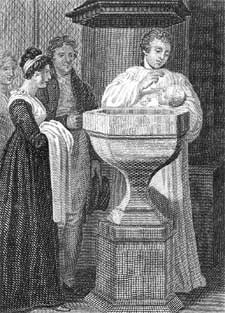 As I was going over the Order for Holy Baptism with an adult who has come to faith, I was struck at how presumptuous the service is for children. The covenant vows that are taken (resisting evil, seeking obedience to God's law, etc.) are big enough as it is. But afterward, we apply water in the name of the Triune Godhead.
THEN, we pray this prayer:
Heavenly Father, we thank you that by water and the Holy Spirit you have bestowed upon these your servants the forgiveness of sin, and have raised them to the new life of grace. Sustain them, O Lord, in your Holy Spirit. Give them an inquiring and discerning heart, the courage to will and to persevere, a spirit to know and to love you, and the gift of joy and wonder in all your works. Amen.
Now some people get their dander up about baptismal regeneration (which, as a good Reformed Evangelical Catholic, i.e., an Anglican, I WHOLLY REJECT). But think about what we're doing. We're claiming God's real promises before they break into reality.
I was struck by how this shares at least some similarity with the pentecostal faith of my childhood: Name It and Claim It!
Those of us who hold to covenant baptism believe that God will be faithful to himself and his promises, and so we speak and act as though those promises were as realized as they are real.
What think you? Have you claimed the Name of him who claimed you?
2008-10-14
Questions about McCain's Associates
Everybody is asking if Obama is ready to lead based on his nefarious associates. But are they asking the same of Obama. In the interest of fairness, let's look at the evidence.
Scary, huh?
Want a real outsider?
Scary, huh?
Want a real outsider?
2008-10-13


2008-10-10

A Republic, if you can keep it.
For the full monty, go here. In these trying times, it's important to remember that we live in a land of opportunity: We have the opportunity to succeed and to fail.
Those who seek a land of government-backed promises are not seeking the dream of America.

Those who seek a land of government-backed promises are not seeking the dream of America.
2008-10-09
On Becoming a Reformed Catholic
I'm thinking of making a weekly rule (not sure yet...bear with me) on blogging. Thursdays would be reserved for Theology. Wednesdays for Worship. Saturdays for silliness. Mondays for musings... Anyway, here's an early stab at Theology Thursday.
A major hurdle in my journey from Presbyterianism to Anglicanism was being forced to abandon the Westminster Confession of Faith as my doctrinal standard. (Yes, I had scruples but they were primarily in the area of praxis.) I'd long known that the Westminster began as an expansion of the 39 Articles of Religion which had been the basis of the Evangelical Reformation of the Catholic Church in England. But something I admired about Westminster was its comprehensiveness.
After a year of intense reading and soul-searching, I've come to cherish the 39 Articles. I cherish them as an irenic statement of evangelical truth, written from a pastoral perspective. The shepherding qualities of a bishop are clearly evident in them. For instance, ..
In a new journal for orthodox Anglicanism, 39 Articles, I came across an article titled "Kindred Spirits" which addresses the continuities and discontinuities between 39 Articles and WCF. It was a blessing to read. Here's an apt snippet:
While the preface to the 1549 prayer book notes that “There never was any thing by the whit of man so well devised, or so surely established, which in the continuance of time hath not been corrupted. . . .” both documents do set forth a very concise system of doctrine that is easily understood by any that care to read them. It is in the setting forth of the doctrine contained in Scripture that both documents find their wholeness, and that is what determines the degree to which they remain uncorrupted. The system set forth is as harmonious to the Word of God as the work of man can be. Accordingly and not surprisingly, both are systems that have withstood the test of time and temptation.I encourage you to read the rest here.
There is another way in which both documents, at least from a Calvinistic point of view, are complete. Historically, Calvinists have defined a true church by the following marks: the preaching of the gospel, the right administration of the sacraments, and church discipline. In both documents, The Thirty-Nine Articles and the Westminster Confession of Faith, we find excellent and concise definitions of these marks, discussions that are both in harmony with each other and with scripture. From a pastoral standpoint — and this is indeed the where the rubber meets the road — they are wonderfully complete. The documents then find their ultimate completeness in their usefulness to the church.
2008-10-08
Losing God the Father
But my friend was called in to the dean's office. His crime? He dared to use masculine pronouns and speak of God the Father. Apparently, inclusive language isn't meant to include half of the population.
Don't get me wrong. Inclusive language in regards to humans is a good thing (though it can make for poor writing in the hands of less-skilled writers). It's a seminary policy to use inclusive language.
But a recent Touchstone article asks, "What are we losing?"
A lot of feminist and post-modernist theologians talk about how people have felt excluded by masculine god-talk. (Which, let's be clear, is MASCULINE, but not necessarily MALE.) They want to jettison 4,000 years of linguistic reflection on the basis of 40-60 years of empowerment talk. But I don't think they've thought through all the implications. They can tell you why they don't want masculine god-talk, but have a harder time justifying the alternative they propose.
Do you know why masculine god-talk is important? Please feel free to use the comments section to elucidate. And stay tuned...the vicar is about to stir things up.
2008-10-07

2008-10-06
Epistolary Epiphany
Sunday was Proper 22A, and the appointed epistle reading was from Paul's letter to the Philippians. The passage begins so familiarly - "But one thing I do: forgetting what lies behind and straining forward to what lies ahead, I press on toward the goal for the prize of the upward call of God in Christ Jesus." With texts like these, the sermon simply writes itself. The parable of the tenants was the more challenging text, and it's what I preached.
Yet, I found myself struck anew by Paul's words...or rather, his emotion, as the epistoler read the lesson this morning.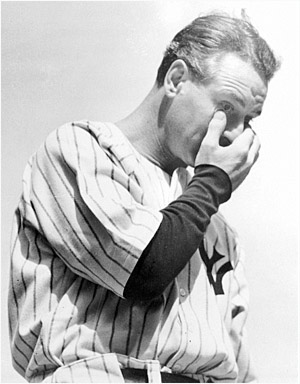
We read the letter to the Galatians and think that Paul is just ready to give both barrels to anyone that dares sniff of apostasy. And in 1 Corinthians, he doesn't hesitate to hand a notorious sinner over to the devil for judgment. Yet here in Philippians, Paul is talking about someone who used to strive to attain the heavenly calling...and then fell.
Heretics.
Liberals.
Apostates.
ReFORMERlies.
Mainliners.
Corpse-churchers.
Whatever you've said about them in the past, did you do so even with tears?
I know I haven't...not until this morning.
Thank you, Jesus, for still speaking to those of us you've called to speak for you.
Yet, I found myself struck anew by Paul's words...or rather, his emotion, as the epistoler read the lesson this morning.
"For many, of whom I have often told you and now tell you even with tears, walk as enemies of the cross of Christ."While he later mentions a striving between Euodia and Syntoche, I don't think that's what is in view here. Rather, I think Paul is grieving for people who have fallen away from the faith.
We read the letter to the Galatians and think that Paul is just ready to give both barrels to anyone that dares sniff of apostasy. And in 1 Corinthians, he doesn't hesitate to hand a notorious sinner over to the devil for judgment. Yet here in Philippians, Paul is talking about someone who used to strive to attain the heavenly calling...and then fell.
Heretics.
Liberals.
Apostates.
ReFORMERlies.
Mainliners.
Corpse-churchers.
Whatever you've said about them in the past, did you do so even with tears?
I know I haven't...not until this morning.
Thank you, Jesus, for still speaking to those of us you've called to speak for you.
2008-10-04
2008-10-03
Modern Art
I honestly don't know whether to laugh or cry. Look at this:

Looks like the energetic frenzy of a toddler with a crayon, right?
Now realize that it actually was done by a toddler with a crayon.

That's what you get from all those extra college edumacated folks I spoke of this morning.
Looks like the energetic frenzy of a toddler with a crayon, right?
Now realize that it actually was done by a toddler with a crayon.
That's what you get from all those extra college edumacated folks I spoke of this morning.
Why We Need Less College Graduates
 Yes, Bluto. Suprising but true, I'm against it.
Why?
Well, I'm very much in sympathy with the basic thrust of this article.
We've created an unnecessary expectation that our children will go to college. Yet in too many cases, it is just a well-funded period of prolonged neoteny and adolescent alcoholism rather than a time for the mind and spirit to be formed.
I really wish we would follow the lead of other countries that reserve a liberal education for those who can take it with good effect, and focus on vocational training for the vast majority of people who cannot (or will not) succeed in college.
Subscribe to:
Posts (Atom)